

Do This One Thing To Your Hydrangeas In April For Stunning Blooms
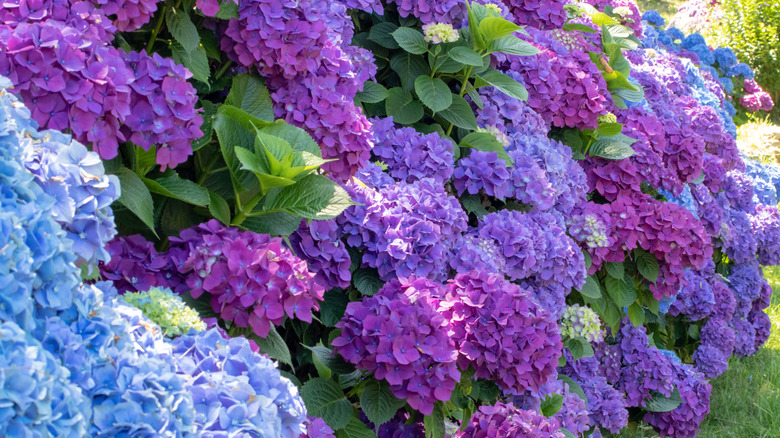
Whether purple, pink, or blue, you're probably eager to see the first blooms on your hydrangea (Hydrangea spp) this spring. While you may be itching to get out in the garden and prune away to encourage new growth and fresh flowers, put the pruning shears down. The best thing you can do for your hydrangeas in April is to add a layer of mulch to the soil. Mulch helps to lock in moisture (which hydrangeas love) while suppressing weeds and regulating the soil's temperature. As a bonus, it also provides some food.
As for pruning, whether you'll want to snip the branches back or not depends on the type of hydrangea you're growing. Some varieties, such as smooth hydrangea (Hydrangea arborescens), bloom on new growth, meaning it's okay to prune the shrub at the end of winter. Other varieties, such as Bigleaf Hydrangea (Hydrangea macrophylla) flower on old growth. If you prune those, you risk cutting off the new buds and not getting any flowers this summer. So, play it safe and focus on using mulch on your shrubs this April. Choose mulch made from a natural material such as pine chips or compost. Your hydrangeas will thank you with plenty of blooms from late spring to autumn.
How to mulch hydrangea
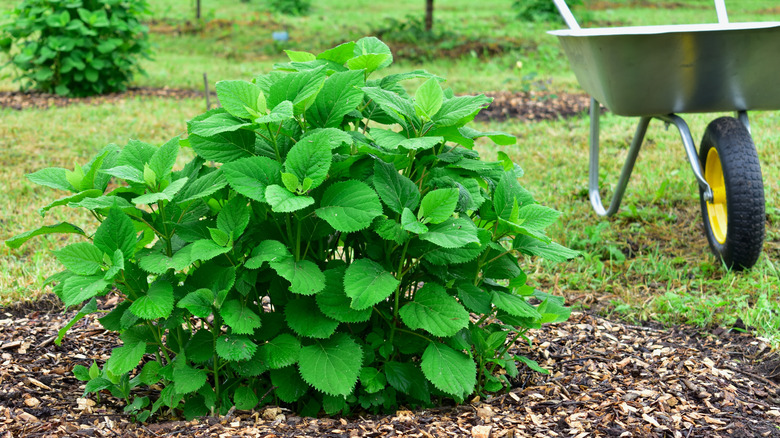
A happy hydrangea is one that's growing in well-drained, moist soil. Since the shrubs have wide and shallow root systems, a layer of mulch over the soil offers an extra layer of protection, retaining moisture and helping the plant thrive even if conditions aren't quite ideal. Organic mulches, which break down into the soil, offer an additional benefit. They help feed the hydrangeas, providing needed nutrients for consistent blooms.
Shredded wood, compost, or peat are all mulch types that are ideal for use with hydrangeas. If you want blue blooms, consider using pine bark mulch, as it will acidify the soil. While fallen leaves make for a budget-friendly mulch, they may not break down and could retain too much moisture. To use leaves as a mulch, shred them first to make them fluffier and easier to break down.
A little bit of mulch can go a long way. In April, as the plant's leaf buds start to open, add a layer of mulch between two and three inches thick around the hydrangea, leaving a gap of about four inches around the stem. Getting the mulch too close to the hydrangea can cause rotting due to trapped moisture. For best results, mulch a day or two after it rains, so the soil is slightly damp but not waterlogged. If the soil is saturated or still frozen, give it time to dry or thaw before you mulch.