

What To Do If You Find A Brown Recluse Spider In Your Home Or Yard
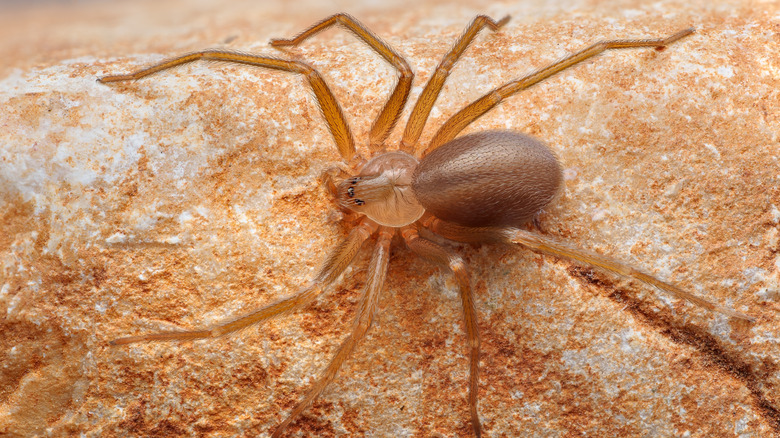
Brown recluses (Loxosceles reclusa) are a common type of spider you might see, but you don't want them in your home or yard. They're native to the U.S. and have an important role in the food chain, but they're also venomous. While only around 10% of brown recluse bites cause serious damage, according to the University of California Integrated Pest Management Program, reactions can still be painful and frightening. Although spotting one in or near your home can be startling, stay calm and try to identify it.
Some spiders are commonly mistaken for brown recluses, so don't assume any brown spider you see is dangerous. Don't touch it but observe it if you can. Look at their eyes, backs, and legs. Unlike other spiders, brown recluses only have six eyes, which are arranged in three groups of two eyes each. Brown recluse spiders have solid-colored brown legs with no stripes, spines, or spots and a dark, violin-shaped mark starting at the back of their neck.
If you're able to confirm it's a brown recluse, don't panic. While bites are unpleasant and can be serious, they're somewhat rare, and typically only happen when the spider feels threatened. If you notice a brown recluse in your yard, keep your distance. Avoid areas where they live, such as brush piles, stacks of firewood, or piles of rocks. Keep weeds and shrubs trimmed, and don't leave debris stacked around your house. If you can, clear it away or move it further from your home to reduce the risk of encounters and accidental bites. Don't forget to wear gloves while you do, in case there are brown recluses in the piles you're moving.
Getting rid of brown recluses in your home
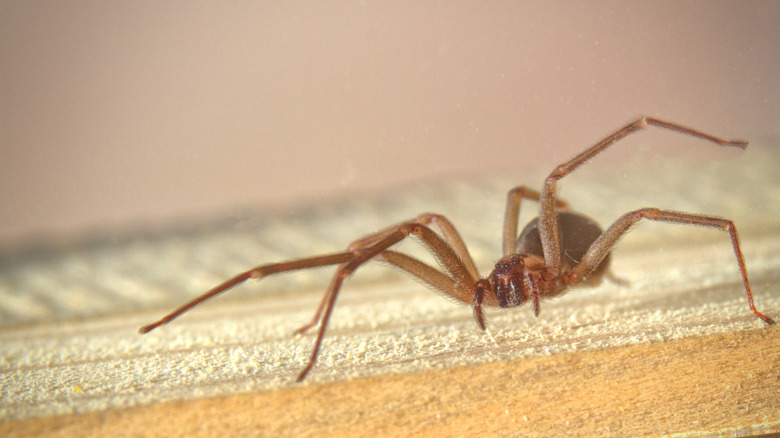
While you generally should not kill spiders in your home, a brown recluse is dangerous enough to be the exception, especially if you have kids or pets, or know you're sensitive to spider bites. If the spider needs immediate removal, place a jar over it. Slide a piece of paper underneath and flip the jar over so the spider falls into it. Then, put the lid on. Once it's contained, two safe options to kill it are adding rubbing alcohol to the jar or putting the whole jar in your freezer overnight.
Place glue traps throughout your home, near walls or hiding places, to get a good idea of how many spiders there may be. To stay safe, wear shoes and clothes that cover your skin. You don't want to accidentally step on or grab one while placing the traps. If you have kids or pets, keep them out of the room. It may also be wise to teach your kids about spider safety in case they see one elsewhere in the home.
Insecticides can control an infestation, but they aren't 100% effective. Due to how quickly certain insecticides can fade and how good brown recluses are at hiding, you may need to take multiple steps. Calling professionals is a great idea, as they have the equipment and training to deal with both chemicals and spiders safely. Finally, seal up possible entryways and clean out storage areas to remove nesting sites. Brown recluses eat insects, so take care of any in-home bug problems and dispose of the dead insects afterward. Be careful throughout the process, and remember, avoiding contact means avoiding bites!