

12 Clever Ways To Transform Scrap Wood Into Bird Magnets For Your Yard
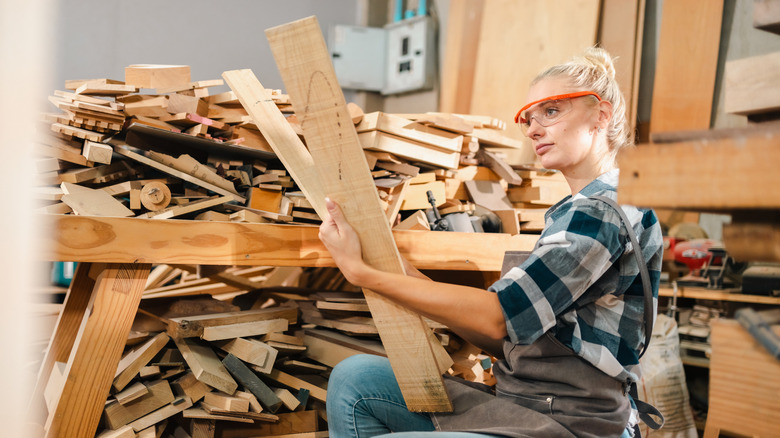
Scrap wood can be quite a frustrating puzzle for DIYers and woodworkers. You know that perfectly square bit of plywood is good for something, but it's too small for most home improvement projects and there are too many such scraps to store them all for long. The answer to this riddle is already in your own habits: Make something quick and useful for one of your hobbies. And if you happen to be a birdwatcher or even just an aficionado of outdoor living, there are endless possibilities.
The things that attract birds are usually the simple necessities of bird life: water, food, and shelter. Water and wood don't mix well, of course, but there are ways of making a project like a DIY birdbath better by accessorizing it with a wood stand or perch. Feeders and nesting boxes are great uses for scrap wood, though be careful to use only untreated wood and non-toxic finishes and sealers.
Most of these projects can be accomplished with the simplest of tools, and can probably be accomplished with a hammer, backsaw, and miter box. (That's the one downside of using scrap wood: smaller wood becomes a little harder to cut, not easier). If you have a miter saw, circular saw, or even a jigsaw, these projects should take almost no time at all.
Birdbath stand
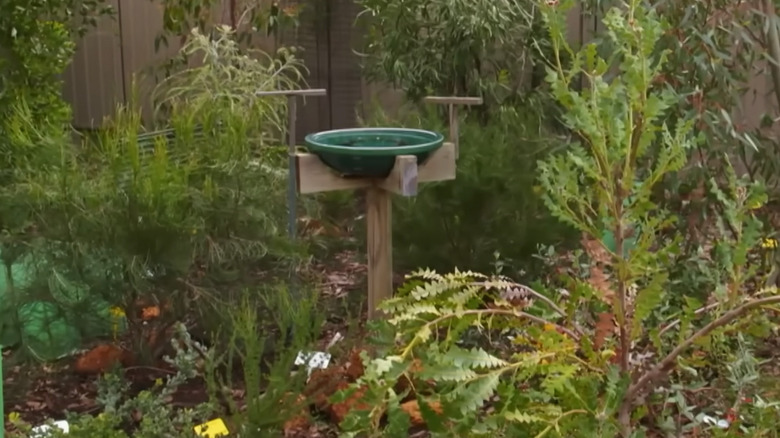
Here's a good way to create a good bathing spot for your backyard birds. A birdbath stand designed with crossed dimensional lumber, like short 2x4 cutoffs, with a shallow cup-shaped depression cut out of the center allows you to use any similar-sized vessel for your birdbath. You don't need to overthink what container to choose as even an old pot lid can be repurposed into a cute DIY birdbath. The wood framework also makes it easy to attach other things to the stand, including a means of mounting it in other spots, like on a deck rail or a post in another area of your yard.
Birdbath perch
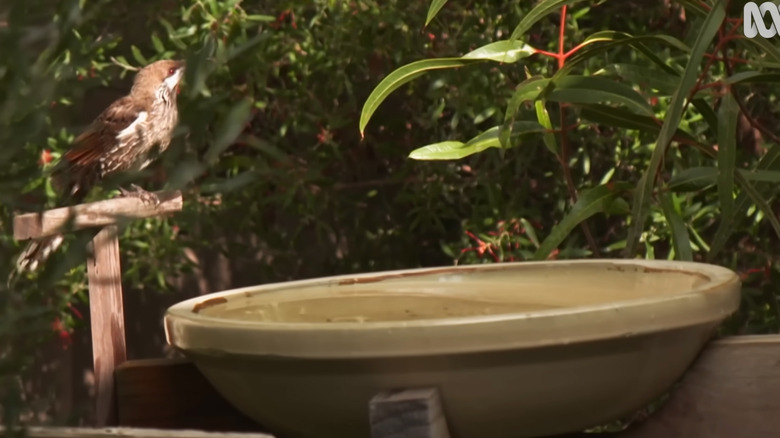
A wooden stand also makes it easier to attach a scrap wood perch to your birdbath. The perch itself doesn't need to be very large, so almost any bit of spare wood will do the trick. Perches are important in that they give birds a moment to check out their environment before they dip into the bath and make themselves momentarily vulnerable. It also turns out to be a boon for photographers, who can get what looks like posed shots at these birdbaths, which can sometimes be rather chaotic without a landing zone.
Garden perch
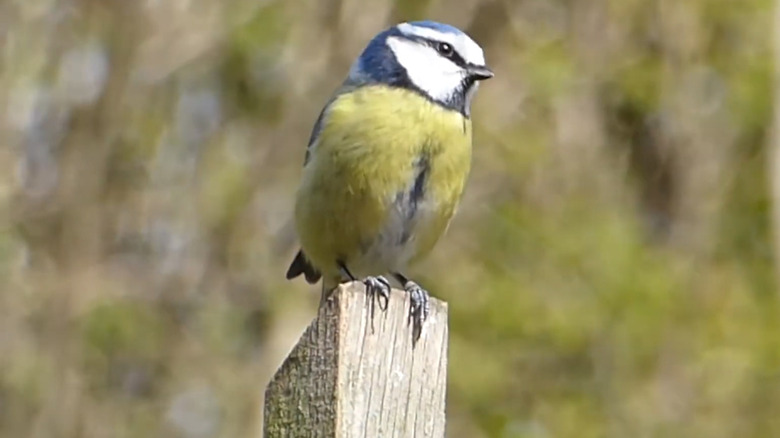
A perch doesn't have to be at a birdbath, of course. They have the same encouraging effect anywhere in a yard or garden, but particularly near feeders. A perch in the open can be made of just about any spare piece of lumber or stick of trim, since it doesn't take much for the average bird to pause on for a moment. Whether you stick yours into the ground or mount it on wall, perches are great resting spots, and because of that they're also great for birdwatchers and photographers.
Basic bird feeder
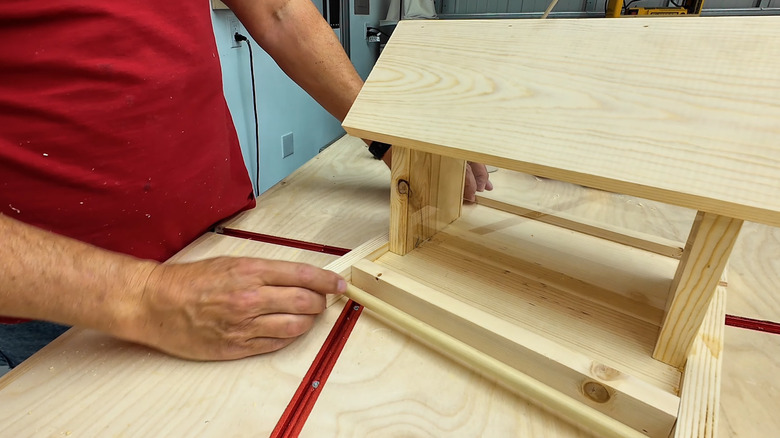
Like most bird-related woodworking projects, a feeder is perfect for using up scrap wood because there simply aren't any large pieces of wood necessary for the typical build. Some designs do require a bit of plexiglass so you can keep an eye on the seed level and refill it as necessary, but this isn't crucial. In fact, no part of the design is really crucial, but there should be some sort of container for the seed, and for many species it's important to have a perch at the feeder.
Wine bottle bird feeder
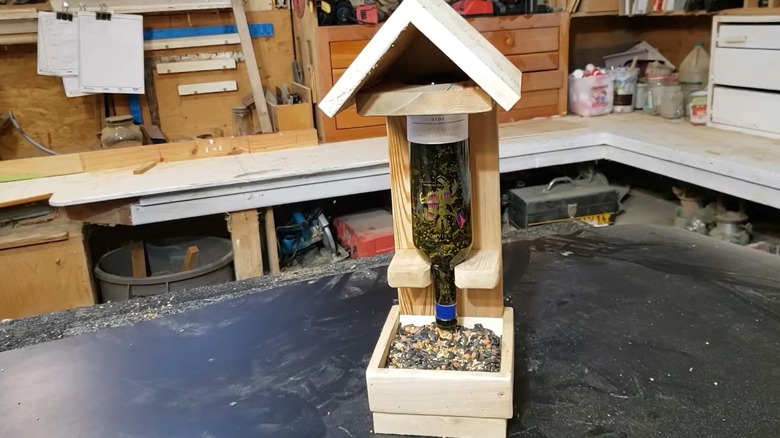
Another useful feature for a bird feeder is some kind of vessel to store the seed so you don't have to refill it constantly. Even an empty ketchup container can be made into a simple bird feeder. This design uses scrap wood and a wine bottle upended so that it will dispense seed whenever the area immediately below it is empty. It is super simple to figure out and make on your own, or you could follow the guide on this YouTube video by Mackenzie Woodworking.
Bench feeder
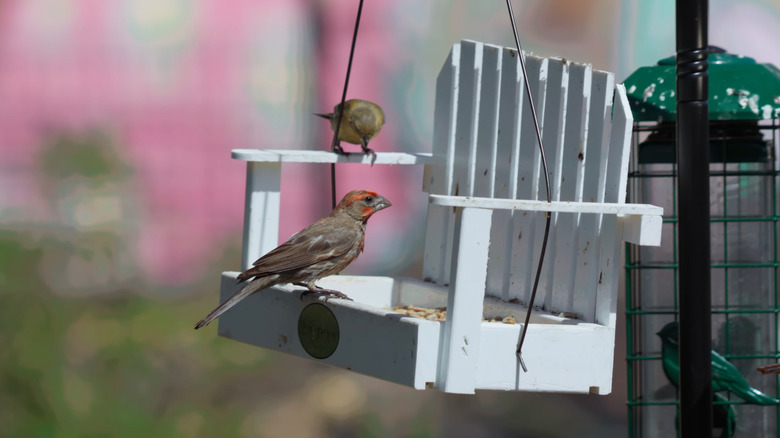
Some gardeners might be hesitant to invite birds to have a seat in gardens where they have been known to peck at the fruits and vegetables, but — as with squirrels — the trick to keeping birds polite is to keep them well- and intentionally fed. Just as you'd give any other garden visitor a seat in your yard or garden, why not give your birds a resting and feeding spot that doubles as a cute bench? We've seen a few of these, including one made with pallet wood, and it's remarkable how little scrap goes into the designs.
Hanging platform feeders
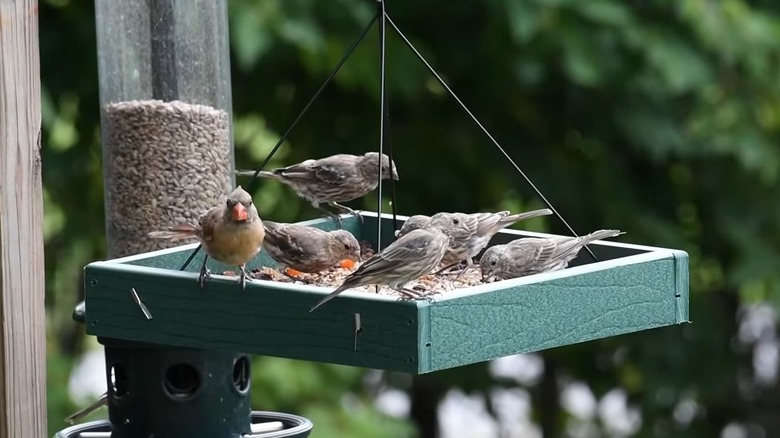
But a feeder doesn't have to be cute, or even particularly attractive, to be effective. Simple platform feeders have a lot going for them: They hold a lot of seed, don't get gummed up by stuck food, and typically have a lip all the way around on which birds can perch while eating or checking out their surroundings. Because this is such a small and easy project, it's perfect for scrap wood. Just ensure not to forget the necessary drainage holes for this feeder.
Basic scrap wood bird house
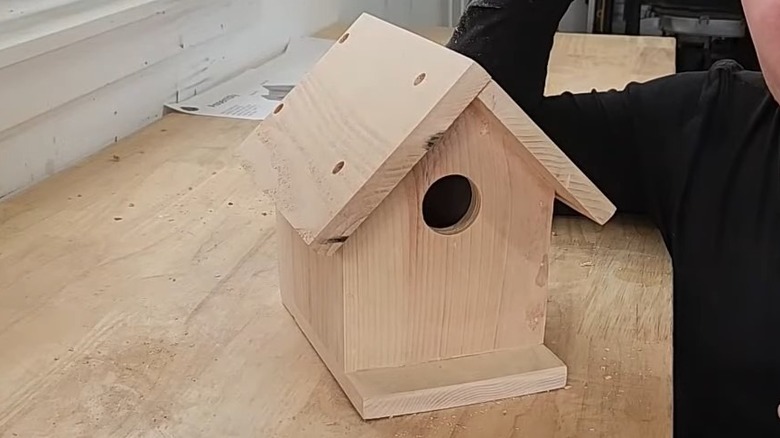
There are about as many birdhouse designs as there are birds, but the simplest are quick and easy ways to use scrap wood in your workshop. This is everyone's first wood project, but that doesn't mean an experienced woodworker can't knock out a few of these in an afternoon for family and friends. There are tons of designs you could go for that require a small amount of wood. But make sure to pay particular attention to overhangs, cleanouts, and mounting if you're adapting a design to match available scrap wood.
Nest box
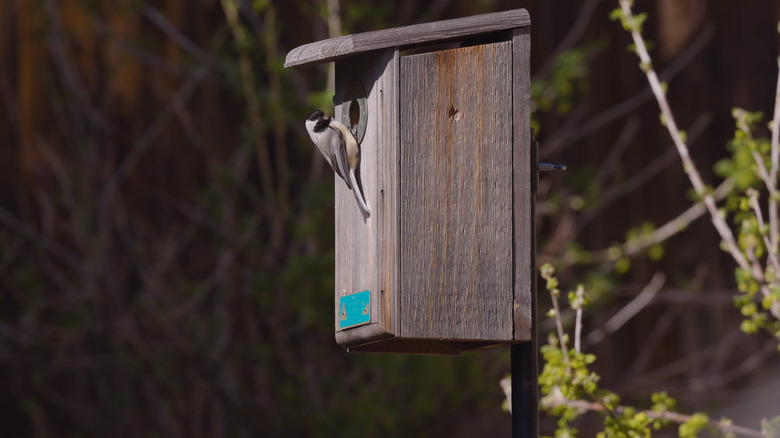
While a birdhouse is typically focused on aesthetics and might not be ideal for nesting, a nest box usually focuses more on the needs of cavity-dwelling birds than on appearance. These more utilitarian houses are also perfect for using up scrap wood, since they're even simpler looking... and often simpler to make, usually consisting of a floor, four walls, and a slanted roof. If you're the type of woodworker who uses a chisel often, you might have another scrap that will help your nest box succeed: Partly filling it with wood shavings attracts birds and makes them commit more readily to the new home.
Replaceable nest box entrance plates
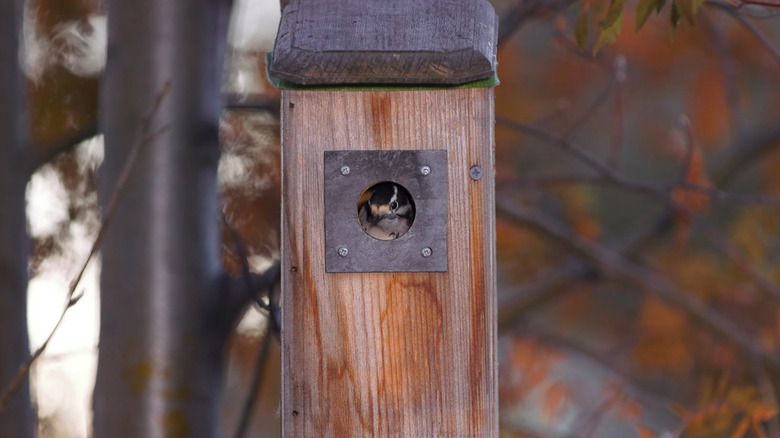
Precisely sized birdhouse entrance holes make nest boxes appeal to particular species, and make them impossible for larger invasive species to use. But they can be worn down by birds and predators after a season's use. Metal entrance guards and hole plates are available, but if you're willing to invest two minutes a year, you can make your own replaceable wooden hole plate each spring. You will need an appropriately sized hole saw. Note that 1 ⅛-inch holes are good for some small species, and it is a standard size for sink faucet holes.
Sparrow colony nest box
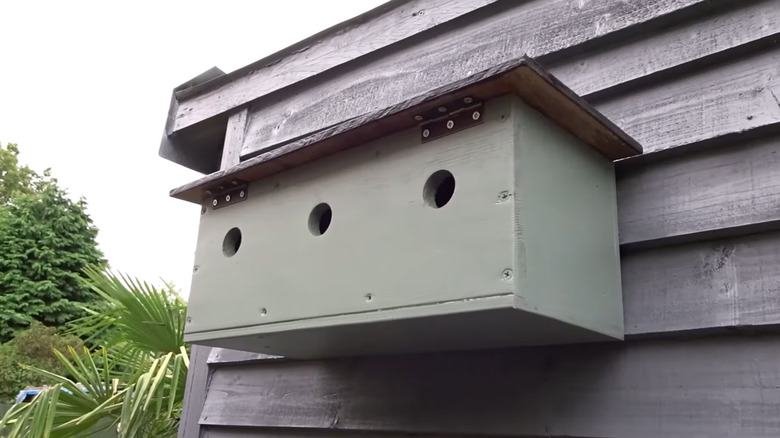
For birds, like house sparrows, that tend to nest together, a colony nest box can be just what you need to attract them and with your scrap wood, you can make one. Designs will vary from species to species, and might have different numbers of compartments, compartment sizes, perch requirements, and the like. But in general you're just making a larger-than-usual nest box and mounting it in just the right place for the species you're targeting. Again, don't forget to use the right size of hole saw or Forstner bit for the bird you want to invite in.
Nesting shelf
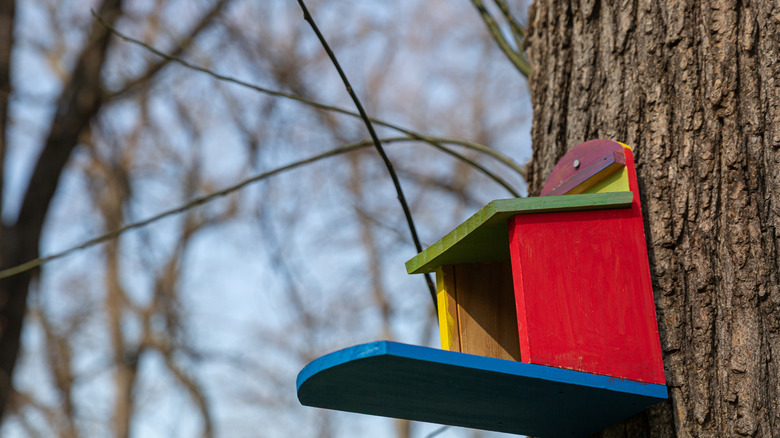
If you have a covered porch, there's a good chance you've hosted a bird family's nest at some point, usually up high in a corner. Robins, house finches, and song sparrows are among the birds that will make use of a shelf instead of a nest box, which is more suitable for cavity-dwelling species. This is another perfect scrap project because there are few parts and they're all relatively small. Locate your nesting shelf according to the species you're trying to attract. Since these birds will occasionally nest on actual shelves, your chances of success are quite high!