

The Part Of Your Kitchen Floors HGTV's Mike Holmes Says Matters Most

If you're in the process of building or replacing your kitchen floor, you've probably spent a lot of time thinking what type of flooring would be best to use. This is crucial because whatever material you choose needs to be able to withstand consistent foot traffic, food spills, and heavy items that drop unexpectedly. As important as this choice is, HGTV's Mike Holmes says that the part of your kitchen floor that matters most is the subfloor that's underneath it.
"It may not be obvious, but the MOST IMPORTANT thing about your kitchen floor is what's underneath," Holmes writes for his blog, Make It Right. Your home's subfloor is the floor that rest beneath your finished flooring and is typically made from either plywood, concrete, or cut lumber. The subfloor is directly attached to the floor joists and provides structural integrity as well as a level surface on which to lay future flooring material.
One of the reasons the subfloor is necessary is that finished flooring is not strong enough to withstand consistent use without structural support underneath. However, the important question that Holmes says needs to be asked is: "Is the subfloor as strong as it needs to be for the material you want to put on top of it?" The answer will not only determine the flooring material you choose, but whether more extensive repairs are necessary.
Why a strong subfloor is so important
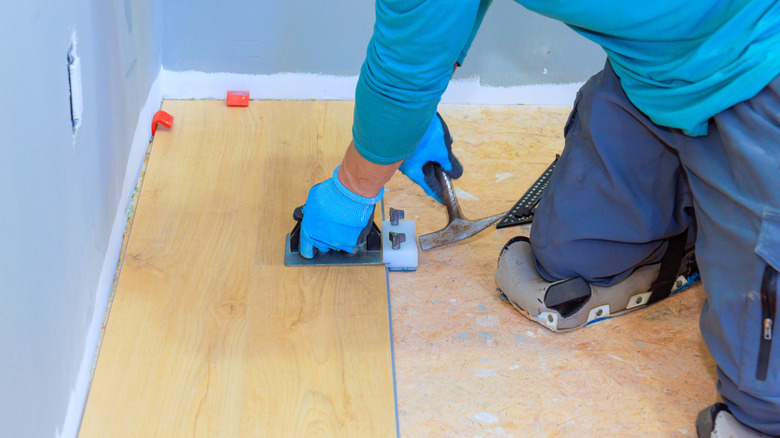
To provide an answer to Holmes' integral question, lets look at the load bearing properties of a typical residential subfloor made of ¾-inch plywood. This subfloor is rated to hold around 50 pounds per square foot. The average kitchen in America is between 100 to 200 square feet, meaning that the subfloor for those homes should hold 5,000 to 10,000 pounds of weight, making it exceptionally strong and sturdy.
Your subfloor should be able to hold the weight of your countertops, appliances, and common finish flooring types such as hardwood, luxury vinyl tile, as well as Holmes' absolute favorite kitchen flooring choice, ceramic or porcelain tile. Because tile is inflexible, however, installation might require some additional subfloor strengthening preparation to ensure there is no cracking or movement. Concrete layers are also very trendy, but Holmes does not believe they are practical solutions due to the stress the weight of the concrete will put on the subfloor and joists.
A good subfloor evaluation is necessary before doing any kind of flooring work. In a kitchen especially, be sure to check for moisture content of the room and your current subfloor. High moisture could lead to mold issues and floor swelling. Also check for any loose sections of the subfloor that have separated from the joists, any areas where rot or damage has occurred, or any sagging. All of these problems will need to be remedied before any finish flooring can be installed.