

Why You Should Think Twice Before Attracting Blue Jays To Your Yard
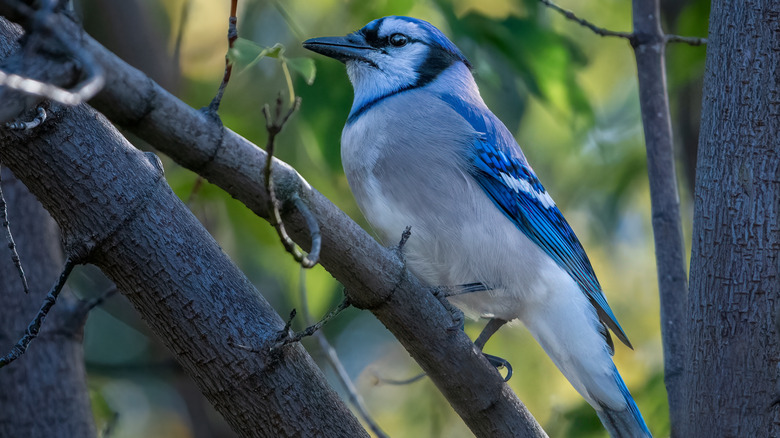
Blue jays are some of North America's most interesting — and most controversial — birds. Known for their striking bluish plumage with white and black patterns, these birds mostly hang out around trees along the edges of forests in both rural and urban areas. There are many complaints about blue jays, but the fact is these birds are extremely beneficial to the ecosystem. What's more, their diets include some of the insects that many people do not want in their backyards. These include beetles, caterpillars, and grasshoppers.
Still, blue jays have notoriously loud calls that can wake you up early, and they are often villainized by backyard bird enthusiasts due to their behavior towards other species. Before you set up a large tray feeder with some seeds or peanuts for blue jays, know there are indeed some valid reasons why you might want to avoid attracting them to your outdoor spaces. While blue jays themselves aren't "bad" to have around, they are notorious for making messes of feeders, being destructive in yards, and becoming aggressive with other bird species.
Blue jays can be aggressive and make messes in your yard
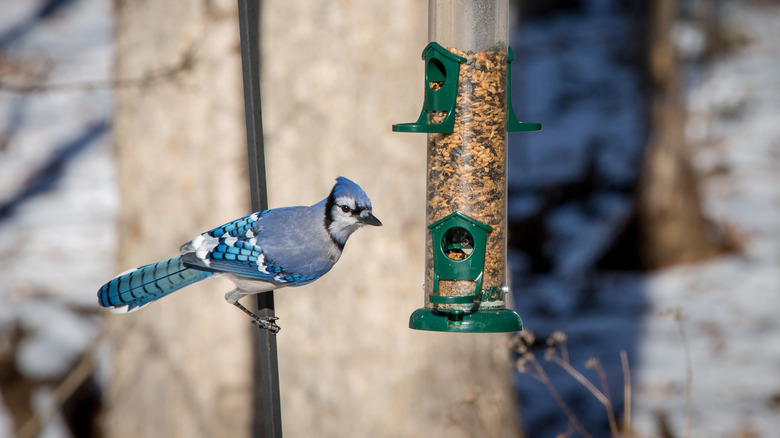
Despite their benefits, blue jays target similar food sources as smaller songbirds such as bird feeders in gardens. You may have witnessed aggressive behavior firsthand, where a blue jay approaches another bird while screaming and pushing them to the side. Another issue is that blue jays may become territorial beyond your backyard birdfeeder and stick around to cause other issues for songbirds, including robbing their nests on occasion.
Due to their larger size, blue jays can also make quite a mess of seed feeders. Their destruction goes beyond feeders, though. Acorns are one of their favorite things to eat, and they can easily tear up a yard trying to dig to hide nuts in the ground for later consumption. Blue jays might even leave some of these acorns behind. When left unchecked, these may eventually grow into new oak trees! It's also common for blue jays to forage for items in a berry garden or from fruits in nearby shrubs and trees and make subsequent messes on the ground.
One of the easiest ways to decrease food access meant for other birds is to swap out any platform seed feeders you have for tubular versions with short perches. (Just be aware that some blue jays might still find a way to access seed from tube feeders.) You can also pick up any fallen seeds, acorns, or fruits from your yard on a regular basis to help further reduce blue jay attention to your outdoor areas. Picking up acorns also keeps you and your family safe from potential tripping hazards.