

Say Goodbye To Grass Between Patio Stones With This Simple DIY Fix
We may receive a commission on purchases made from links.
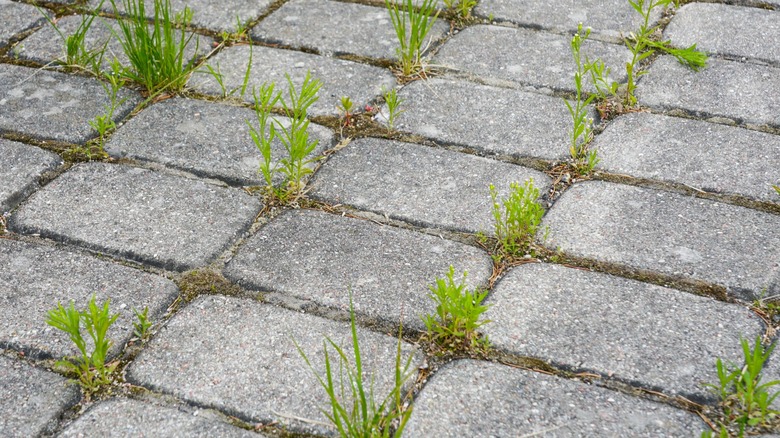
Grass and weeds love to pop out in the cracks between patio stones, and the wider the cracks, the more they like it. If you leave them alone, they'll overgrow the pavers, and getting rid of them before that happens means manually pulling them, using a chemical to kill them, or blasting them away with a pressure washer. A far better approach is to keep pesky weeds from growing in the first place, and you can do this by sealing the pavers and the sand between them. Besides hardening the sand to create a weed-resistant barrier, a sealant provides a protective waterproofing barrier for the pavers that helps them resist stains.
Sealing isn't the only simple, lasting fix for weed growth between pavers. Another option is to sweep polymeric sand into the gaps. Unlike regular sand, polymeric sand hardens when it gets wet, creating a solid barrier that is still flexible enough for the pavers to move. Polymeric sand won't be effective, though, unless you remove all the existing sand first to make room for it. Sealing doesn't require this.
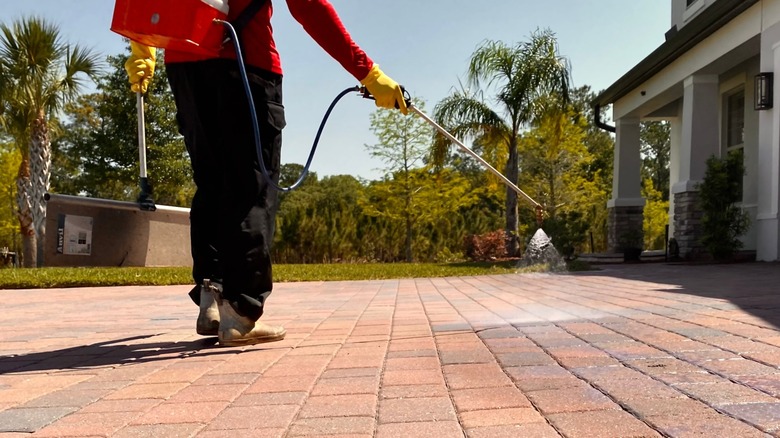
A water-based concrete sealant like Foundation Armor Concrete Sealer is suitable for concrete and other porous materials, but if you have non-porous stone pavers, you're better off with a product like Rain Guard Stone Sealer. Both are water-based and easy to use, and although you could use a roller to apply them, they will penetrate the sand more evenly if you spray them with a garden sprayer.
How to seal pavers to prevent grass and weeds from growing
Before you apply a sealer, you have to remove the grass that's already growing. Pulling it out using simple tools, like a screwdriver or FITOOL Patio Weeder, is an affordable way to kill grass growing between patio bricks and pavers, and it's the least problematic. Chemicals like bleach will kill grass, but it takes time for it to die, and you have to pull out what remains anyway. Pressure washing is quick, but unless you hold the sprayer at a shallow angle and use low pressure, it will blow out the sand and could disfigure the pavers, so it isn't recommended.
Since you're going to seal the pavers as well as the sand, you need to clean them to avoid sealing in dirt and stains. Scrub them down with soapy water, then rinse thoroughly with a garden hose. If you need a stronger cleaner, use one recommended for the type of pavers you have. This method will get rid of efflorescence, most oil stains, and mold. It's a lot of work, but this should be the last time you have to do it.
Once the pavers have dried out, apply the sealer with a HDX Multi-Purpose Lawn and Garden Sprayer. Cover all the pavers, as well as the sand, thoroughly and evenly. Let the sealer dry for the recommended time before applying a second coat (if you want), then stay off the pavers for 24 hours.