

Why Wasps Keep Coming To Your Porch And How To Get Rid Of Them

We may receive a commission on purchases made from links.
You're not the only one who loves hanging out on a porch in the warm weather — plenty of insects do too, and some of them are of the stinging variety. We're not talking about bees, which prefer the garden for the most part, but wasps. These unwelcome bugs can ruin your day with a painful sting, and if you're allergic to the venom, they can be outright dangerous. They may be living in the rafters, behind the siding, or under the floor boards, or they may just be dropping by. And they're probably there for two main reasons: food and shelter.
Some 30,000 species of wasps and hornets exist worldwide. No matter what kind they are, they're all interested in your lunch – particularly sweet drinks and desserts, and protein-rich foods like meat. One species, the yellowjacket, is so aggressive about eating protein that people sometimes refer to them as meat bees. Whatever they're planning on eating, however, the presence of wasps and hornets on your porch probably indicates that there's a nest somewhere nearby — but where?
How to find and identify a wasp nest
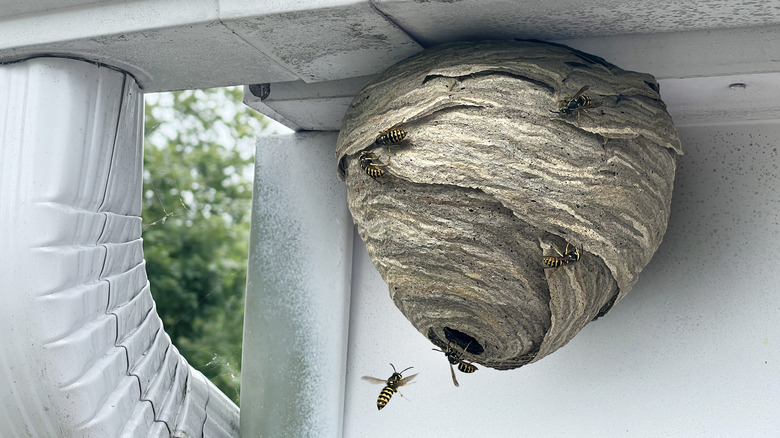
If you see a wasp or hornet flying by, watch where it goes, because it might help you locate the nest. The two wasp species most likely to bother you on the porch are yellowjackets and paper wasps, the latter of which is the less aggressive kind. Both have markings similar to bees, so the best way to tell them apart is by their legs. Paper wasps dangle their legs below them when they fly, while yellowjackets do not. You may also find hornets near your porch. The bald-faced hornet, which is actually a type of yellowjacket, also has bee-like markings, as does the European hornet. Both tend to be larger than wasps.
Bald-faced hornets make very large nests — at least as large as a basketball — which often dangle from tree branches or rafters. Paper wasp nests look like honeycombs, with multiple entryways, while yellowjacket nests have only a single opening. A yellowjacket nest is usually located underground or inside a wall cavity, so it can be hard to spot — but if it's active, you'll often see the wasps swarming around the opening.
How to get rid of a wasp nest
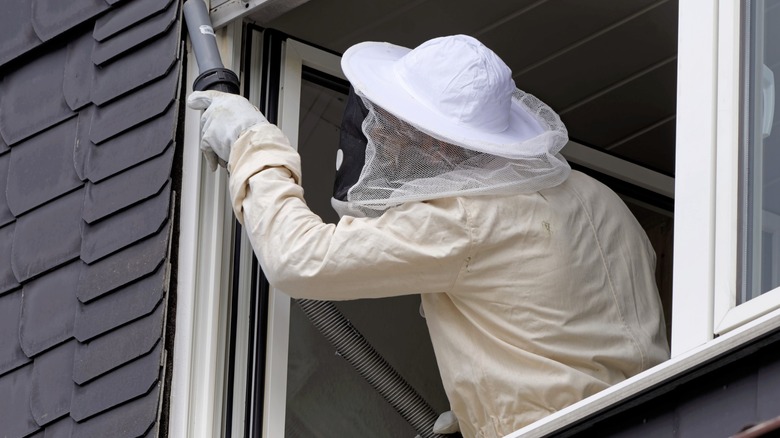
Once you've tracked down a wasp nest, the safest thing to do is probably to leave it alone until winter, when you can remove it after the wasps abandon it. Getting rid of a wasp or hornet nest in summer can be dangerous, as they will aggressively defend it by swarming and stinging repeatedly. Wasps typically vacate their nests before winter, however, and they don't reuse them the following spring. So, rather than risk injury, it's better to give them no reason to come by the porch. Remove or cover any sweets, meat, juices, or other attractants, and keep your porch clear of food items — including pet food — when you're not there. You can also grow plants that will keep wasps out of your yard.
In some cases, you may need to remove the nest immediately. It could be situated in a place that's impossible for people to avoid, it could be a nuisance, or someone in your house could be allergic to the stings. If you have to remove it in summer, when the colony is most active, it's best to hire a pro. If you do it yourself, make sure to wear protective clothing and work at night.
You can find several sprays on the market with long-range nozzles that allow you to stand several feet away from the nest. Ace Wasp and Hornet Killer is an effective one. Spray the entire nest, paying particular attention to the openings. Continue to watch the nest for activity, and if you see any, repeat the treatment. You may have to do this several times to finish the job.