

What To Do If You Find A Snake Hole In Your Yard
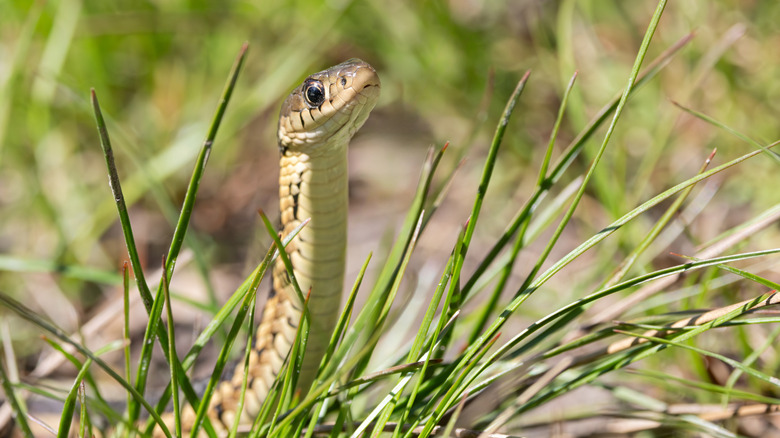
Numerous types of wildlife can dig around your property, including rodents, groundhogs, raccoons, skunks, and even feral cats. You might also wonder if there's a snake living in a hole you stumble upon in your yard. In most cases, you can let any possible snake alone without taking further action. Whether you're concerned for your family's safety over venomous snakes, or are ophidiophobic, there are valid reasons you may want to determine if a questionable hole in the ground currently belongs to a snake. If this is indeed the case, your next course of action could involve filling in the hole or calling an expert for professional removal services. (Never, ever attempt to stick your hand inside any questionable hole in your yard!)
First, it's important to note that snakes cannot dig holes themselves, but will instead take over and occupy holes created by other animals for hibernation purposes. So if you're trying to determine whether the holes in your yard are from snakes or squirrels, for example, know that it's possible for a snake to use a hole previously dug by a squirrel. While the only surefire way to identify a snake hole is to witness one of these reptiles slither in or out of it, seeing snake skin or droppings can be other signs that the hole might belong to a snake. Snake poop tends to look like large, dark brown tubes that may have a white chalk-like substances on the ends. An unobstructed entrance can also indicate a snake may have slithered around the area recently, especially if the outer edges are smooth rather than jagged from digging motions belonging to another animal.
What to do about a confirmed snake hole in your yard
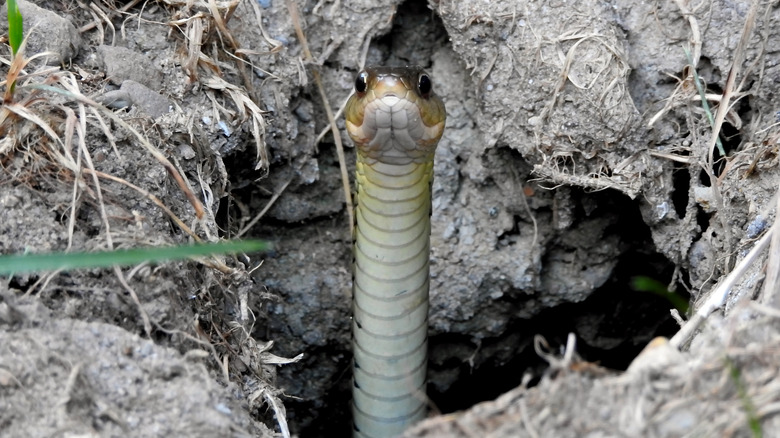
In a perfect world, you and snakes around your yard can go about your separate lives without harm to one another. The story may be different when you have curious pets and children, or if you're dealing with possible venomous snakes. A snake hole can technically be filled with dirt as a deterrent, or even something more solid such as a piece of wood or a rock. However, this can prove unsafe unless you've seen the snake and are perfectly sure it is non-venomous.
If the problem around your yard is out of control and you need to get rid of snakes, be sure to first read up on the laws in your state about how to handle them. The physical removal of problem snakes is really best left in the hands (or snake tongs) of a pest control professional. They will also be able to properly identify the snake and handle their relocation, when warranted.
It's also good to prevent snake infestations as best as you can. No snake deterrent is 100% guaranteed, but you can focus on three main areas for best success: food, shelter, and water sources. Removing these items can make your yard less enticing for snakes. Clean up any items on the ground that might attract rodents, dump out any accumulated water in buckets, children's toys, and empty planters, and remove debris piles such as leaves, chopped wood, and grass clippings. If snakes are a recurring problem around your yard, consider removing tall ornamental grasses they like to hide in and instead add plants with possible snake-repelling effects.