

Say Goodbye To Grass: This Low-Maintenance Swap Fills Your Yard With Color & Pollinators
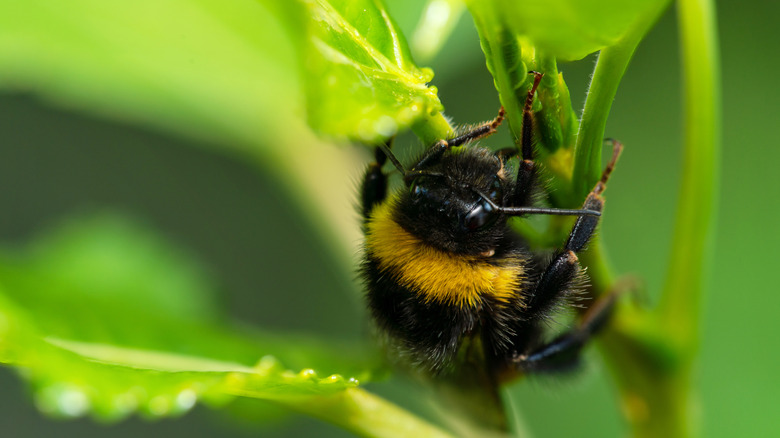
Have you ever been out walking on a wooded trail when suddenly the trees give way to a beautiful meadow that's popping with colorful wildflowers and buzzing with thousands of pollinators? It's an idyllic scene. So, what if I told you that you could do the exact same thing to your own yard? If you're tired of keeping up your lawn and want to ditch grass for good, transforming it into a wildflower meadow is a low-maintenance swap that is going to give you a colorful, pollinator-friendly yard.
I've helped plant two wildflower meadows: one at a friend's property in northern New Hampshire, and another at my wife's grandparents' home on the coast of Maine. The latter covered about three acres and was magnificent in full summer bloom. It was filled with all sorts of flowers that help pollinators do their jobs, such as lupines (Lupinus spp.) and bee balm (Monarda spp.). We mowed paths to protect the flowers, and cut back the meadow once a year before winter.
While you may not have that kind of space, you can still transform your own yard into a wildflower haven. Check your local and HOA ordinances regarding lawns before you get started. Also, once it's grown, you can't treat your meadow like a regular lawn. Mow walking paths or create ways around the meadow so as not to damage the delicate wildflowers by breaking them or compacting the soil, which could hinder future growth.
How to plant a wildflower meadow
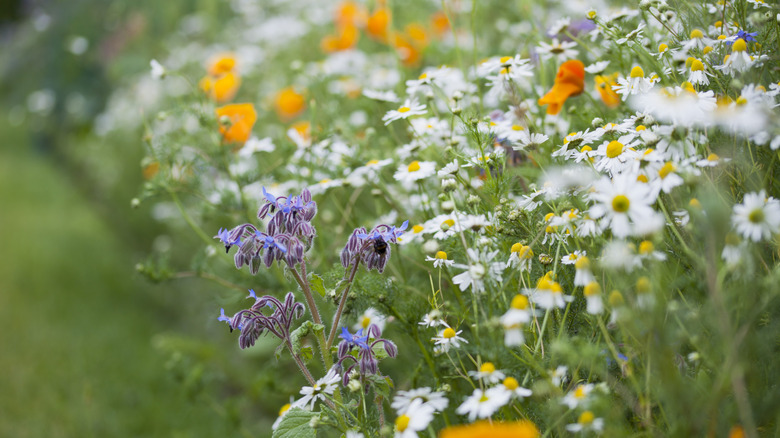
When it comes to choosing flowers for your wildflower meadow, there are a ton of stunning plants that will attract butterflies, hummingbirds, and bees. Companies like American Meadows offer wildflower seeds catered to your region and growing conditions. Their mixes include some wonderful self-seeding flowers you plant once and enjoy for years, including black-eyed Susan (Rudbeckia hirta) and coneflowers (Echinacea spp.).
Now, growing a wildflower meadow is not simply a matter of scattering your new seeds over the existing lawn and hoping they will grow. You will need to remove the existing turf from your yard in order to expose the soil underneath. Depending on how large an area you want to turn into meadow, this could take some time. For perspective, the acre and a half meadow we planted in New Hampshire took a whole day with a plow attached to a tractor. A less intensive method would be to sheet mulch your lawn with several layers of cardboard to kill the grass and leave you with bare soil.
Next, sow your wildflower seeds. Don't add any additional fertilizer, because the wildflowers actually prefer poorer or low-fertile soils. Set the seeds in the soil by tamping them down with your feet. Water the area consistently for the first two weeks. After good germination, leave the flowers to do their thing. In about six weeks to two months, you should have a thriving meadow.