

The WD-40 Trick You Need Before Mowing Your Lawn
We may receive a commission on purchases made from links.
Spring brings warm weather and lots of rain, and grass just loves that, so it can easily get super long in no time. If you're busy with other things and don't get out there early to mow it, by the time you do make it, your mower has to cut its way through a dense, often wet ground cover. Accumulated grass cuttings cling to the blade, reducing its ability to cut and causing rust that dulls it. Fortunately, you can mitigate this problem with a can of WD-40. Simply spray it on the underside of the deck and the blades before each mowing session.
This spray lubricant contains mineral oil, but a far larger percentage of the formula consists of aliphatic hydrocarbons, which reduce the viscosity of the oil and help it seep into crevices. The hydrocarbons work immediately on the existing rust on your lawn mower blades, while the mineral oil works long-term to prevent new rust from forming.
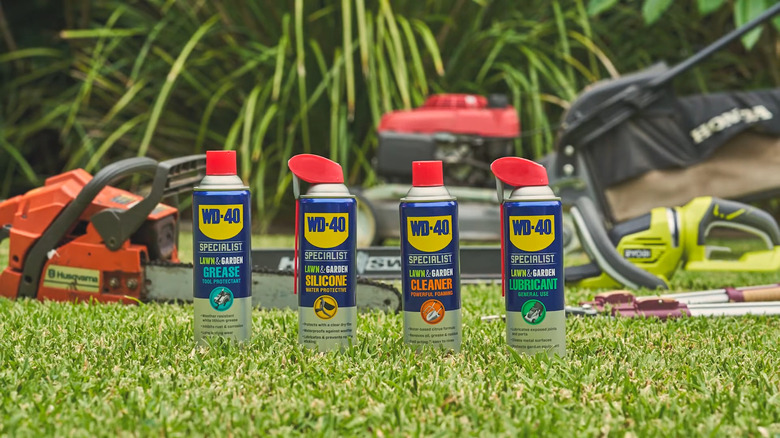
Because mineral oil is a lubricant, this simple lawn mower maintenance trick also helps the blades shed grass clippings. Less grass will stick to the blades, and it will be easier to remove. The all-purpose formula (which you probably already have) is effective, but you'll get even longer-lasting protection if you use WD-40 Specialist Water-Resistant Silicone Lubricant.
How to clean your blades and apply WD-40
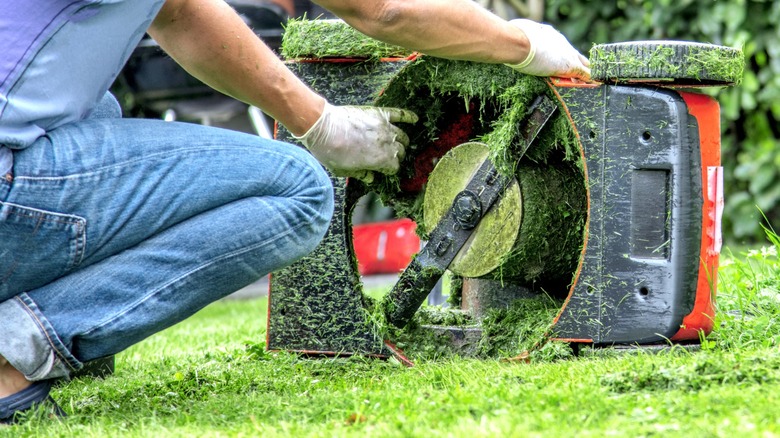
All grass has some moisture in it, so even if you're kind to your mower by never mowing wet grass, you'll still have to remove cuttings from underneath the deck and from the blades from time to time. After that, a treatment with WD-40 will reduce the amount that accumulates and make the next cleaning easier.
Begin cleaning by disabling the mower to prevent an accidental start-up. If you have a gas mower, disconnect the spark plug and unplug your corded mower. If you have a cordless model, remove the battery. Turn the mower on its side, making sure the fuel tank on your gas mower faces up to avoid leaks. Use a trowel or scraper to remove the bulk of the cuttings from the underside of the deck and the blade. Then, get a brush and scrub the surfaces as clean as you can. The less grass you leave on these surfaces, the better the WD-40 will be able to penetrate.
Spray WD-40 liberally on both sides of the blade and the undercarriage. If you get any on your hands, just wash it off with soap and water. You won't need the straw that comes with the can; you'll get better coverage without it. Give the solvents about 15 to 20 minutes to evaporate and leave a thin oil coating behind, then turn the machine upright and get mowing. Still have some spray left? There are many other handy ways to use a can of WD-40 in your yard and garden, including lubricating your lawn mower wheels.