

The Cleaner Alternative To Paper Towels That's A No-Brainer For Homeowners
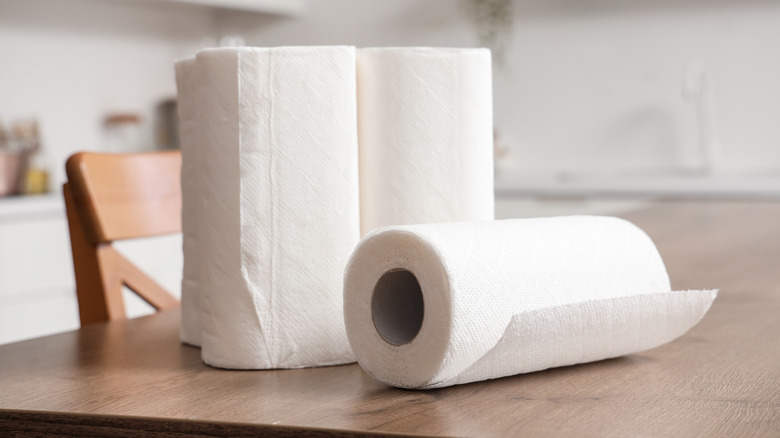
Paper towels sure do feel like a household essential. After all, they're so easy to reach for — just tear off a roll and perform a quick cleanup when spills or sticky messes happen, and you can toss them in the trash when you're done wiping up. But there's an alternative you can switch to that's cheaper, reusable, eco-friendly, and lasts longer. That alternative is cloth towels. From microfiber cloths to washcloths to thin, paper towel-like cloths, there are a lot of reusable paper towel alternatives that are just as easy to reach for and clean with. And instead of creating waste, you can reuse them again and again with a simple run through the wash.
For homeowners who are already tossing plenty of loads of laundry into their washing machine, it's kind of a no-brainer. You can stop racing through single-use paper towel rolls and lean on a greener alternative. Switching from paper towels to cloth alternatives can help reduce your ecological footprint (and how much trash you're producing), and it can also play a role in preserving trees, energy, and water used in the manufacturing process. Plus, making the switch from paper towels to cloth towels can add up to serious savings for you. With a pack of 50 microfiber cloths priced as low as a few cents per towel (or $9.98 in total), it isn't an expensive swap to make. And since Americans spend approximately $131 on paper goods like paper towels annually, per data from 2023 to 2024, your one-time investment in cloth alternatives can really pay off as you reuse them.
How to switch from paper towels to reusable cloth towels

If you're ready to make cleaning up at home a more sustainable — and cheaper — process, you have a lot of options. There are many reusable alternatives to one-and-done disposable paper towels, and different options are best-suited for different jobs. Swedish dishcloths, for example, are spongelike biodegradable cloths that can absorb up to 20 times their weight, making them an excellent option for wiping up spills and wet surfaces. Similarly, you can also switch to thin reusable paper towels made out of bamboo, which are soft, absorbent, and can be washed by hand or machine before your next use. These are also handy for wiping up liquids and spot-cleaning.
Two of the most common and versatile options are microfiber cloths and cotton or cotton-blend cloths. Microfiber cloths are an alternative you can use pretty much anywhere (including as a Swiffer hack when you're out of refills). Made from synthetic fibers, they're lint-free and gentle enough to clean scratch-prone surfaces, but highly absorbent and quick-drying, too, so they work for dusting, wiping up spills, or cleaning surfaces. Cotton cloths, which can come in 100 percent cotton or blends like soft-to-the-touch cotton flannel, can pick up dust, debris, and general dirt while also offering some absorbency.
And lastly, you can always rely on another familiar kitchen staple: Your dish towels. Larger than most paper towel alternatives, dish towels are often reached for to dry off hands, perform quick wipe-downs or cleanups as you cook, or really any other messy task at hand. They usually have some level of absorbency.
Keeping reusable paper towel alternatives fresh and clean

Worried about the cleanliness of any kind of reusable alternative to disposable paper towels? While paper towels are easy to throw out when dirty, making the switch to most sustainable alternatives doesn't have to make the act of cleaning up even messier. In general, with the exception of Swedish dishcloths (which should be thrown out after about six months or 200 uses, depending on your usage), you will need to wash any paper towel alternative you choose. How often you should wash your kitchen and cleaning towels will determine just how clean the switch from disposable paper towels to cloth versions is.
However, the exact washing schedule for your paper towel replacements will ultimately depend on how you're using your cloth towels. If you're using cloths or towels to wipe up surfaces or items like food (meat or flour in particular), you'll need to wash them more frequently. But in general, it's recommended that you wash your cloth towels every three to five days to ensure they're not harboring bacteria or creating an environment in which it can thrive.
Keep the frequency of use and dampness in mind, too. Cloths or reusable paper towels that you're using repeatedly throughout the day should be washed daily; if the cloths get damp, you should also wash them after each use. The more regularly you wash your paper towel alternatives, the more they'll be a cleaner and very similar swap for single-use paper towels.