

Forget Basic Bird Seed: There's A Better Way To Attract Bluebirds To Your Yard
We may receive a commission on purchases made from links.
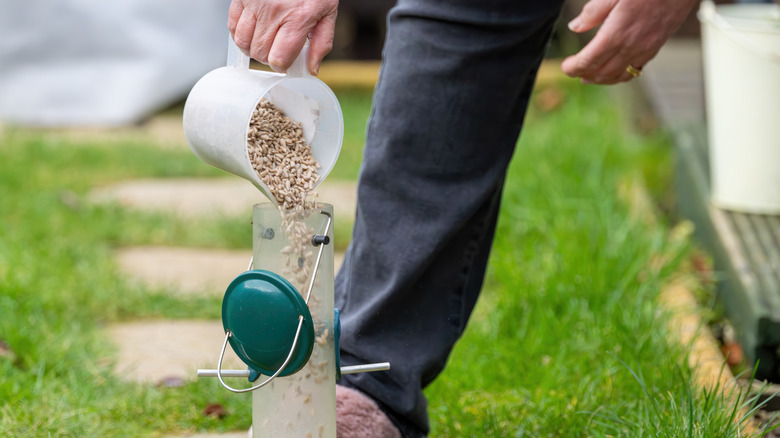
Of the more than 800 types of birds that call North America home, there's admittedly something special about the bluebird. If you're like many backyard bird enthusiasts, seeing a vibrant blue spot on your fence or nearby tree can be exciting. To that end, it's no surprise that bluebirds symbolize happiness, as noted by the Minnesota Department of Natural Resources. To help attract these songbirds, you might dutifully put up your seed feeders in an attempt to see bluebirds up close, only to get discouraged when they keep their distance. Changing out the seed may do little good in this regard, either. The problem isn't birdseed gone bad — it's the fact that bluebirds prefer eating insects and fruits. If you want to actively attract these beautiful birds to your yard, you might consider offering fruit sources as well as mealworms and waxworms during certain times of the year as adjuncts to your seed feeders.
While the eastern bluebird (Sialia sialis) is the most prevalent type of bluebird species in the U.S., there are also two others to consider: the mountain bluebird and western bluebird. Each is named after its primary geographic location, though the eastern bluebird's reach expands northward to southern Canada, and even westward towards Colorado. Regardless of where you live in the U.S., all three types of bluebirds have similar dietary requirements that consist of higher protein needs during nesting season and more fat and carbohydrates during the winter.
Tips for offering mealworms and waxworms to bluebirds
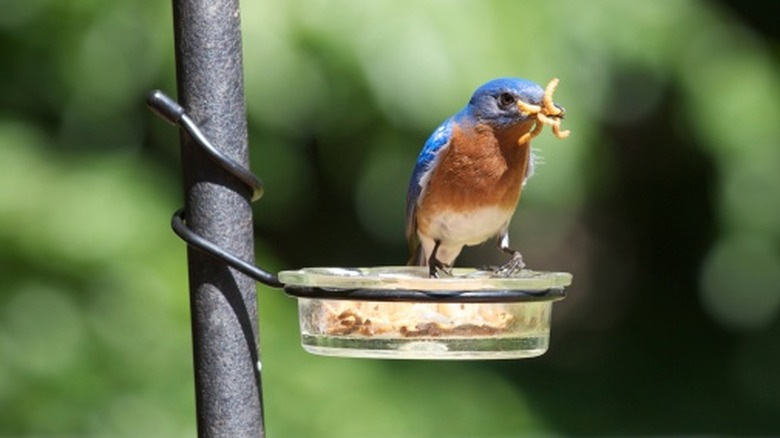
During nesting season, bluebirds focus on getting more protein-rich sources of food to help support themselves and their young. (Depending on where you live, nesting season may begin in late February or end in September!). While they will certainly still target any live insects in your yard, you can supplement their diets by offering them mealworms. Despite their name, mealworms are actually darkling beetle larvae. They are especially important for the birds' young during nesting season. As bluebirds start feeding on mealworms, you may also see other types of birds take notice as well, including woodpeckers, mockingbirds, and robins flocking to your yard. While you might be eager to attract bluebirds to your yard, it's crucial that you offer mealworms in moderation. Bluebirds do need a lot of protein, but consuming too many of larvae can increase the risk of nutritional deficiencies. To that end, the North American Bluebird Society recommends about 100 mealworms per day for a pair of bluebirds and their young.
While perhaps not as common as mealworms, some people also feed bluebirds waxworms. These are also larvae, which belong to wax moths. They are not as protein-rich as mealworms, and are instead good sources of fat. When providing bluebirds with either mealworms or waxworms, it's best to use a feeder with trays or dishes to keep them in place, such as this Jacobi Jayne Bluebird Mealworm Feeder. Also know that bluebirds prefer live insects — not freeze-dried versions. You can find these at a local bird or wildlife supply store, pet store, and even online.
Provide bluebirds sources of fruit to round out their diets
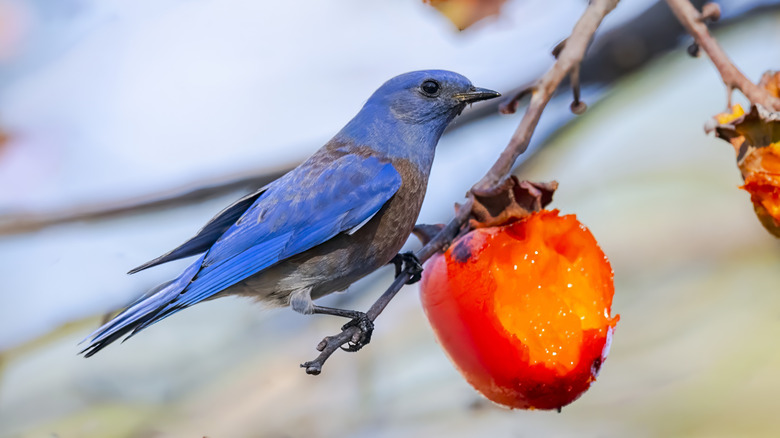
Bluebirds will eat a variety of insects from around your yard, but you may also be able to help support their entire dietary needs by planting native berries and fruit trees in your landscape. Berry bushes are especially important for bluebirds during the winter, as these types of plants can provide the birds with both food and shelter. Consider adding native plants with berries these birds might like, such as blueberry, elderberry, and flowering dogwood. Bluebirds are especially reliant on these types of non-insect food sources outside of nesting season, and they can be considered among the foolproof ways to attract birds without a feeder.
If you're interested in offering bluebirds fruit while you're waiting for native plants to grow, you can consider offering fresh bits on feeders. Just make sure you keep the fruit separate from any insect larvae or seeds you wish to offer them, too. Avoid attracting pests and other wildlife by adding a few pieces at a time, and be sure to discard any old fruit bits at the end of the day. Fresh fruits are best, but you may be able to moisten unsweetened dried fruit pieces, too. Some of their favorites include blueberries, currants, and raisins.
Aside from providing bluebirds with the foods they love, it's also important to avoid things that can harm them. Like other types of songbirds, bluebirds are particularly vulnerable to harm from outdoor cats as well as the use of pesticides in yards. Chemical insect control is especially detrimental during nesting season should a nestling be fed an insect that was exposed to pesticides.