

The One Red Flower Hummingbirds Can't Resist (And It's Striking Next To A Patio)
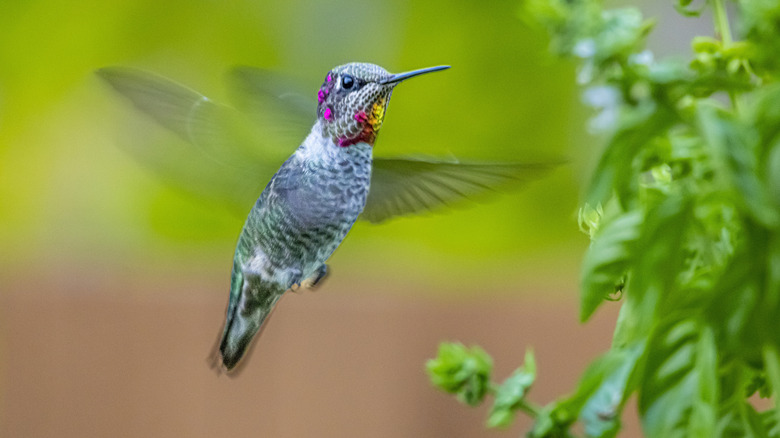
There are plenty of benefits to starting a hummingbird garden. After all, hummingbirds are beautiful pollinators that can help keep pest populations in your garden down. The flowers that attract them are also a sight to behold. If you need a new addition to your garden, you should consider planting red yucca (Hesperaloe parviflora). It's also sometimes called redflower false yucca, as it isn't actually a type of yucca. Don't worry — the other part of its common name is correct. This plant grows spectacular red flowers that hummingbirds love.
The flowers appear in mid to late summer, filling the tall flower spikes with blooms. Although this type is red, there are also varieties with yellow and pink flowers. If you've ever looked into colors that attract hummingbirds, you'll know that red is one of their favorite colors. However, bright yellow and pink will also draw them in, so don't be afraid to choose one of those varieties if you like them more. The flowers are tube-shaped, which is ideal for hummingbirds. Butterflies also enjoy red yucca flowers, so you can expect to see a mix of lovely pollinators.
Red yucca plants can grow several feet tall and wide, making them perfect statement plants. Add a few as accents near your sitting area so guests can enjoy them, or use them to form a border along one side to add a little bit of privacy to your patio. Just be sure not to plant them too close to the patio, or their long leaves might crowd your guests. Don't worry about the plants looking dull in winter, either. Your patio will look lovely all year round, as their evergreen leaves sometimes take on a slight green or purple tint when the weather turns cool.
How to grow a red yucca plant
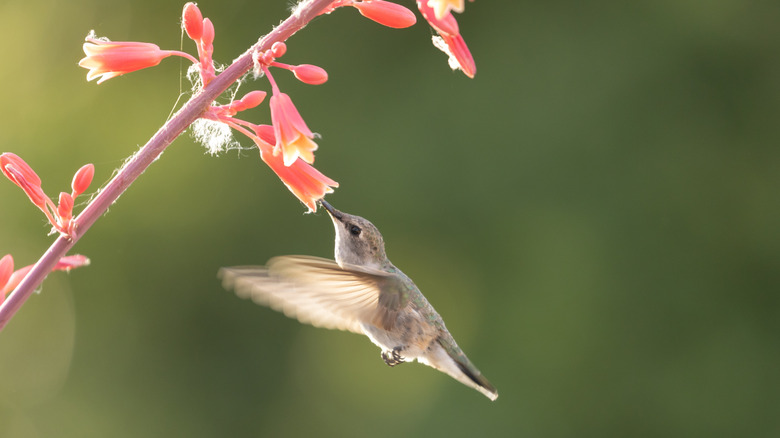
Red yucca is native to the Chihuahuan Desert, including parts of Texas and Mexico. As you might expect from a desert plant, it thrives in hot, dry climates. If you're trying to choose water-wise plants for your garden, red yucca is a great choice. However, this plant is also surprisingly versatile. It's remarkably cold hardy for desert plants, and can be grown outdoors as far north as zone 5. It can also tolerate some shade, but for the best flowers and healthiest plants, you should grow red yucca in full sun. When planting it, it's important to provide plenty of room. Make sure you have a few feet between the red yucca plant and the edge of your patio or any other plants and structures.
Once established, red yucca is fairly low-maintenance. Water it during long droughts or when the soil is completely dry, and try to avoid overwatering it. If left sitting in wet soil for too long, red yucca can develop root rot. Since you're growing it to attract hummingbirds, avoid using chemical pesticides or herbicides that might harm your feathered visitors. Red yucca typically doesn't have severe pest issues, so the plant should be fine without pesticides anyway. You may see some evidence of deer browsing on your red yucca, though. You also don't need to worry about fertilizer, as red yucca generally grows fine without it, even in poor soil.