

What To Do If You Find A Ground Wasp Nest In Your Yard
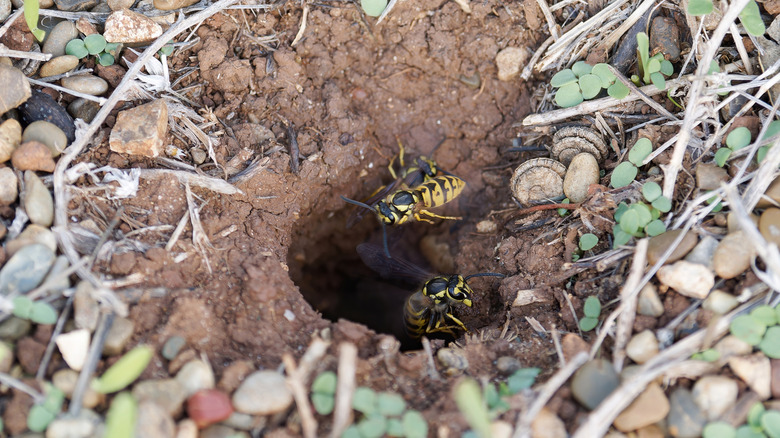
It's pretty unavoidable that your yard is going to be home to all sorts of insects. While many of these can be helpful additions to your space (like ladybugs or praying mantis), some are going to be unwanted guests that aren't just nuisances but can actually be harmful. One such example is wasps.
Unlike the bees that they can often be mistaken for, wasps are known for their aggressive behavior and their more painful stings. If you notice some of these insects in your yard and subsequently find a ground nest, you'll likely want to find a way to get rid of it. Ground nests are usually identified by loose dry dirt and nearby wasp activity.
Luckily, there are a variety of ways you can remove ground wasp nests if they are causing problems in your yard. These include insecticide sprays, which typically contain an ingredient like pyrethroid, and are sprayed from far distances to help keep you safe, as well as dust applications. There are also homemade, natural options, like using soapy water to drown the wasps. Before you jump to a solution, however, it's important to identify if it's really necessary to risk removing that nest.
Should you remove a ground wasp nest?
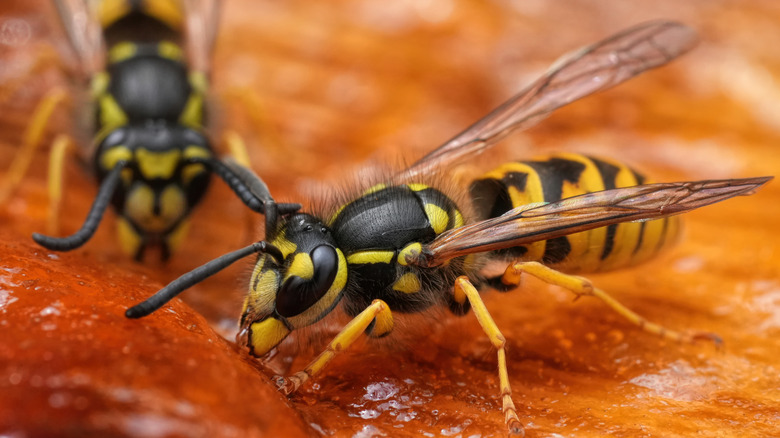
Once you've determined you have a ground wasp nest, you'll need to further distinguish which type of wasp is living there in order to follow the right course of action to protect yourself and your yard. There are tons of species of wasps, but when it comes to ground nests, you can narrow down your options to typically three: cicada killers, sand wasps, and yellowjackets.
Cicada killers may sound and look scary, but they're actually pretty harmless. They tend to be large, and nest in solitary groups, rather than a large colony nest. Males don't even have stingers, and females are not known to be aggressive unless physically threatened. If you have cicada killers, it's best to simply leave their nests alone. Similarly, sand wasps are quite relaxed for wasps and nonaggressive. They also likely won't be your ground nesters because, as their name implies, they prefer sandy ground, not soil.
Yellowjackets are social ground nesters and quite aggressive. They'll often attack at any perceived sign of disturbance to their nesting area, which can include things like the vibrations of your lawn mower or even footsteps. Their stings can be pretty painful, and they can sting more than once. These are the types of wasp nests you do not want to see in your yard, and they give you a good reason to move forward with considering removal.
How to remove a ground wasp nest
When you consider how to get rid of wasps like yellowjackets, timing matters. Yellowjackets do not reuse the same nest, so if they're discovered in late fall and are not in a high-traffic area, it's not a bad idea to let them die out on their own. Conversely, if you find them during the late summer when their nests are in full swing, you'll want to take extra caution with removal, as they can be more aggressive.
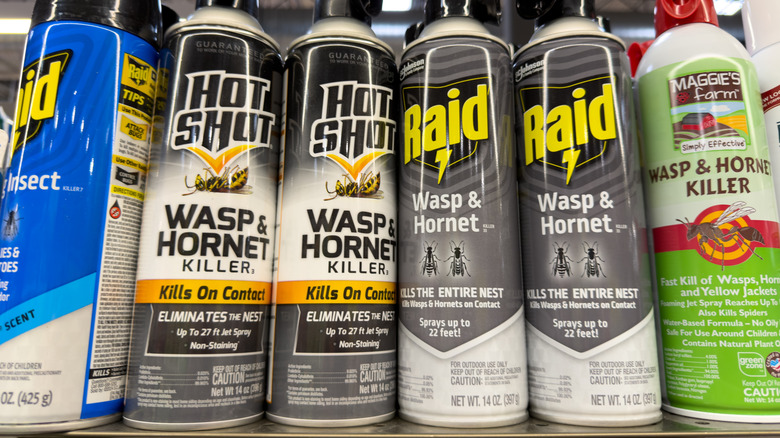
There are three main choices for removal: a tablespoon of dish soap and hot water in a hose spray bottle, insecticide spray, or insecticide dust. The sprays can be sprayed on the entrance to the nest while the dust is placed around the ground nest, attaches to the wasps' bodies, and then is carried deep into the nest, killing the wasps inside within a couple of days.
For all options, to safely get rid of a nest, make sure you do your removal at night so you avoid the wasps' most active time, and wear protective clothing, including gloves and a netted hat. When using a spray, stay a safe distance away, roughly 15 to 20 feet, to avoid any aggressive wasps flying around. Lastly, but most importantly, if you are allergic to wasp stings or concerned about removal in any way, it's absolutely your best bet to call the pros.