

13 Unexpected Things You Can Clean With A Pressure Washer
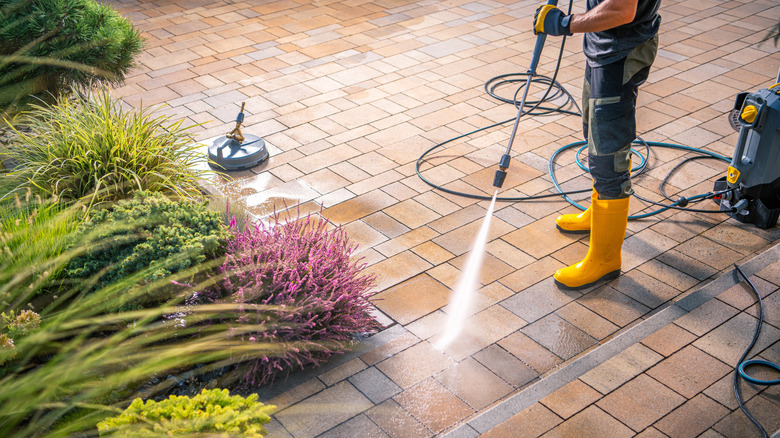
If you have surfaces and items around your home that could use a deep clean, you might want to try a different tool than your usual scrub brush or hose. A pressure washer could be a better choice for the job, especially if you need extra power for the task at hand. These power tools use high-pressure sprays of water to clean, and they're typically used outdoors to clean large areas like sidewalks, driveways, or decks and patios.
While they're kind of a heavy-duty cleaning solution, pressure washers can be surprisingly versatile, and they can take the hard work (or the hard scrubbing, at least) out of cleaning, particularly when you're dealing with stubborn substances like grease, wax, and rust. Pressure washers are effective cleaning tools because their high-pressure water spray has enough force to loosen dirt. The increased intensity of that spray lifts mildew and other types of grime, and it can speed up cleaning tasks to deliver results with less of a time and effort investment.
The usefulness of a pressure washer might surprise you, as they can clean not only large outdoor areas like decks, but also smaller items — and even some unexpected surfaces inside and outside of your home. If you're wondering how to put your pressure washer to use around the house, or you're thinking about buying one, these unexpected use cases just might convince you it's a deep cleaning tool you need.
Outdoor furniture
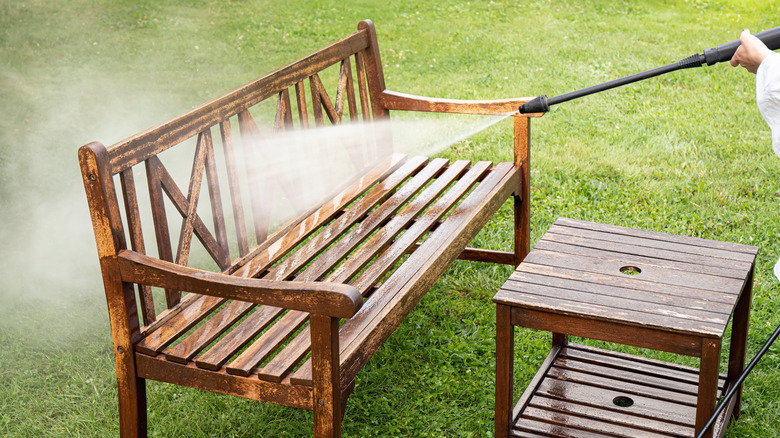
Outdoor furniture gets pretty dirty while sitting in your yard or on your deck or patio, but you can use a pressure washer to blast away any dirt, mud, or even stubborn surface-discoloring messes like algae.
Most outdoor furniture, including pieces made from wood, composite wood, metal, or plastic, can be cleaned safely with a pressure washer. Just keep in mind that furniture is likely to be more delicate than surfaces like, say, your concrete driveway, so you'll want to adjust your pressure washer's PSI to a light-duty setting when you're ready to start spraying.
Fences
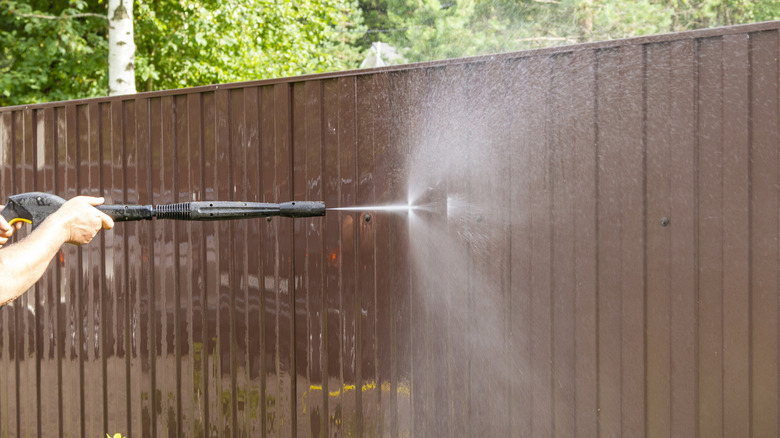
If the fences around your property are looking worse for the wear due to dirt, debris or even dirt-related discoloration, you can enlist your pressure washer to get them looking clean.
You can use a pressure washer to clean wood fences as well as metal and vinyl ones — but do make sure you're using the right pressure, or PSI. If you have soft wood fences, you'll want to stick with 500 to 800 PSI; for hardwood fences, you can go up to 1,300 PSI. Vinyl and metal can tolerate higher pressures of up to 2,000 and 2,300 PSI each.
Trash cans and recycling bins
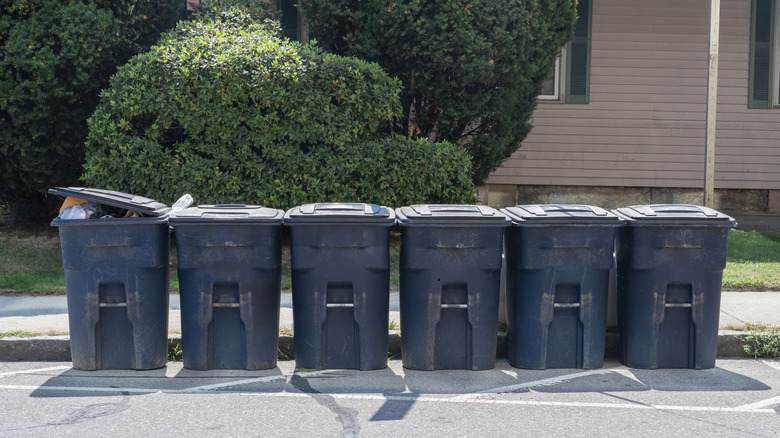
Let's be honest, no one wants to clean their outdoor trash cans — it's one smelly, dirty job, especially if you undertake it in warm weather. But at some point, your trash and recycling bins will be dirty enough that they need a clean.
Instead of getting in there with your hands and a scrub brush, a pressure washer can do the work for you. You can blast away trash and recycling residue with the spray of your pressure washer. When you're finished, simply tip your bins over and empty the water (and any leftovers) into a nearby drain.
Windows
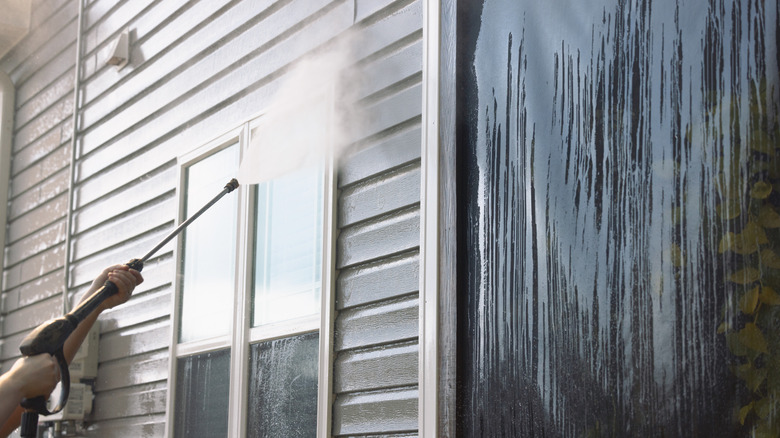
It's time to stop cleaning windows by hand with cloths, spray bottles, and squeegees, because you can actually use a pressure washer to clean your windows. Using a pressure washer can offer more reach to clean windows from top to bottom.
Now, it's important to keep in mind that high-pressure sprays can crack or otherwise damage window glass. So, when pressure washing your windows, only do so on the exterior — and make sure you choose a gentler wide-angle nozzle to reduce the risk of damage and spread water over a broader area, and put your machine's pressure on the lowest possible setting.
Rugs and door mats
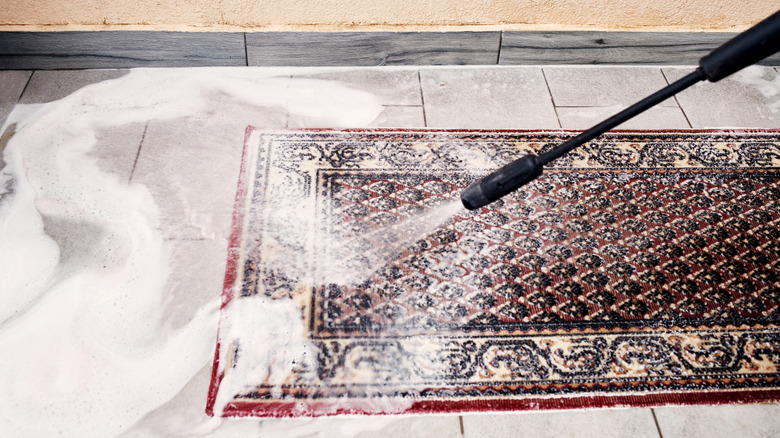
Your area rugs, entryway door mats, and outdoor rugs encounter a lot of foot traffic, and they can wind up looking quite dingy. But you don't need to scrub them; you can use a pressure washer to get into the rug fibers and spray away dirt and debris.
Outdoor rugs, which are typically made with synthetic fibers, tend be especially great pressure-washing candidates. To protect the more delicate fibers of your rugs and doormats, you'll want to stick with a lower pressure (aim for something under 1,600 PSI) and avoid pressure washing any that require special care, such as wool rugs.
Garage doors
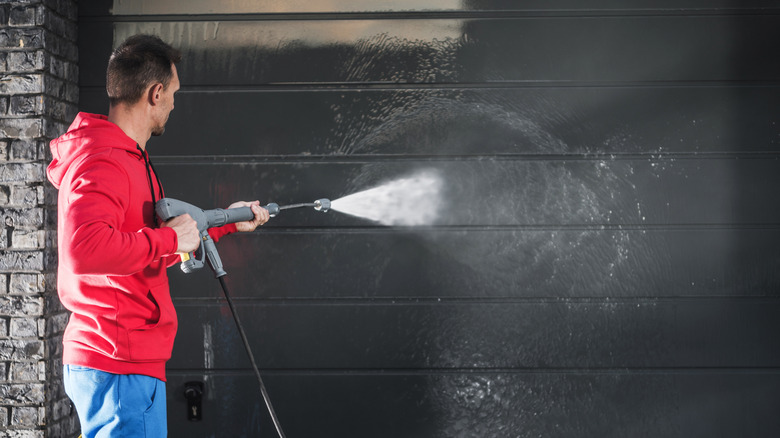
If your garage door is in need of some maintenance and looking worse for the wear, you can freshen it up and remove stubborn dirt with your pressure washer. And it's not just the exterior that can be quickly, effectively cleaned with this approach; it'll work on the inside of your door, too.
Just make sure you keep your pressure and nozzle choices on the gentle side; a very intense PSI or nozzle angle could harm the finish on your garage door. You'll also want to avoid pressure washing any rubber seals or components directly.
Garage floors
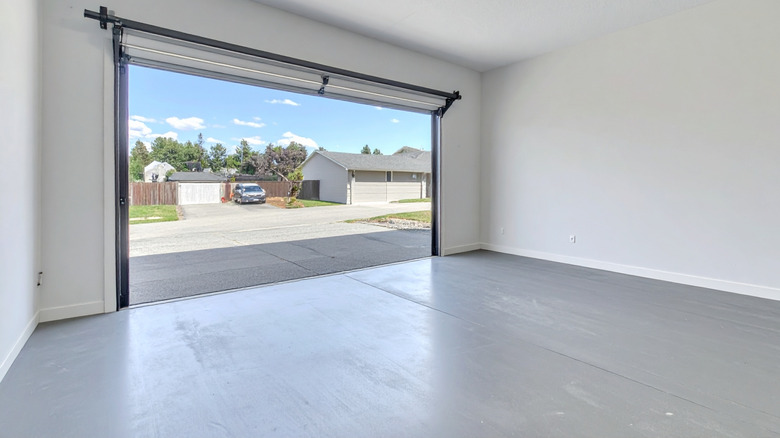
If you have concrete flooring in your garage, good news: You can put your pressure washer to work here, too. Just like a pressure washer can clean driveway and sidewalk concrete, it can loosen dirt that's sitting in this porous material, making it easy to flush away.
While concrete is usually tough enough to handle pressure washing, you may want to test out your chosen strength setting and nozzle choice in a small area before you clean your entire garage floor to ensure they'll get the job done damage-free.
Pool interiors
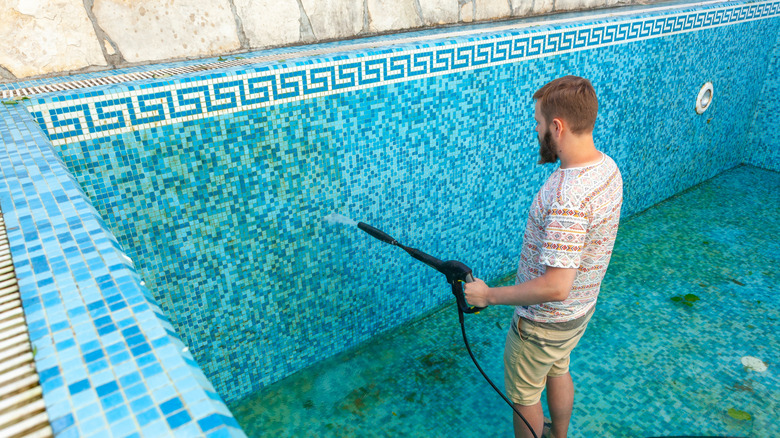
If your pool's interior is looking dirty or you have algae hanging around, a pressure washer can help you clean such a large area with minimal effort (and little to no scrubbing).
Just make sure you only use a pressure washer on an in-ground pool; odds are this tool's powerful water pressure will cause damage on more delicate above-ground pools. And exercise caution if you have a fiberglass in-ground pool, as this more delicate material can also be prone to damage under high-pressure sprays. Plaster and concrete pools should be perfectly safe to pressure wash.
Outdoor cushions and pillows
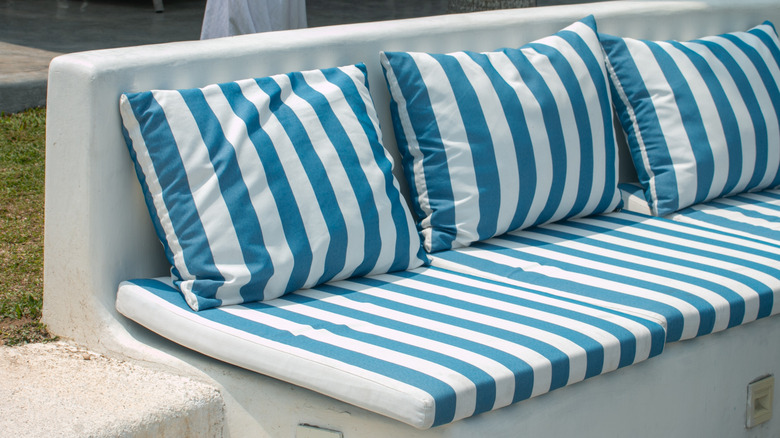
In addition to cleaning all of your outdoor furniture with your pressure washer, you can also use it to take dirty or even mold-covered outdoor cushions and pillows from unsightly to sparkling clean.
With a fabric-friendly cleaning solution in your pressure washer's soap-dispensing tank and a low-pressure setting, you can rinse all of your outdoor cushions and pillows with water from your device, then apply the cleaning solution, and rinse them clean. Just remember to give yourself and your cushions a little distance while pressure washing; you'll want to keep the nozzle at least 2 feet away from the fabric.
Kids' playsets
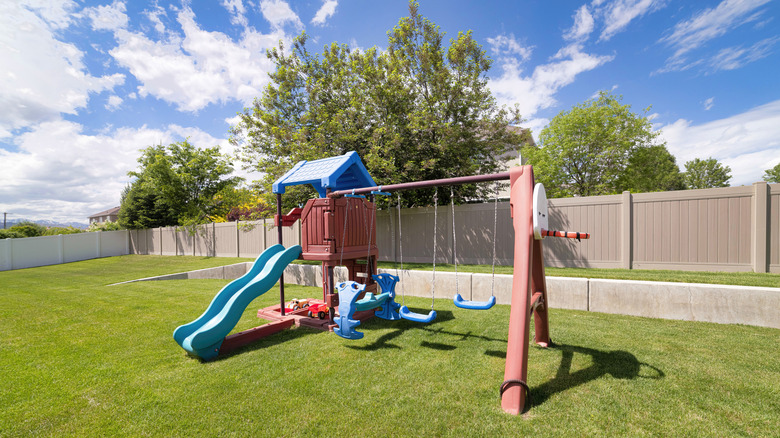
Playsets can get just as dirty as any other outdoor furniture or surfaces, and if you don't want your kids covered in dirt and debris, you'll want to give them a regular cleaning.
A pressure washer can make the process easier if you have a vinyl playset; using a medium-level PSI setting, you can spray away all of the dirt that's collected without scrubbing anything at all (though if you do have more stubborn stains, some scrubbing may be required). You may also be able to pressure wash wood playsets, but you'll want to keep the type of wood (soft or hard wood) in mind as well as any manufacturer's cleaning or care instructions.
Your home's siding
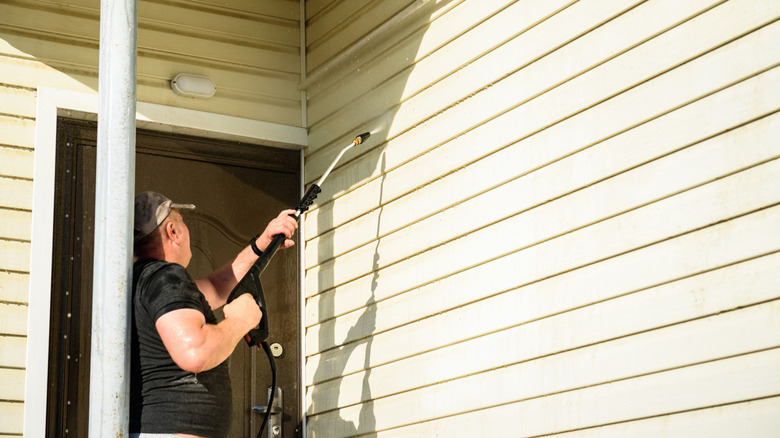
Unhappy with how dingy your home's siding looks? You can use a pressure washer to clean it — and its powerful spray will even be enough to eliminate common woes like mildew. Most types of siding can handle pressure washing, but you will need to adjust your device's PSI to suit different materials.
For example, brick and stone require a PSI of no more than 800, while stucco, aluminum, and soft wood siding can handle up to 1,500 PSI. Vinyl, the hardiest option when it comes to pressure washing, can handle up to 2,000 PSI.
Rakes, shovels, wheelbarrows, and other yard tools
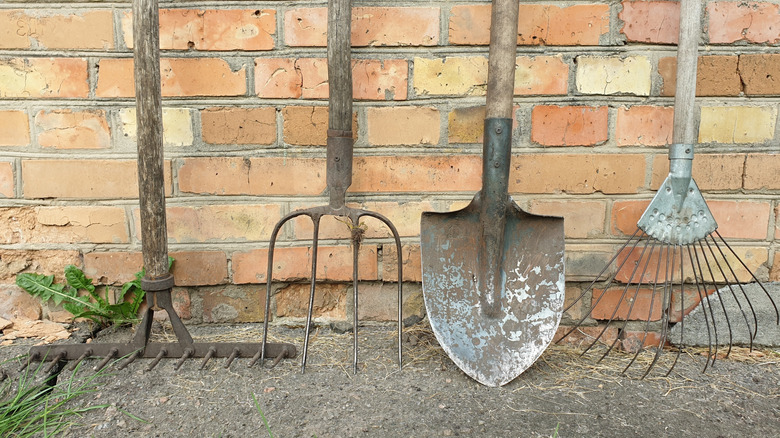
It's no secret that your commonly-used gardening tools like rakes, shovels, and even wheelbarrows get quite dirty over time. If you're tired of using them with caked-on dirt and debris, you can line all of your tools up and spray them clean with your pressure washer.
While pressure washing may not be enough to tackle more set-in issues like rust stains, it can make maintaining small and larger tools easier by eliminating the need to care for and clean each one individually.
Artificial turf
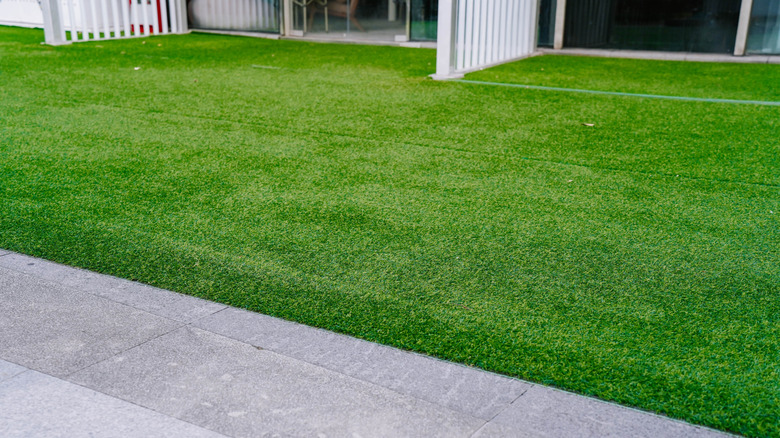
Want to quickly clean off your artificial turf or grass? If your turf was installed over concrete, you can do exactly that with your pressure washer.
Now, you don't want to turn your pressure washer on the highest possible PSI and get cleaning when you're working with artificial turf or grass. Rather, you'll want to take care to maintain the grass with a gentler setting designed for rinsing instead of hard and fast cleaning. Opt for a wide-spraying nozzle to reduce the intensity and spray at an angle, and give yourself at least 1 foot of distance between the pressure washer's nozzle and your turf to do the job carefully.