

What To Do If You Find A Baby Bird In Your Yard (And What Not To Do)
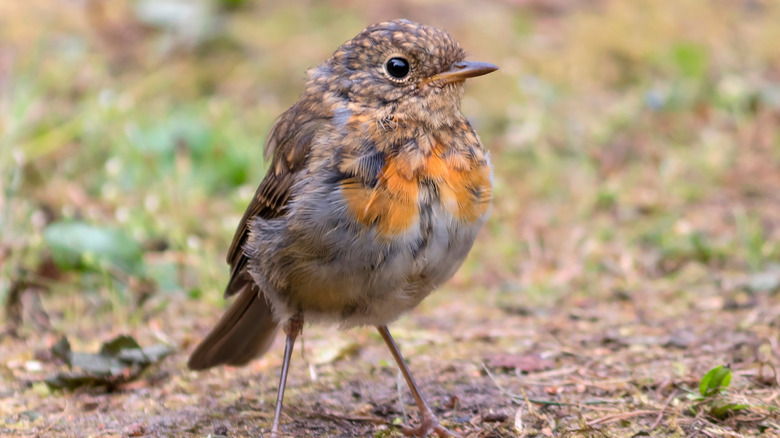
If you're a backyard bird enthusiast, spring is an exciting time. Not only is there an influx in overall bird activity, but this time of year also marks the beginning of nesting season. As such, you might already plan to put a bird feeder in your garden. While the exact timing varies by bird species, you can expect nesting activities any time from early spring through early fall. This means you might see signs of young birds at any point of this timeframe. One thing no one wants to see is a wayward baby bird in their yard. Your first instinct might be to help the poor young bird, but the rules for doing so depend on the age of the bird, whether a visible nest is around, and whether it is in any danger. Following these best practices just might help save your young avian friend without inadvertently causing more harm.
The first thing to do is to determine whether the newfound baby bird is a nestling or a fledgling. A nestling has very few feathers and is unable to fly or even fully open its eyes just yet. A fledgling, on the other hand, has more feathers and may be able to hop around on the ground and flap its wings. Due to the vulnerabilities of a nestling, you might consider returning the helpless bird to its nest. The case is a bit different with a fledgling. In these slightly older birds, consider keeping a watchful eye on them instead of picking them up. Chances are, they are slowly learning to fly and may be able to move on their own.
The best ways to help a baby bird based on their age
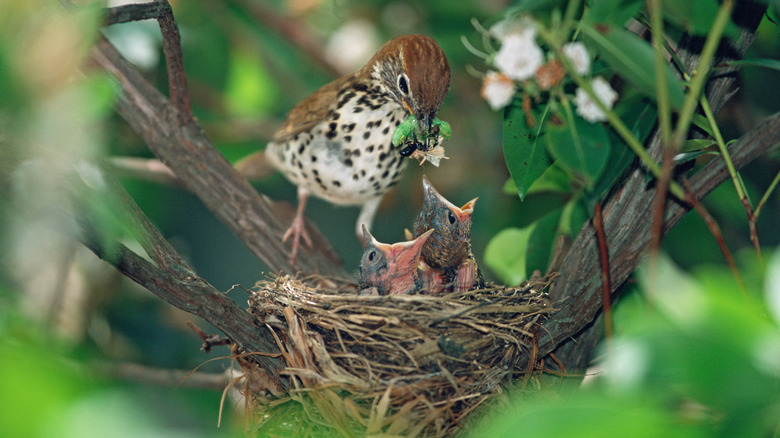
There are some other best practices to be aware of if you've found a nestling versus a fledgling in your yard. First, if you are absolutely certain the baby is a nestling and you cannot find the nest in your yard, try to move the bird underneath a nearby shrub or tree. This ensures the baby will have some shelter from any potential predators while it waits for its parents to find them. You can also create a makeshift nest out of grasses, mosses, or any other soft materials available to help keep the baby warm until its parents come back. Quickly back away and watch from a distance, or else you might make the parents too timid to return. The baby will likely make a lot of noise to alert its parents to its location in no time.
In the case of fledglings, it's important to give the baby birds adequate space so the parents can return to help them, if needed. Unless there are predators around, you should not be hovering over the bird, as this might deter it from attempting to utilize some of the life-saving skills its parents are likely teaching it (such as hopping or flying away). Another consideration is that it can take some time for the parents to return to the nest and realize their baby is missing, especially if they are out getting food. Furthermore, seeing a fledgling in your yard isn't always a red flag– it could in fact be out exploring and may return to its nest on its own.
When to call an expert for help with a baby bird
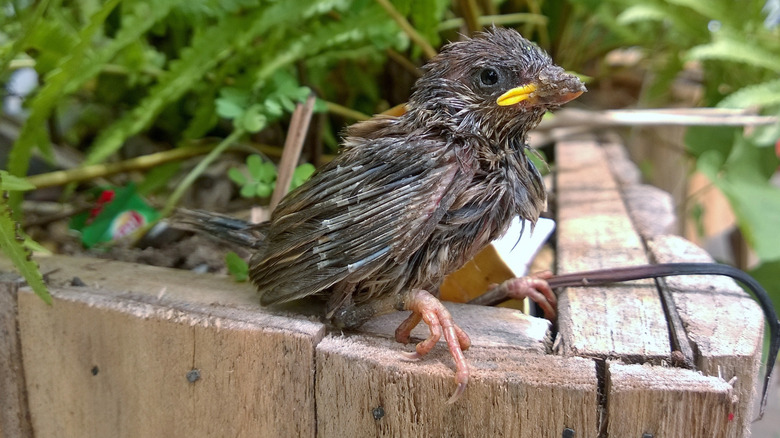
If no parent birds return to help their little one after about an hour, it's possible that something significant is preventing them from coming back to the nest and that the baby might now be an orphan. In such cases, you must call a wildlife rehabilitation expert for help. (Note that this is different from a professional wildlife removal expert.) They may also give you additional instructions while you wait for their arrival, such as providing shelter to keep the baby bird warm and safe from predators like cats. It's critical that you do not bring the bird indoors or attempt to give it food. Alternatively, they might ask that you transport the baby bird to a rehabilitation center yourself. Ideally, you should place it in a small shoebox as a makeshift carrier.
Another reason to call a wildlife rehabilitation expert for help is if you suspect the baby bird is seriously injured and no parents have come back. Never attempt to try to "save" a bird yourself. Not only is it illegal to possess the majority of wild birds, but the process of caring for a baby bird requires a lot of time and expertise. Furthermore, by depriving the baby bird of potential life-saving help from a rehabilitation center, the chances of mortality are greater.