

16 Fast-Growing Flowers To Plant In Spring For A Lush Garden In Half The Time
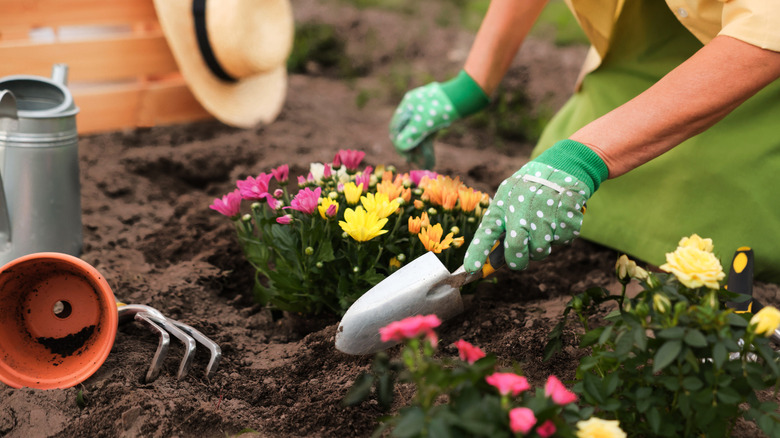
As winter fades and warming weather sets in, the minds of many turn toward gardening and colorful spring flowers. However, if you are just getting around to planting flowers this spring, you may be waiting awhile to see them bloom. Some popular varieties such as snapdragons take around 12 or so weeks to bloom when sown from seed. Others that should be planted in spring, like columbine, won't bloom until the following year. While such wait times may make it tempting to grab some nearly-ready-to-flower seedlings from your local nursery and plop them in the ground, there are some fast-growing flowers you can plant from seed in spring and have colorful blooms in half the time — or close to it.
Beyond just getting a splash of color in your yard sooner, there are viable reasons to want to see blooms sooner rather than later. For one, these spring flowers can attract birds and pollinators to your yard. They can also draw in a variety of beneficial insects that can help control pests in your garden and yard. With that in mind, there's actually a fairly extensive list of flower seeds to choose from that can yield blooms in as little as 6 weeks. Keep in mind, however, that different varieties and cultivars of the same type of flowers can have varying seed to flower times. Additionally, your location and the prevailing weather can also impact the length of time it takes your flowers to mature and bloom.
Alyssum
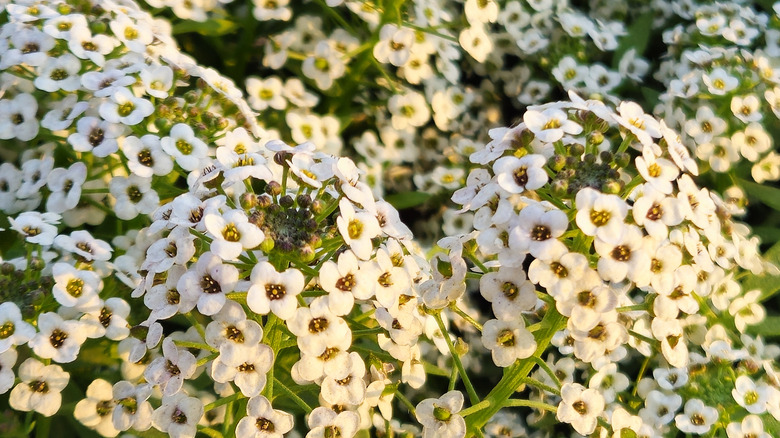
One of the fastest flowering plants when planted from seed is alyssum (Lobularia maritima), which typically sees blooms around 45 to 55 days after the seeds are planted. Also known as sweet alyssum, this native of the Mediterranean Coast can be grown in hardiness zones 5 – 9. Although 'Sweet alyssum' is the most common and fastest alyssum to bloom, other varieties such as 'Royal Carpet' can also be counted on to flower within 60 days. Alyssum does best in spots that get at least 6 hours of full sun each day and requires well-draining soil that stays slightly moist.
Nasturtium
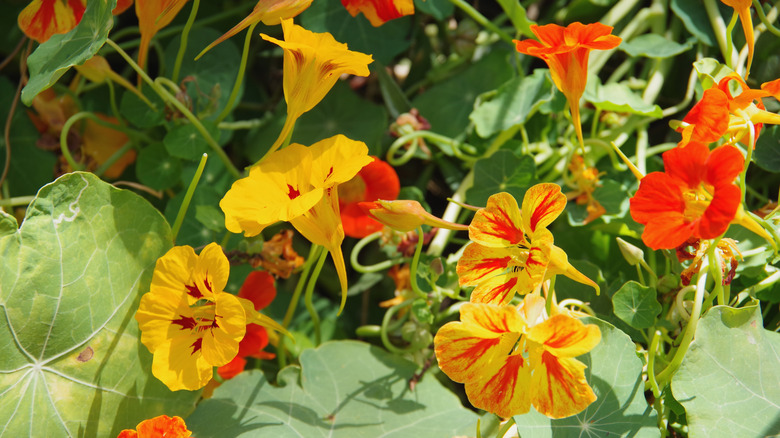
Another fast growing flower to plant in spring is nasturtium (Tropaeolum majus), which typically reveals its colorful blooms within 6 weeks. There are dozens of species of nasturtium, both full size and dwarf. However, all of them feature showy flowers that attract a variety of pollinators, including butterflies and hummingbirds. Growing nasturtium is relatively easy, as it is a low maintenance plant that does well in zones 2 to 11. It can handle either full sun or partial shade and prefers well-draining sandy or loamy soil. As a bonus, nasturtium leaves and blooms are edible!
Baby's breath
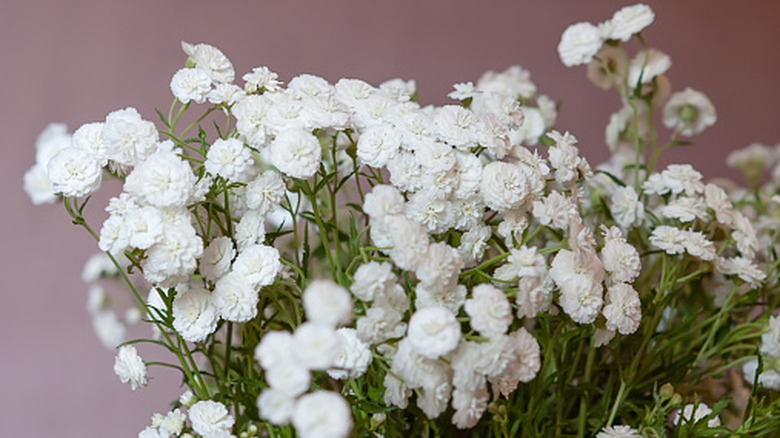
Baby's breath (Gypsophila paniculata) is known for its dainty white and pink flowers. It produces those blooms quite quickly, as well — usually within 45 to 60 days. Baby's breath can be grown in hardiness zones 3 through to 9, preferring sandy or loamy soil. This fast-growing flower can handle full sun or partial shade and is ideal for growing in containers or patio gardens, as it typically only grows to a couple of feet in both height and width. This low maintenance plant is drought resistant and only requires occasional watering.
Marigold
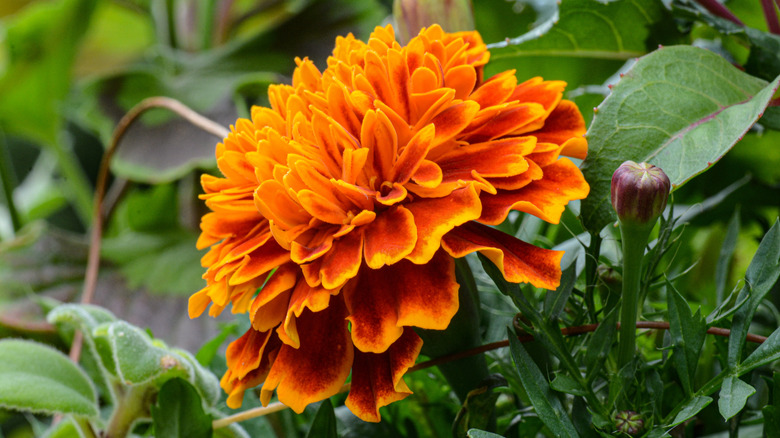
Although they aren't quite a quick as the flowers above, marigolds (Tagetes spp.) still go from seed to flower pretty rapidly, with most varieties taking around 50 to 60 days, although some can take slightly longer. You can grow marigolds in zones 2 –to11. They prefer full sun, but aren't picky about soil type, doing equally as well in sandy, loamy, clay, or high organic matter ground. In fact, marigolds are self-seeding plants that actually improve the soil. Marigolds can also be grown indoors. When planted outside, they attract a variety of pollinators, as well as songbirds that wish to feed on the seeds.
Calendula
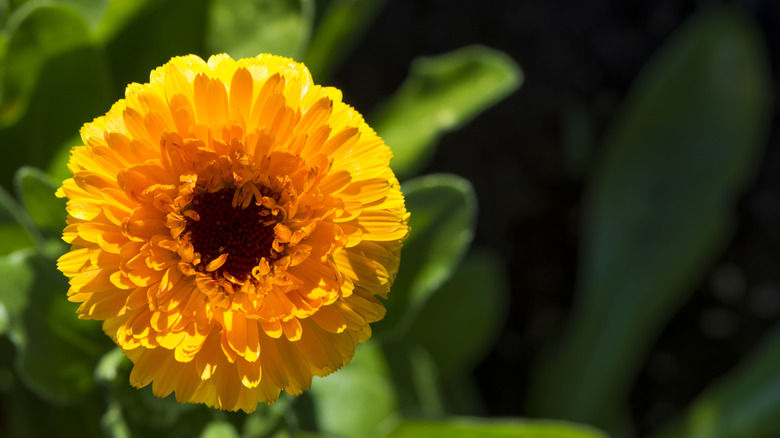
For anyone wishing to have a colorful, daisy-ish flower in their garden in less than a couple months, calendula (Calendula officinalis) is the best choice. Whereas daisies can take over a year to produce blooms, calendula can be counted on to open its bright yellow and orange flowers in 6 to 8 weeks. Although its nicknames include pot marigold and English marigold, and it is commonly mistaken for true marigold, calendula plants are entirely different. They do well in zones 2 to 11. But, although it can handle full sun in some areas, it is best to grow calendula in partial shade in hotter regions.
Portulaca
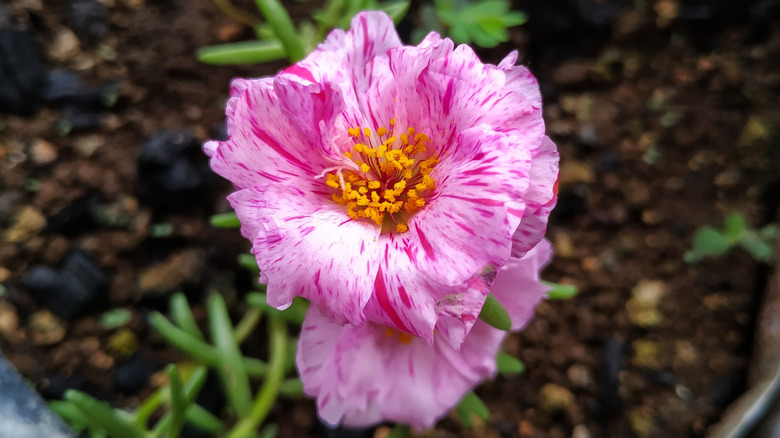
Portulaca (Portulaca), which is also known as moss rose and purslane, also reliably produces blooms within 6 to 8 weeks of sowing seeds. It is a little more restricted in its growing region, as it does best in warm to moderate temperature areas, specifically hardiness zones 6 through 10. Portulaca produces bright blooms in an array of colors, including orange, pink, red, yellow, and white. It does best in full sun and is ideal for containers or patio gardens. It can also be used as a ground cover. This low maintenance plant is drought and heat resistant and can be grown in a variety of soil conditions.
Borage
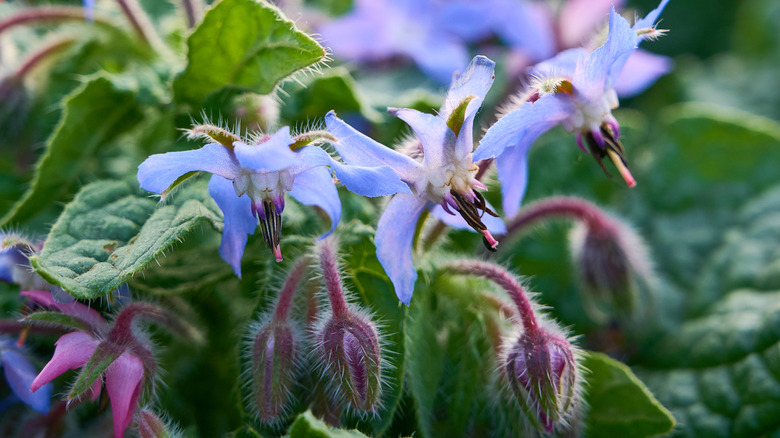
Growing borage (Borago officinalis) is another way to quickly fill your garden with blooms. The bright blue, star-shaped blooms will typically appear 50 to 60 days after the seeds are sown. In addition to providing colorful blooms, borage flowers and leaves are edible. However, when consuming, it is best to harvest the leaves before they become covered with the hairy tendrils of the mature plant. Borage can be grown in hardiness zones 2 to 11 and is very low maintenance, requiring only occasional watering and direct sunlight.
Sunflower
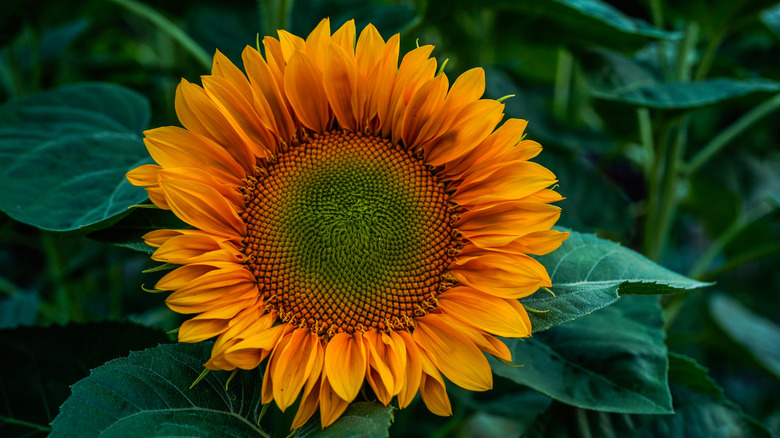
Generally speaking, sunflowers (Helianthus annuus) are fast growing flowers. However, some varieties and cultivars really stand out for the rapidness with which they produce flowers. The 'ProCut Orange Excel' is one, as it typically blooms within 50 to 60 days. The 'Jua Maya Hybrid' is even faster, flowering between 45 to 50 days. Multiple others bloom within 2 months of planting. Various sunflowers can be grown within hardiness zones 2 through 11. They are considered low maintenance and prefer relatively dry conditions with plenty of sunshine. Although sunflowers are annuals, the seeds are easy to harvest and save for sowing the following spring.
Zinnia
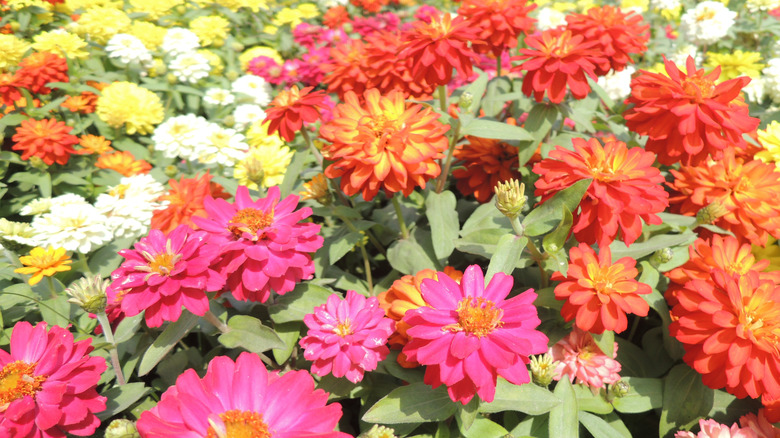
Another fast-growing flower is the zinnia (Zinnia elegans), which usually bloom around 55 to 60 days after the seeds are planted in spring. As with other types of flowers, some zinnia strains and cultivars will bloom even faster. One notable example is the 'Pinwheel', which can produce flowers in as little as 40 days. Growing zinnias is possible throughout hardiness zones 2 to 11. The blooms, which range from white to red and orange to purple, attract an array of pollinators. Given that they bloom throughout summer and fall, they are a favorite of hummingbirds. Zinnias do best in full sunlight and well-draining soil.
Phlox
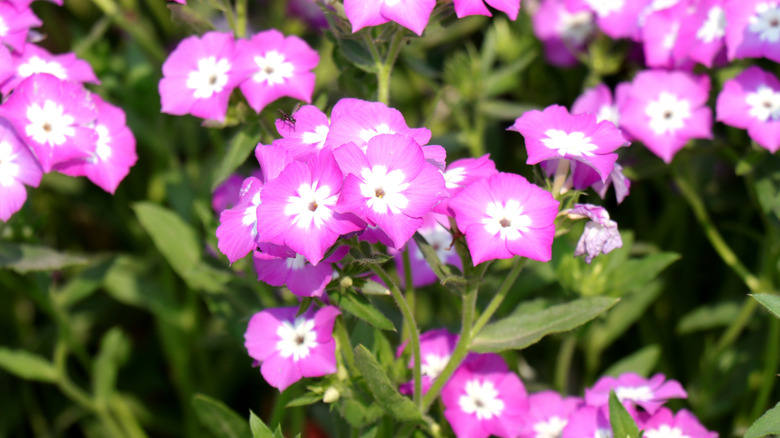
If you grow phlox (Phlox paniculata) in your garden, you can expect it to fill with blooms in a hurry. Most often, annual phlox will bloom within 2 months of planting. The purple and white flowers of phlox are popular with pollinators. Phlox is native to the Eastern United States and tends to do better in mild to moderate climate regions. They are best suited for hardiness zones 4 TO 8. It grows best in full sun, although it is not drought tolerant and needs to be watered regularly to keep the soil moist. Phlox also needs adequate air circulation to prevent powdery mold from forming.
Johnny Jump Up Viola
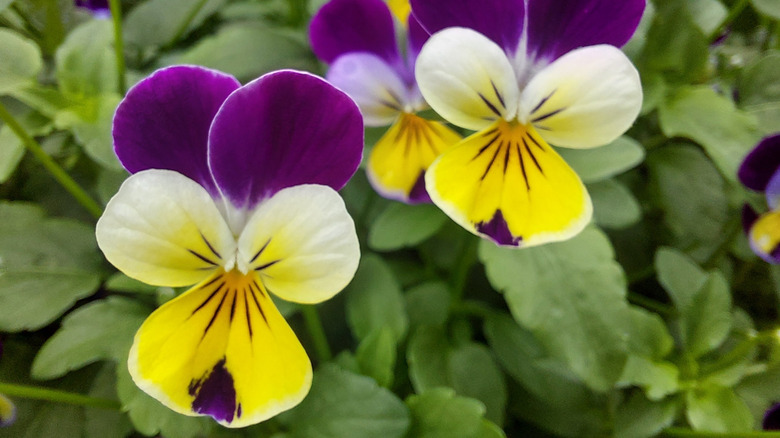
Wild Pansy (Viola tricolor) is commonly referred to as Johnny Jump-Up or Jack-Jump-Up-and-Kiss-Me. As the name implies, its flowers feature three colors: gold, white, and violet. These colorful flowers usually appear 60 to 70 days after seeds are sown. Since they only grow to around 6 to 8 inches tall, these fast-growing flowers are ideal for containers and window boxes, as well as flower beds and gardens. They are also a good choice for pollinator gardens and near water features. Wild pansies can be grown in zones 2 through 9. They prefer moist, sandy or loamy soil, and full sun.
Cosmos
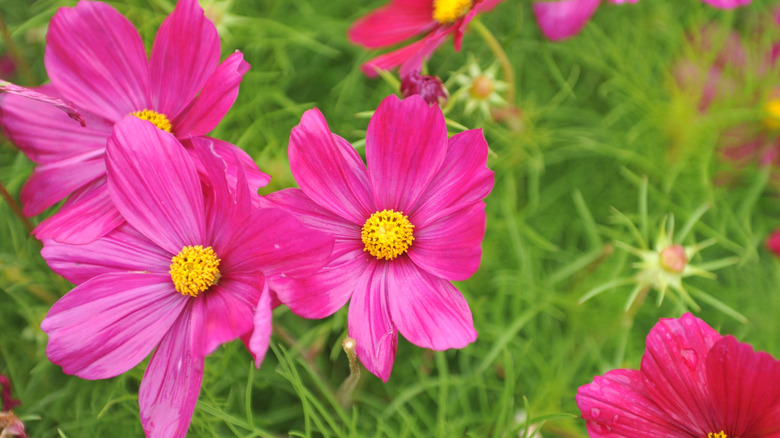
Cosmos (Cosmos bipinnatus) can take anywhere from 2 to 3 months to flower, depending largely on the growing conditions and region. However, once they begin to bloom, they will typically continue to do so until the first frost. Native to Mexico and the Southern US, they can be grown throughout zones 2 to 11. Cosmos require little to no maintenance as long as they are planted in well-draining soil and receive full sun. Their flowers are similar in shape to those of daisies and feature white, pink, or red petals surrounding a yellow center.
Clarkia
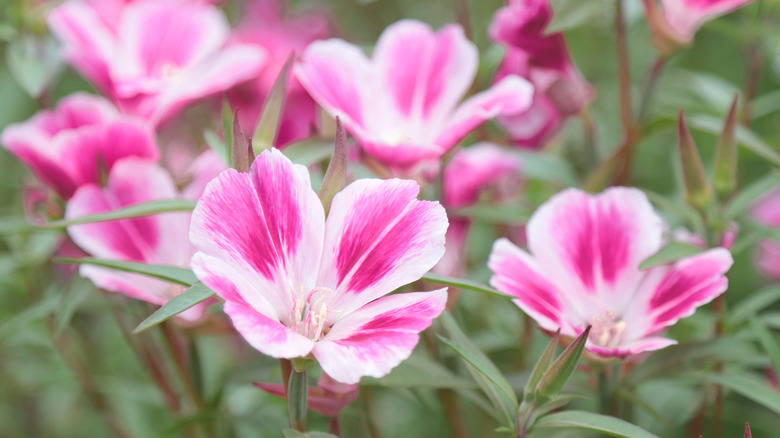
Clarkia (Clarkia) is native to Western North America. It is named after William Clark of Lewis & Clark fame, following the expedition encountering it along their journey. Also known as Rocky Mountain Garland and Farewell To-Spring, clarkia typically blooms 60 to 90 days after seeds are planted. The flowers can be yellow, white, pink, or purple depending on the variety, of which there are over 3 dozen. These colorful flowers attract hummingbirds and various other pollinators. While clarkia is a low maintenance plant, it requires very well-draining soil, preferably sand, and plenty of sunshine.
Tithonia
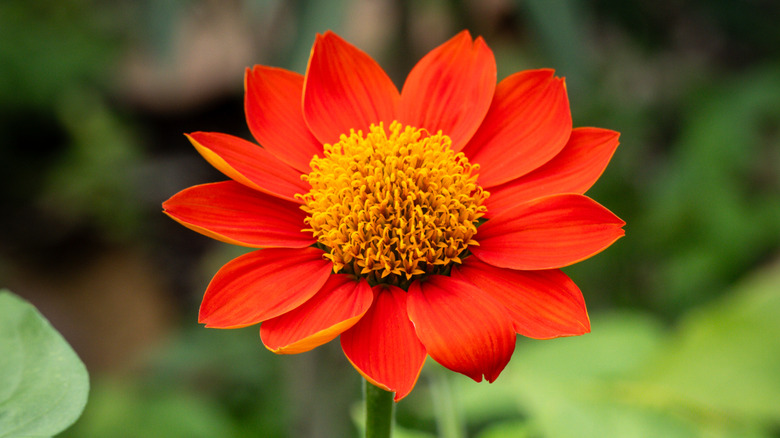
Often referred to as Mexican sunflower, tithonia (Tithonia rotundifolia) is a way to quickly add color to your garden, as this fast-growing flower typically yields reddish-orange blooms about 2 months after planting. Although its native range is throughout Mexico and Central America, tithonia can be successfully grown through zones 2 all the way to 11, meaning the entire Lower 48 and even parts of Alaska. Wherever it is grown, tithonia does best in full sun and dry soil. This low-maintenance plant is also drought tolerant and very attractive to hummingbirds and butterflies.
Poppy
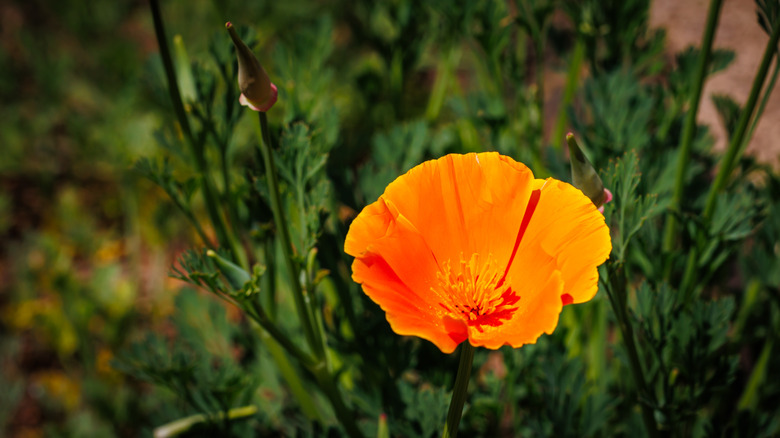
California poppies (Eschscholzia californica) are not only the official state flower of California, but also a fast-growing flower that produces blooms within 2 months of the seeds being planted. Although it is named after the Golden State, the native range of the California poppy covers the entire Western United States. It grows well throughout zones 6 to 10. They can be grown in gardens, beds, or containers and do best in full sunshine, requiring a moderate amount of water.
Bachelor button
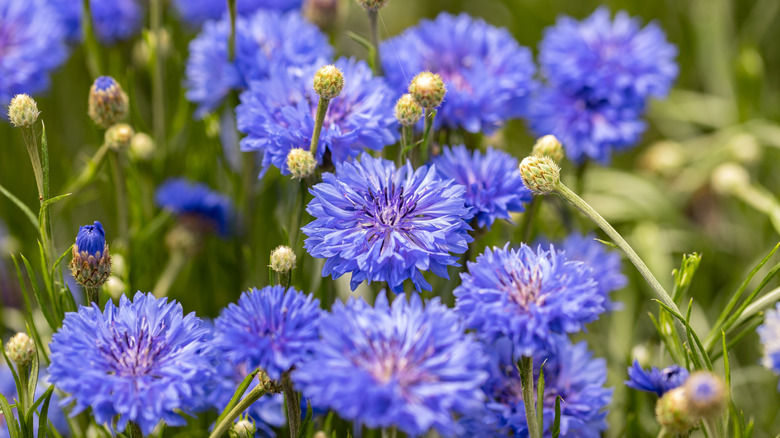
Bright blue flowers are the hallmark of bachelor button (Centaurea cyanus). It typically takes around 65 to 75 days after the seeds are sown for those flowers to appear. Also known as cornflower, bachelor button can also have pink or white blooms, in addition to blue, and can be grown across the US, in zones 2 through 11. It requires moist, well-draining soil, but can do well in either full sun or partial shade. While it does require a good deal of maintenance, a garden full of bachelor button will draw in songbirds and butterflies alike.