

The Gorgeous Ceiling Design That Adds A Perfect Finishing Touch

When done right, a decorated ceiling can add elegance to any room. One of the best ways to achieve this is to use a paint color that can heighten your decor and serve as a unique accent wall. But if you'd like to take things a step further and really create a visually striking ceiling, fretwork panels are a gorgeous design option that adds a perfect finishing touch to your space.
Fretwork refers to a design technique that cuts intricate patterns into materials like wood, metal, stone, or PVC. Though it has a long history of use stretching back to ancient China, todays fretwork panels are individual pieces that come in a range of geometric, floral, or naturalistic patterns. They are typically hung on walls to provide a dynamic room accent, but they can also be attached to the ceiling to create a similar effect.
Fretwork ceiling panels provide an almost coffered look, which is the name of a ceiling style that uses recessed squares for added texture and depth. Fretwork panels achieve similar results without all of the hassle and materials needed for getting the recessed look right. While it is an involved process from start to finish, tacking fretwork panels to your ceiling is a great way to add a lot of intrigue into the design of your ceiling.
How to add fretwork panels to your ceiling
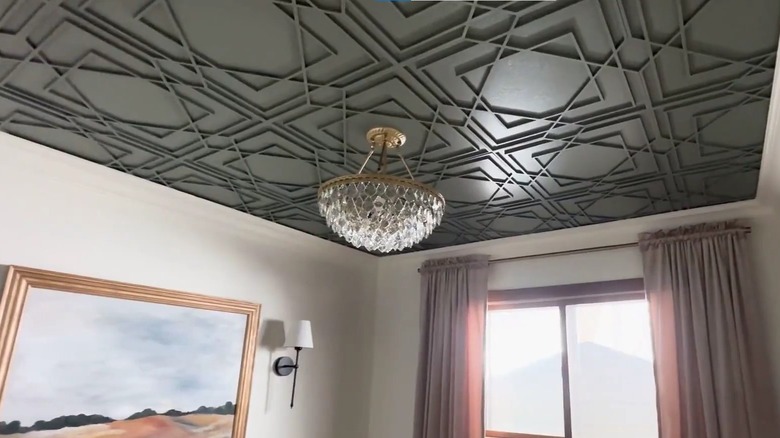
Before you actually get the fretwork panels up onto your ceiling, you'll need to do some prep work. If you have a textured ceiling, such as a popcorn, orange peel, or lace ceiling, you're going to have to remove it or sand it down in order for the fretwork panels to sit flush and level. Unlike solid ceiling tiles, which can easily cover up a popcorn ceiling without any mess, fretwork work panels have an open design that unwanted texture will be visible through, which could lessen the panel's aesthetic impact.
However, if your ceiling has no texture or you've done the work of removing it, actually installing the fretwork panes is exceptionally easy. Paint the fretwork to either match what you have on the ceiling or give it a vibrant contrasting color. Working out from the center of the room, attach your panels using a nail gun or finishing hammer. You will likely need to trim off sections of the panels in order for them to fit in where the wall and ceiling meet. You can cover up the seam with a good piece of trim afterwards.
Once you've finished, you'll be amazed at just how much the decorative panels transform your space. Rather than looking like an afterthought, the ceiling is now just as creatively decorated as any other wall or accent piece in your home.