

Ditch Boring Concrete: Here's A Prettier, More Durable Driveway Alternative
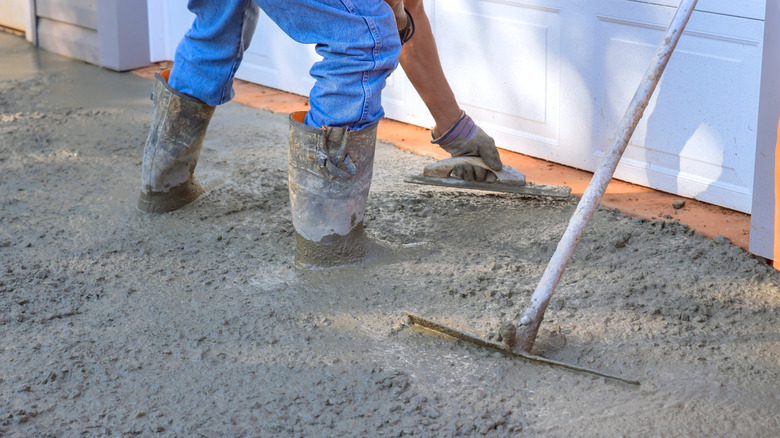
Many homeowners might not necessarily think of their driveway as something to make a statement with, but it's important to realize that the driveway is the first thing that most people see when they visit your home. As such, boring concrete just doesn't cut it anymore. If you want to make your driveway more visually appealing while still being able to handle heavy traffic, brick pavers are the way to go, as they're one of the most stylish and durable concrete alternatives.
Brick pavers are made from a recipe of clay, lime, sand, iron oxide, and calcium silicate, which is then flame-cured into individual, rectangular pavers. To withstand heavy driveway use, these pavers need to be between 60 mm and 80 mm thick. Different from permeable pavers, which are another concrete alternative that easily sheds water, brick pavers are designed to withstand different environmental phenomena, including snow, rain, ice, and sun. Their interlocking design also invites you to get creative with different kinds of eye-catching patterns, like herringbone, ashlar, or basketweave.
As far as durability is concerned, bricks outlast concrete by a large margin. While concrete tends to last 30 to 40 years if taken care of properly, bricks can last well over 40 years if installed and cared for correctly. Bricks achieve this longevity thanks to the 2,000-plus degree Fahrenheit firing process that removes any contained moisture, chemically altering their structure to make them more durable.
Brick pavers are expensive, but easier to maintain
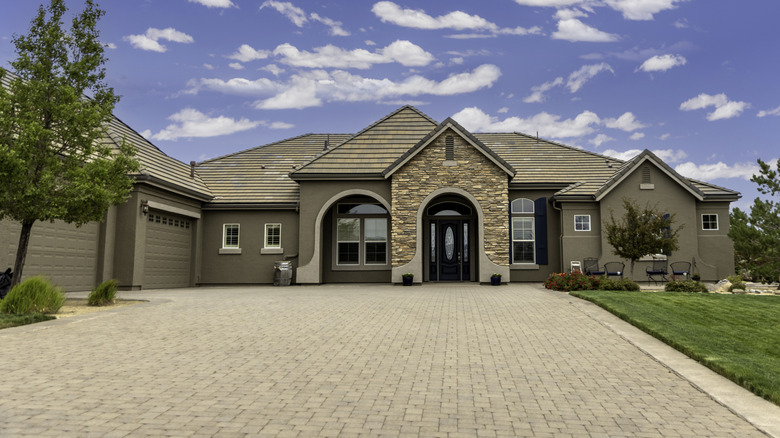
Unfortunately, using brick pavers isn't a cheap way to pave a driveway. In fact, the average cost for a paver driveway runs between $6,000 to $18,000, with the higher end being closer to $40,000. This depends on the size of your driveway, what kind of bricks you're using, and the intricacy of your design. By contrast, a concrete driveway is going to cost between $2,700 to $14,500, making it the more budget-friendly option of the two. However, that cost-saving move comes with a shorter lifespan and a product that can be a lot harder to repair.
Despite the expense, brick pavers are easier to maintain. The bricks are individual units, so if there's ever a problem like a sinking paver, which can be easily fixed with a screwdriver and some leveling sand, all you need to do is replace a paver or two. Concrete is prone to cracking and bowing, which can sometimes require the whole slab to be redone.
However, where concrete has brick pavers licked is in its ease of application over a larger surface. If you have a wide driveway, for instance, it would be easier and more cost-effective for you to pour concrete than to lay down brick. Still, if you're thinking in terms of longevity and ease of maintenance, then bricks are by far the better option.