

Skip Planting Hostas Unless You're Ready For These Downsides
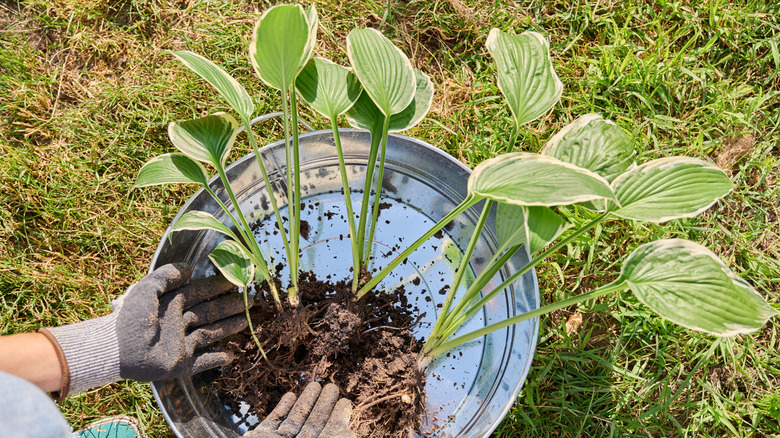
There are numerous reasons why you would want to have hostas (Hosta plantagenia) in your garden. For one thing, hostas will grow perfectly well in shady areas, making them great for the darker sections of your yard. They're also incredibly easy to propagate. You can basically grow hostas from one plant forever. Still, in spite of these benefits, hostas are temperamental. You might want to skip planting hostas altogether unless you're ready to handle some significant downsides, including problems with sun damage, root rot, pests, and diseases.
While hostas can certainly grow well in areas that get morning sun, hotter afternoon sunshine can be incredibly damaging. There are certainly more sun tolerant varieties, such as August Moon (H. 'August Moon'), but the majority of hostas will suffer from sunburn, heat stress, and scorch if exposed to too much sun. Gardeners in USDA Zones 6 and above will need to be extra careful in this regard.
The thing is, though, all hostas need to have moisture — even the sun tolerant ones. If they are in an arid environment under the full sun, there is no question they will dry out and die. Hostas require about an inch of water every week for optimal health, though it needs to be in well-draining soil as long exposure to standing water can cause root rot. As such, if you live in a dry climate or commonly experience droughts, you either need to be prepared to baby your hostas through that season, or just not plant them at all. Pests are also a problem. Those broad, deep green leaves can prove irresistible for numerous damaging pests, including slugs, cutworms, grasshoppers, snails, and blister beetles, and they are also prone to diseases.
Hostas are prone to numerous pests and diseases
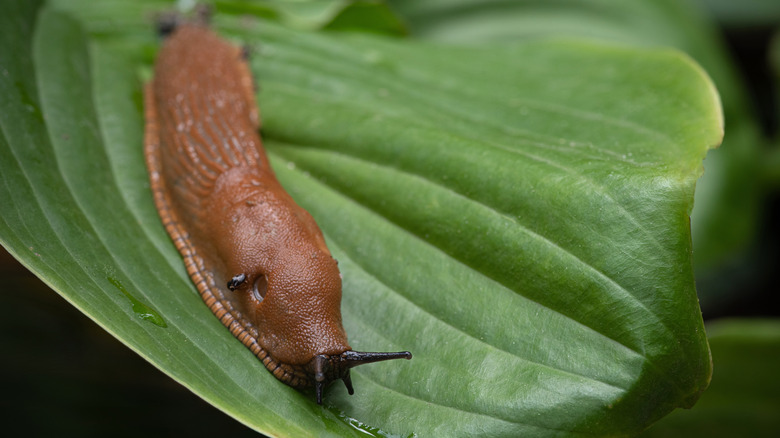
While no plant is truly pest-free, there are several flowers and herbs that will help keep pests out of the garden. Hostas are not one of them. Slugs, in particular, are a problem, leaving the most tell-tale signs with massive holes in the foliage. Larger mammals, like deer, rabbits, and voles, can also devastate a hosta patch.
Additionally, hostas are prone to a number of different diseases. Leaf spot is a common fungal disease that will appear after periods of excessive moisture, such as a heavy rain. However, petiole rot is perhaps the most serious disease hostas face. Also caused by fungus, this disease begins as a mild yellowing of the hosta leaves before transforming rapidly into a brown mush of decay and death.
So, how can these two issues be dealt with? Well, for pests, you can opt for the natural route with deer repellent plants like ornamental alliums, or build a tall wire fence to keep them out. As for the fungal diseases, use integrated management systems such as early watering, keeping the plants cool, and removal of any leaves or sections that look diseased. So, as long as you're prepared to give them the care and attention that they require, it may be better to skip planting hostas altogether.