

Our Real Estate Expert Thinks This Is A Poor Bathroom Flooring Choice (& It's Not Carpet)
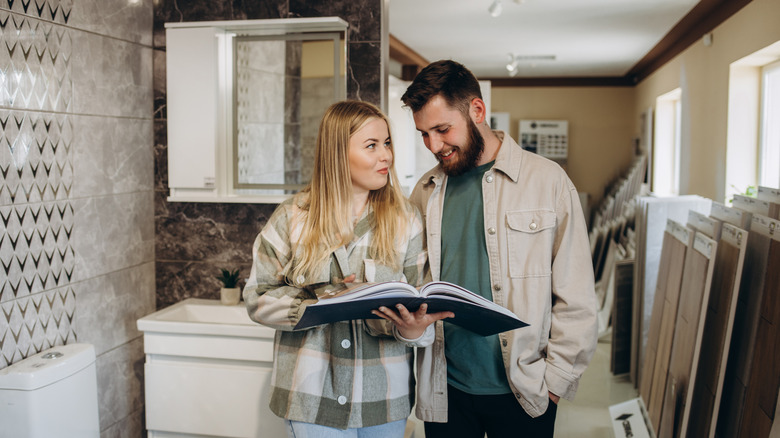
Are you reading this from your toilet? You're not alone. Between quick morning showers, elaborate skincare routines, and scrolling sessions on the throne, a study from Bio Bidet (via KTNV Las Vegas) found that 44% of Americans spend an hour or more in the bathroom daily. For some homeowners, a lot of that time is spent daydreaming about the perfect bathroom renovation. There's some debate over how much return on investment you're likely to get with a major bathroom remodeling project, but according to Blake Zises, real estate agent at Coldwell Banker Warburg, installing the wrong flooring is one of the worst bathroom design mistakes you can make. It goes without saying that carpet is a disastrous choice, but Zises says hardwood floors are also a costly bathroom nightmare.
"Wood is porous and readily absorbs moisture. Exposure to water or humidity can cause hardwood floors to buckle and warp over time, making them a poor choice of flooring for a bathroom," Zises told Hunker during an exclusive interview. The real estate agent went on to explain that installing hardwood floors in a bathroom can cost you in more ways than one. "They can become a financial burden, either through the maintenance required or the cost of replacing them with a more durable material," she said. Although they may not directly impact your home's value, Zises added that buyers are likely to realize hardwood bathroom floors often need to be replaced when they're looking at your home. "They will likely deduct that upgrade cost from the value that they are placing on the home," she cautioned.
Porous and absorbent materials are the worst bathroom flooring choices
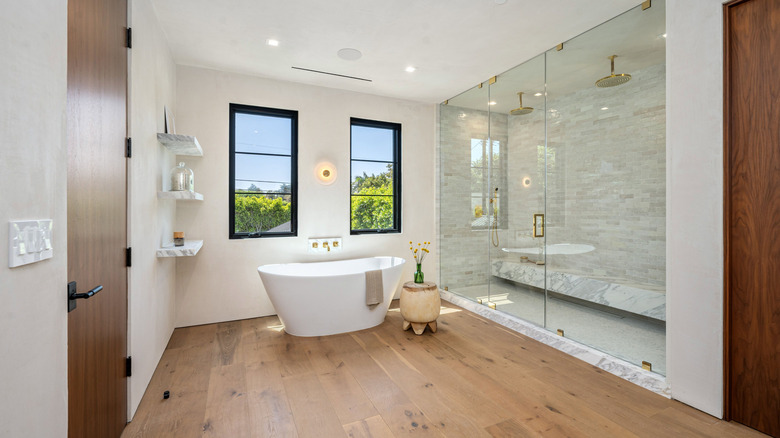
We don't know what possesses anyone to lay carpet when they're remodeling a bathroom, but it does happen. According to Blake Zises, it's more than just a questionable aesthetic choice — it can actually make you and your family sick. "Carpet in a bathroom would be another concern, as it can lead to mold issues," she said during her exclusive interview with Hunker.
The issue that makes both hardwood and carpet bad flooring choices mostly comes down to the high levels of moisture in your bathroom. From steam from hot showers to splashes from the sink, they're called wet rooms for a reason. Unless absorbent and porous flooring materials like hardwood and carpet are fastidiously installed and maintained, you'll soon come to regret them. "Any poorly installed flooring can cause problems, as it must be properly sealed to withstand water exposure," Zises explained." She suggested using simple bathmats to limit exposure to water, although this may not be enough to prevent mold long term.
With either carpet or wood flooring, water is likely to move into the subfloor which will make it soften and decay over time. Near misses near the toilet compound the problem, since bacteria can make itself at home in carpet padding or dark crevices around hardwood plank joints. Since bathrooms are naturally damp and warm, this means your bathroom can quickly succumb to a mold problem you may not be able to see, but that will eventually start to smell, give you the sniffles, or worse.
Ceramic tile and natural stone are the best bathroom flooring materials
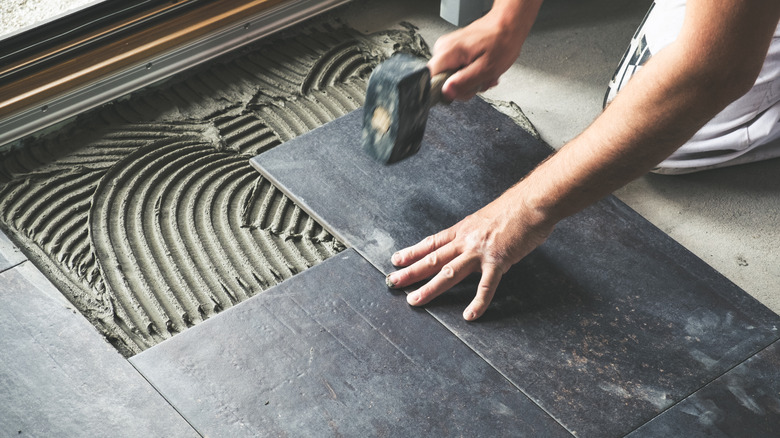
So what's the best type of bathroom flooring to install if you want to avoid mold growth while also increasing the value of your home? In her exclusive interview with Hunker, Blake Zises suggested two different options worth considering. "Ideally, the best flooring for bathrooms, in terms of durability and resale value, would be ceramic tile," she said. A versatile and relatively budget-friendly option, ceramic tiles come in an enormous range of colors and styles that can fit any bathroom aesthetic. If you have some DIY experience, they're also fairly easy to install. Although ceramic is slightly porous, glazed versions work well indoors as long as you keep them out of your highest traffic areas and remember to reseal them occasionally according to the manufacturer's instructions.
When cost isn't a factor, there's another material that seriously outperforms carpet and hardwood. "If you're looking for something more elevated, natural stone is a great option," Zises said. Travertine and limestone are outstanding choices that add beauty and durability to your bathroom floors. Soapstone or lava stones can also bring a grounded and earthy appeal that will last for decades. Both ceramic tile and natural stone flooring offer superior water-resistance to spongy materials like carpet and wood. Because they're typically grouted, sealed, and caulked around the edges, you won't have to worry about water seeping into the underlayment or crevices along your tub or toilet.