

The Low-Maintenance Flowering Ground Cover That Butterflies Love
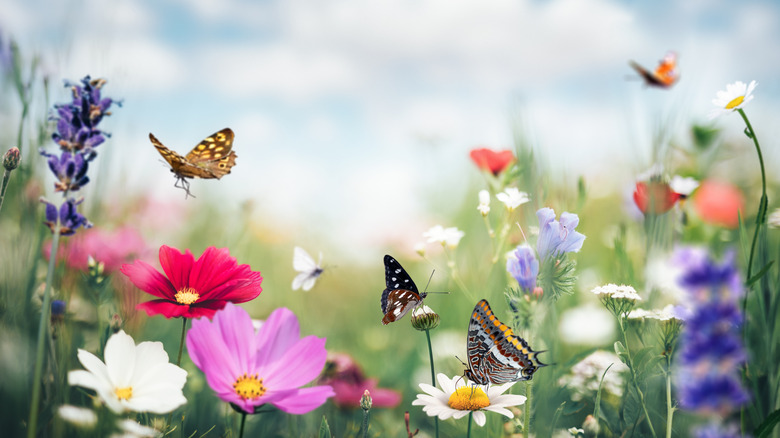
Butterflies love visiting gardens filled with native plants that help them do their job as pollinators and offer colorful, fragrant flowers with plenty of nectar. Luckily, there's an abundance of options, though some flowering plants can come with tricky growing conditions or require regular maintenance. If you're searching for options that attract butterflies and are easy to grow, a fast-growing ground cover like cranesbill geranium (Geranium spp.), is worth considering. Its flowers have striking, vibrantly hued blossoms, it spreads quickly once it takes root, and it's loved by pollinators like butterflies. Cranesbill geranium comes in many species, including bloody cranesbill (Geranium sanguineum) and wild geranium (Geranium maculatum), but regardless of which you choose, its cup-like flowers are just what your local butterflies are looking for.
Flowering ground covers fill in bare spaces, help your soil hang onto moisture, and double as attractive, low-maintenance additions that bring visual interest to an outdoor space. Cranesbill geraniums are a particularly good choice, as they have a long blooming season that stretches from spring to fall — a quality that can help draw local butterflies to your yard for months. This gorgeous ground cover is pretty robust and easy going, and it grows well as a perennial in USDA hardiness zones 4 to 8. Although the plants only reach 3 feet in height, they grow into a dense, carpet-like ground cover and require very little maintenance or intervention once they're mature.
How to select, plant, and care for your cranesbill geranium
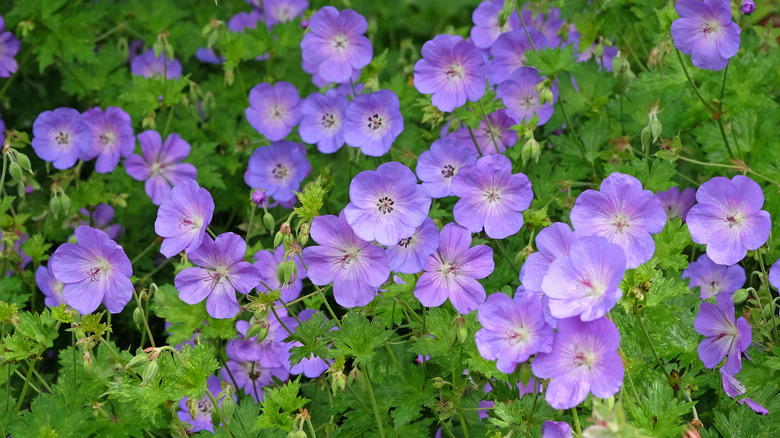
Before you plant cranesbill geranium in your yard, it's important to choose a specific species. With more than 300 options available, there's quite a wide range of bloom color choices, including purple, blue, pink, and white – though different options may be more suitable for your local butterflies. Since butterflies prefer native plants, you may want to choose a hardy geranium local to your region. For example, wild geranium is native to the eastern portion of the U.S., while California cranesbill (Geranium californicum) thrives throughout its namesake state. Crucially, make sure you choose true cranesbill geraniums when you shop at your local nursery; "geranium" is the common name of an entirely different genus, Pelargonium, which doesn't form a ground cover but rather grows in clusters of long-stemmed flowers.
Once you've settled on a species, you can plant these perennials in the fall for spring blooms by sowing the seeds right into the ground. Plant this ground cover in full or partial sun and in a location with soil that drains well. Just note that ground covers don't withstand heavy foot traffic as well as lawns, so cranesbill geranium isn't a good lawn alternative. Once this hardy geranium takes up residence in your garden, though, it'll be pretty hands off; it's not appealing to slugs or snails, and the plant won't demand much in the way of care.