

Homeowners Beware: This Popular Landscaping Tree Can Secretly Wreck Your Pipes

Elm trees (Ulmus) are tall, magnificent trees that are popular in yards, but they are one of many common trees you should never plant right next to your house. When you're planting a new tree in your yard, it's important to keep in mind how far the roots can spread, as they can pose a risk to underground pipes. The roots of trees grow into the ground, stretching and searching for water. If a buried pipe happens to break, the tree roots will seek out the leaking water and could end up growing inside your plumbing system. This phenomenon is known as root intrusion and is a common problem with elm trees.
In a 2025 study on root intrusion published in Environmental Challenges, English Elm (Ulmus procera) trees were found to be likely to cause serious problems for your pipes, posing a damage rating of 8 on a scale of 9. For comparison, other common landscaping trees like box elder maple trees (Acer negundo) and pin oaks (Quercus palustris) have damage ratings of 4 and 2, respectively.
If you want elms in your yard, you can still plant them, but keep them far away from your pipes. It's crucial to know how to find underground sewer pipes and note their locations before planting elm trees. Otherwise, once a root finds a crack in a sewer pipe and makes its way into the plumbing fixture, it can make that crack larger. This eventually leads to clogs in your plumbing system and sewage leaks.
Signs that tree roots are growing in your pipes
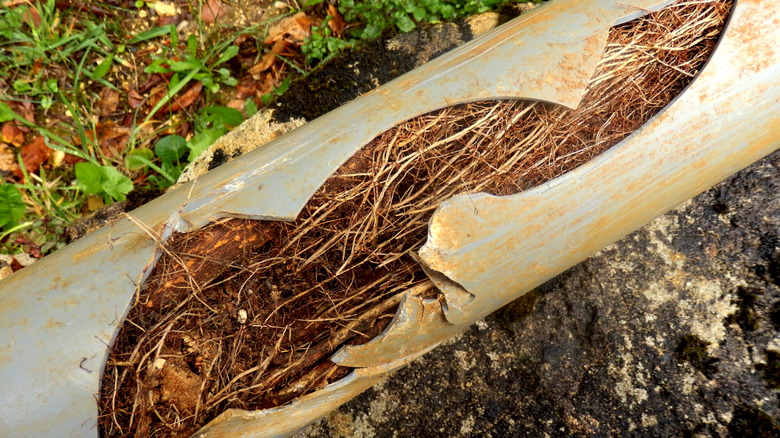
If you already have an elm tree growing on your property, there are a few indications that the roots have reached your underground pipes. You may notice that pipes in your home are draining more slowly, or are producing a disgusting stench. Toilets may also start to clog and need to be fixed more frequently. Hearing your pipes make strange burbling sounds also points to trouble with your elm roots and your sewer line. Outside your home, the grass around your underground pipes might suddenly become thicker and more vibrant as the leak gets worse. Invading elm tree roots could give your yard a putrid smell, and cause sinkholes as well.
Dealing with root intrusion is more difficult than hiding unsightly above-ground tree roots in your yard and is best done with the help of a professional plumber. Replacing old pipes with PVC can help prevent leaks and issues with tree roots, as can inspecting your sewer lines regularly. Installing root barriers will also block the roots from reaching the pipes. If you're planting a new elm tree, consider consulting an arborist or landscape designer to find out how far the roots may stretch, and where to place your tree in relation to your underground pipes.