

Open Floor Plans Can Feel Overwhelming — This Alternative Layout Feels More Peaceful
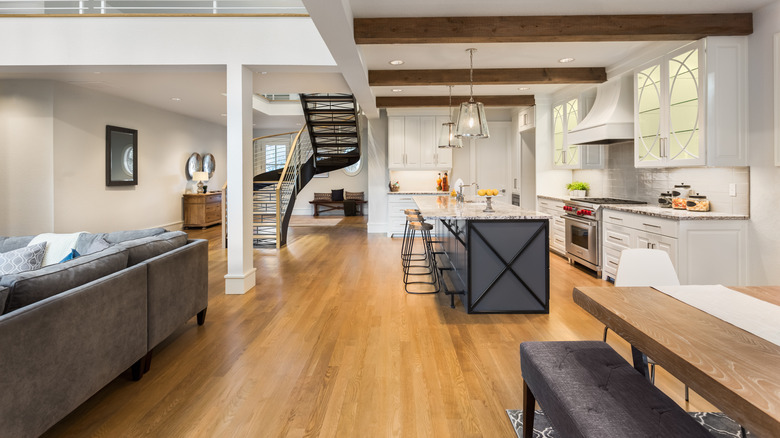
It's tempting (and easy) to think of "micro-zoning" as something of a cheap trick — repackaging old home decorating and layout ideas under a new name to challenge the long-running reign of open-concept spaces. It involves designing rooms in small zones according to how you intend for them to be, and from a distance, this might seem like what people do by default. But this practice turns out to be a bit more powerful than the occasional conversation cluster or reading nook.
Looking back now, the most open floorplans might have worked best in magazines, much like living walls, floating staircases, and purist minimalism. Open-concept homes can certainly be beautiful, with their effortless airiness and great fields of seamless continuity. They can also be practical in terms of entertainment and traffic flow ... at least in photographs. In practice, enormous undifferentiated spaces tend toward clutter, chaos, and coldness. There's nothing intimate about that couch between the kitchen and the big bank of windows 40 feet away. And implying that open-concept designs have better traffic flow is like claiming a demolition derby flows better than a highway system: Maybe, but it depends on your goals.
Enter micro-zoning, the practice of breaking down spaces into zones according to their intended use, defined by lighting, rugs, furnishings, and even careful use of color. It's a fresh twist on the still-trendy open living area that can be used in discrete rooms and big, open-plan areas alike. The trick is to subdivide your space without disturbing the continuity of your overall design vibe.
A micro-zone is not a conversation pit
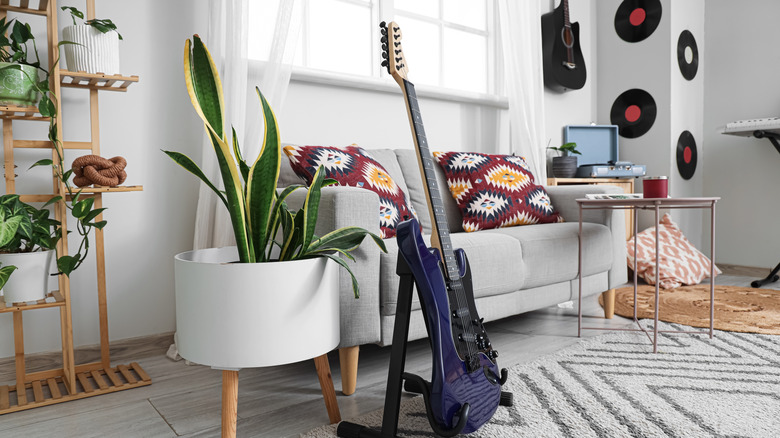
You might think "micro-zone" is a terrible name, but at least it's not "conversation pit." That's not what micro-zones are, anyway. In fact, they're often described in terms that seem carefully non-spatial: Moments divided by intent and emotions and, you know, the occasional rug.
Unlike a conversation cluster or any sort of pit, micro-zones can be defined however you prefer, not just by social interaction. You might have a decompression zone and a me-time zone, and you probably already have a drop zone. It's difficult to imagine pet and kid zones living up to their names rather than spreading to and trampling your zen zone. And you might want to put some sort of aesthetically pleasing but real barrier around your glass-blowing zone. Note, too, that a truly functional micro-zone will usually need some form of storage for any related wares, as well as a way for you to meaningfully, physically occupy that zone, like a chair or work table.
Another interesting thing about micro-zones is that you don't have to be in the zone to receive its emotional content — sometimes seeing it from across the room is enough. And when the emotional content is the primary purpose of the area, the approach is sometimes called "emotional zoning," which is nearly as bad as "conversation pit." While psychology-based design focuses on the impact of design elements without always considering their function, emotional zoning creates areas within the home that reflect your personality, character, and emotional needs.
A micro-zone is not a replacement for walls
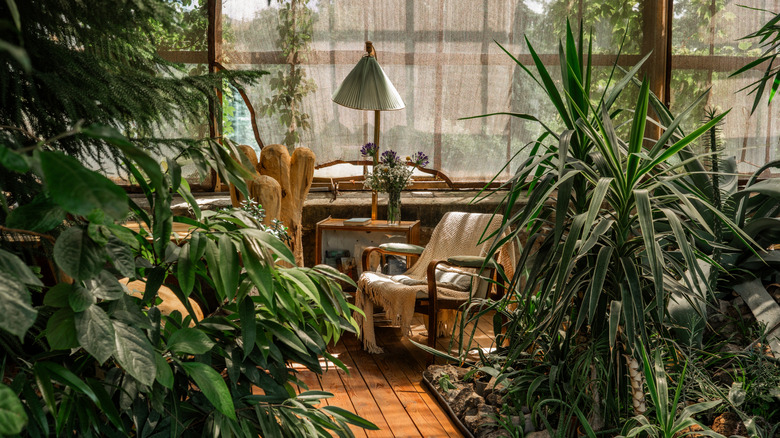
People have been talking about micro-zones like they're shots fired in the rooms-versus-open-concept debate. But micro-zones work within rooms just as well as they do within open-plan areas, and they can actually help solve some design challenges of really choppy room-oriented home layouts. Many closed-concept and most open-concept homes seem to have an awkward transitional space somewhere. Micro-zoning can help you style these tough "dead zone" spaces. Often, what they're really calling for is a purpose- or mood-driven treatment created with carefully selected elements. Sometimes they're vignettes with little actual utility beyond their emotional impact.
The approach does do a lot of things you already do (calling a coffee station a micro-zone doesn't change what you're going to make there, after all), but it can accomplish a few concrete things. For one, it forces you to be intentional about your space, whether it's a small room or a big, open area. One of the most interesting ideas we've surfaced recently is the notion of having your interior design reflect your actual lifestyle and hobbies. Micro-zoning expands the palette available to you by giving you dozens of places to paint that particular version of you — the part that collects butterflies or does quilting or whatever. With an open-concept mindset, that kind of personalization might feel like an unwanted smudge on your pristine canvas. Micro-zoning makes your canvas feel open but also detailed so that you can focus on small areas as needed.