

Plant This Gorgeous Flower By Your Rosemary To Attract Beautiful Birds & Butterflies
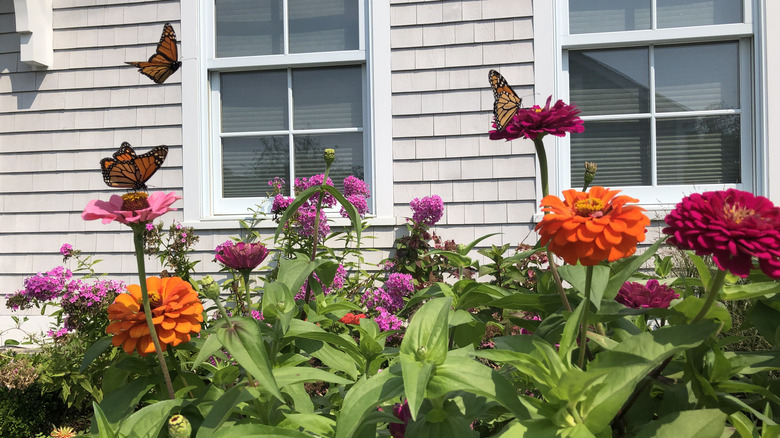
Marigolds (Tagetes spp.) are bright, vibrant flowers with stunning hues of orange, yellow, red, and white, and they can be extremely beneficial in your garden. Butterflies and a variety of other pollinators and beneficial insects, including parasitic wasps, ladybugs, and bees, love to stop by marigold flowers for a little nectar. Besides insects, marigolds can attract other pleasant visitors to your yard and garden. The seeds of marigolds are also a favorite snack of birds, helping to bring more feathered friends to your yard in addition to gorgeous butterflies. Since rosemary (Rosmarinus officinalis) and marigold flowers both like full sun and similar soil conditions, rosemary is a good companion plant for marigolds. By planting these two fragrant plants together in your garden, you'll have a beautiful display of flowers and herbs that'll ensure birds and butterflies pay your yard a visit.
Beyond attracting wanted visitors, marigolds and rosemary both have strong scents that can help keep unwanted pests out of your garden. While rosemary's scent repels annoying garden insects like white flies, the pollinators and birds marigolds bring will help to control insect populations as well. Marigolds are also known to be a good defense against root nematodes because of the thiophene or alpha-terthienyl in these flowers' roots. The smell of marigolds can also sometimes deter certain pests, such as deer and rabbit, which helps to prevent them from eating the rest of your garden. Though generally a repellent, marigolds will sometimes become infested with thrips.
Attract the most butterflies when growing marigolds and rosemary
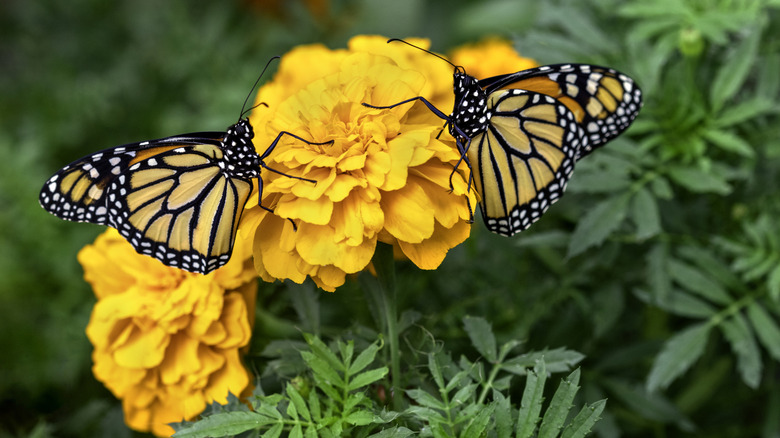
To attract a variety of pollinators and birds to your yard with this one vibrant flower, you'll want to plant a bunch of marigold flowers together to be more alluring to the butterflies. Since marigolds are annuals, they will eventually go to seed. If you want the butterflies in your garden to stick around a little longer before the marigold seeds start to bring birds, you'll need to deadhead the wasting flowers. This allows the plant to keep growing more blossoms for longer into the season. Simply remove flowers that have started to droop and die. Allowing some of your flowers to go to seed will bring more marigolds to your garden next year and encourage butterflies to return to your yard.
When growing marigold flowers next to your rosemary plants, you'll need to ensure the conditions are suitable for both your flowers and herbs. Marigold flowers and rosemary both should be planted in soil with a pH between 6.5 and 7 that's well draining. Since both of these plants are sensitive to overwatering and excess moisture, let the soil dry out a little before giving your rosemary and marigold plants a drink. In summer when the weather is hotter, marigolds will need a little more water than normal, so make sure you're checking the soil to know when your plants need to be watered.