

How To Get Your Hydrangeas Ready For Spring So They Bloom Beautifully All Season
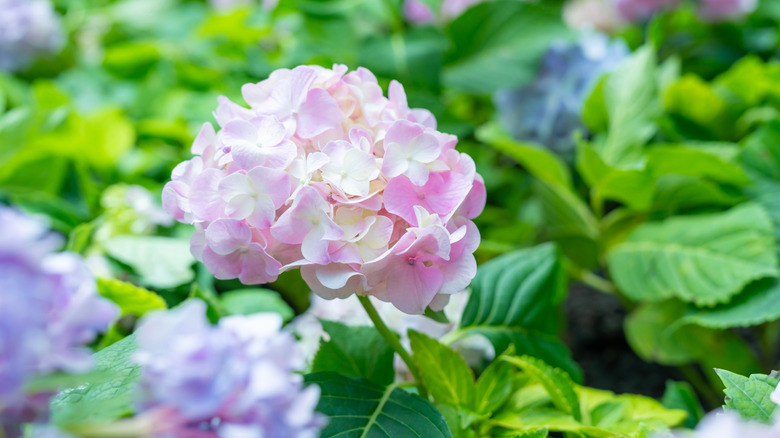
When the snow starts to melt and the buds start to appear on the trees, it means that spring blossoms are on their way! Among the best and most dramatic bloomers in the entire garden are hydrangeas (Hydrangea spp.). Their vibrant colors and generous flowering make these blooms the star of the garden. And there are certain things you can do to care for your hydrangeas for spring that will help guarantee beautiful blooms all season long.
It is important to understand that not all hydrangeas bloom in the spring. Panicle hydrangeas (H. paniculata) are a hardy variety that can withstand winter temps well below zero in USDA Zone 3. While many varieties bloom later in the summer, certain cultivars like Early Evolution (H. paniculata 'Early Evolution') and Quick Fire (H. paniculata 'Quick Fire') will arrive in late spring in Zone 8 upwards. By contrast, the also cold-hardy smooth hydrangea (H. arborescens) is a summer bloomer that doesn't show flowers until late June.
Another key to spring blooming success is to be sure your panicle hydrangeas are placed in the right location. While the flowers do love some sun, having them in an area that gets a healthy mix of both shade and sunlight will go a long way in ensuring that the blooms stick around all summer and well into fall. Too much direct sunlight will stress and wither a hydrangea, which is why many gardeners in warmer climates are done growing hydrangeas and are seeking replacements.
Fertilizer and prune for blooming success
One of the best things you can do in the lead-up to the spring blooms is to lay down some fertilizer. However, hydrangeas do not need to be fertilized excessively. In fact, doing so with high-nitrogen fertilizer, especially for panicles, could lead to rapid growth of weaker stems and potentially fewer blooms. Hydrangeas prefer loamy, well-drained, and slightly acidic soil. So, you should fertilize them once a year in the early spring with some organic fertilizer specifically made for shrubs and roses, such as Espoma Flower Tone, which is especially good for smooth and panicle hydrangeas. You could even add some composted orange peels to the soil to help your hydrangeas flourish.
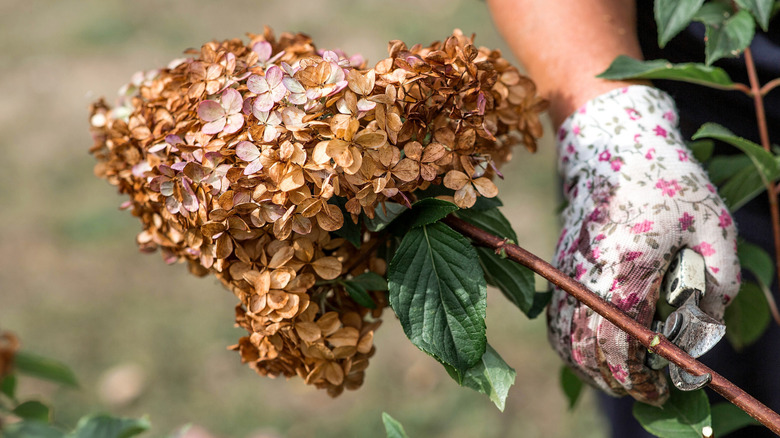
Another key to success is knowing when to properly prune your hydrangeas. Again, they don't require a ton of pruning, but doing so at the right time of year will help ensure those blooms last all season long. Panicle hydrangeas are what's known as new wood hydrangeas, meaning that they bloom on new wood instead of forming their buds in old wood. As such, you can prune them in early spring without risking killing off the flower buds.
Prioritize cutting away those branches that are damaged, dead, or look diseased, then leave them alone. This will free up the plant to focus all its energy on new growth and flower production, ensuring you have great blooms all season long.