

Your Garden Will Thrive With This DIY Fertilizer Made From Repurposed Kitchen Scraps
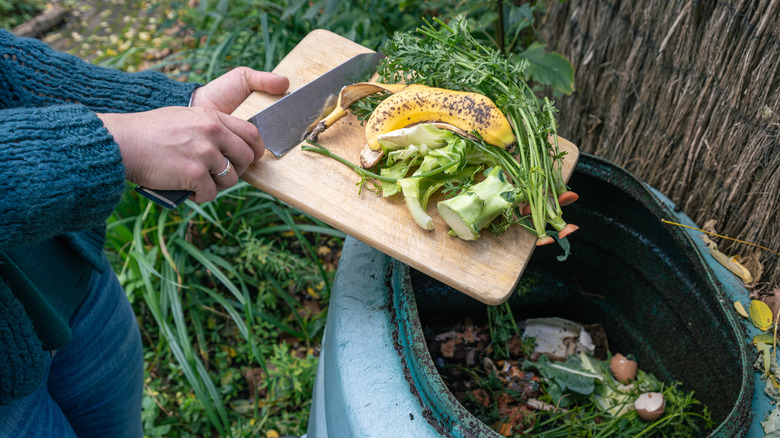
Did you know that you don't need to head to your local garden center to buy fertilizer this spring? Everything you need is available in your own kitchen! You can use your leftover coffee grounds as an all-natural fertilizer for your plants. You can even use crushed egg shells to benefit your plants with calcium and other minerals. However, there is one kitchen scrap repurposed into fertilizer that will help your garden absolutely thrive: fish.
Fish fertilizer, sometimes known as a fish meal or fish emulsion, is a totally organic fertilizer you can add as an amendment to your garden soil. The broken-down organic matter is an excellent food for your garden because fish are loaded with nutrients such as calcium, magnesium, and sulfur, and they have an NPK (nitrogen, phosphorus, potassium) rating of around 2-4-1. It all comes together to create an incredibly effective fertilizer for your garden.
While you can use fish as an all-purpose fertilizer, there are certain plants that really benefit from its use. Tomatoes, brassicas, peppers, cucumbers, leafy greens, and root vegetables all respond really well to the concentrated elements in fish fertilizer. Even your lawn and perennial flower beds will benefit from its use with strength and uniform growth. Overall, you really can't go wrong with making fertilizer out of fish scraps.
How to DIY a fertilizer using fish scraps
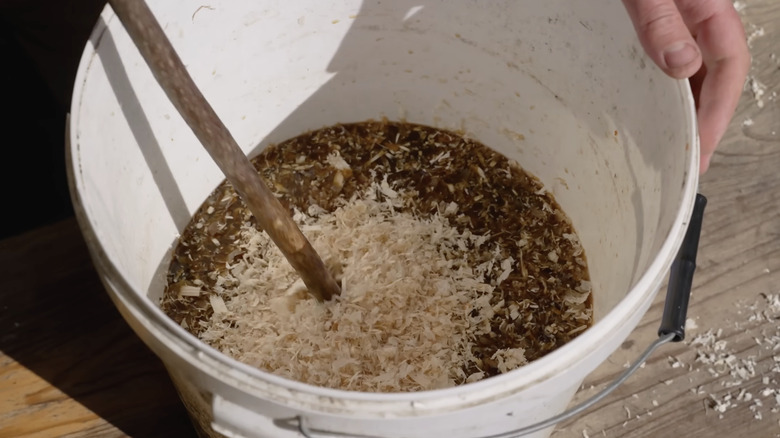
The key ingredient to fish fertilizer is, of course, fish. You need to collect a decent amount of scraps, which includes the bones, guts, and heads, that will need to be fermented in a method of your choice. You could toss it in with the rest of your kitchen scraps into a general compost pile. A better method, however, would be to create a liquid fish fertilizer simply by adding water to your collected fish scraps.
Fill a five-gallon bucket with a ratio of about three parts water to one part fish. You can add brown sugar or molasses to provide extra sugars for really efficient fermentation and some untreated sawdust to help create air pockets and provide more nutrients. Cover the bucket and leave outside, burping the mixture occasionally if you see an air bubble forming in the lid. This is best done in spring or summer when the warmer temps can charge the fermentation. Fair warning — it will smell.
After a month, the fish will be totally broken down into a highly concentrated liquid. Dilute the mixture with a ratio of two tablespoons fish liquid to a gallon of water. Then you can pour it directly onto the soil. Avoid any edible parts of your plants because you don't want those tasting of fermented fish. Once you're done, sit back and watch how the benefits of fish fertilizer work their wonders on your garden.