

Want Stunning, Long-Lasting Hydrangea Blooms? Plant Them At This Time
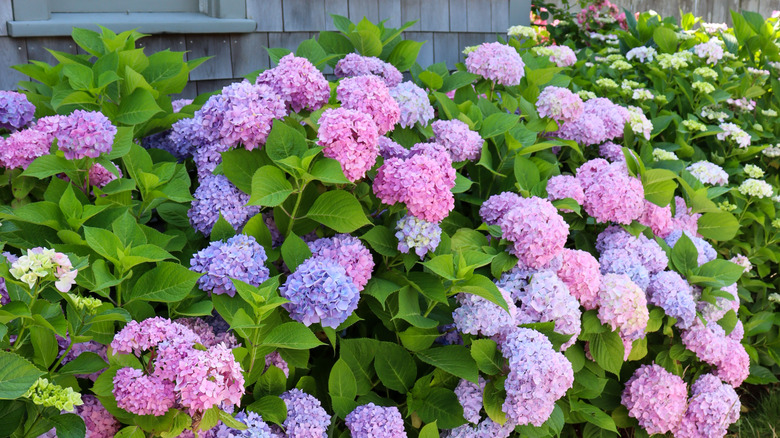
The goal of anyone who wants to grow and care for hydrangeas (Hydrangea spp.) is to achieve stunning, long-lasting blooms on their plants. There is a lot that goes into this because hydrangeas require conditions to be just right in order to put forth their best blooms. One thing that is absolutely essential is to make sure you're planting your hydrangeas at the right time of year.
There are two schools of thought when it comes to planting hydrangeas. The first is in favor of early spring planting, between April and May. Planting during this time of relatively cool and stable temperatures will allow the hydrangea to spread its roots in the soil before the summer heat kicks in. Excessive heat can easily stress or kill a fledgling hydrangea, which is why gardeners in warmer climates are swapping hydrangeas for more heat-tolerant alternatives.
The second school is in favor of early fall planting, between September and October. The idea is to get the hydrangeas in the ground several weeks before your region's first frost. During that time, while the temps are cool and the soil still loose, the hydrangeas can get their roots settled before entering winter dormancy. Once late spring and summer arrive, the hydrangea can put all of its effort into producing blooms instead of being rushed to get its roots squared away.
Which hydrangeas to plant when
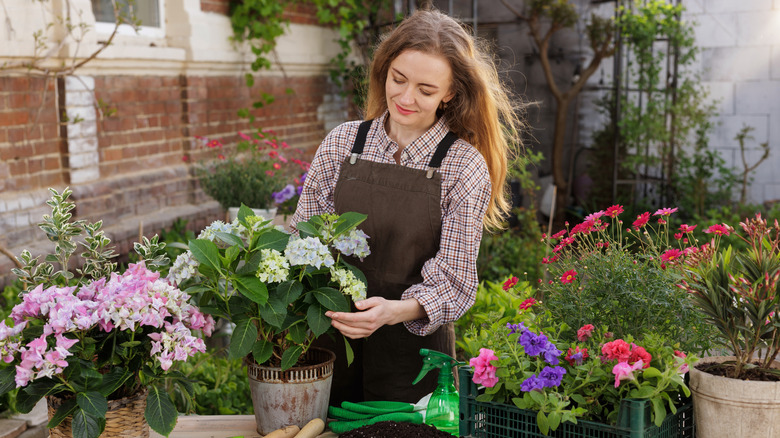
Hydrangeas come in a wide selection, so it's important to note which ones will work better when planted in the spring versus the fall. Generally speaking, the varieties that are more cold-hardy, such as panicle (H. pinaculata) and smooth (H. arborescens), will be better candidates for fall planting thanks to their tolerance for colder temperatures. They will thrive in USDA hardiness zones 3-9, with the panicle in particular being the best in terms of just how much it can handle temperature fluctuations.
Spring planting would be better for those who live in warmer climates with earlier final frost dates. This is owing to the fact that colder zones can see freezing temperatures and snow a decent way into April. For spring planting, hydrangeas like bigleaf (H. macrophylla), oakleaf (H. quercifolia), and mountain (H. serrata) work great and do better in zones 5-9 where temperatures are a little more forgiving.
All this said, we'd lean our preference more to fall planting because of the time it allows to get the hydrangea established. Planting in spring can be tricky because everything is waking up out of winter and conditions are not always stable. Ensure your hydrangeas are planted in areas with plenty of light and acidic soil, and don't forget to water them constantly for optimal health. If your soil is less acidic, try adding orange peels to your hydrangeas to help them flourish.