

7 Unexpected Uses For Oven Cleaner (That Have Nothing To Do With Your Oven)
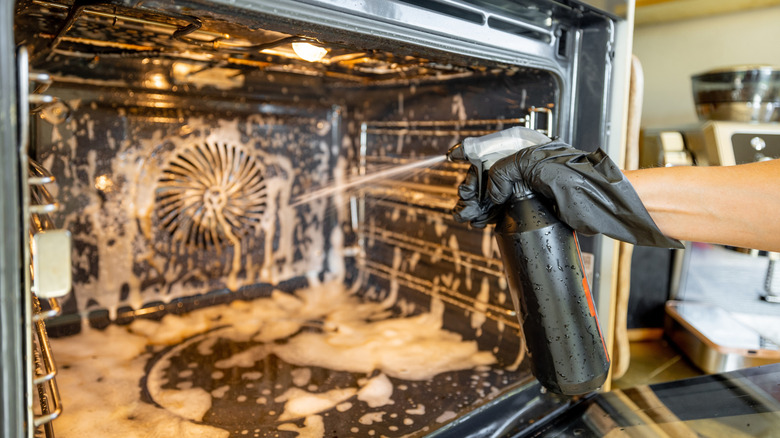
Cleaning an oven isn't an easy task. Most of us, if we're being honest, probably wait until our oven is in pretty dire shape before we crack open the door and get scrubbing. As a result, it's a job that requires one capable cleaning product, which is why so many of the best oven cleaners take the sweat and scrubbing out of the process. While you can ditch the chemicals and go with a natural, DIY oven cleaning solution, a bottle of store-bought aerosol oven cleaner can actually tackle so much more beyond your traditional oven or toaster oven. Since oven cleaners are made with ingredients that target grease (a particularly tricky, sticky residue to remove because it gets baked onto surfaces), these cleaning products can help you clean up other messes outside of your kitchen.
Oven cleaners can be so effective on caked-on, baked-in grime because they're potent cleaning solutions that include abrasive and alkaline ingredients. That potency is exactly what lets them be used in other surprising ways — including tackling both food residue and sticky problems such as soap scum, hard water stains, and regular ol' grease. However, a detail worth keeping in mind any time you reach for your oven cleaner inside or outside the kitchen is that these cleaners are caustic, which means they can burn bare skin — don gloves to protect your hands as you work. They can also be quite irritating to inhale, so it's best to work with oven cleaners outdoors or in areas with good ventilation and airflow.
Remove stubborn stains on pots and pans
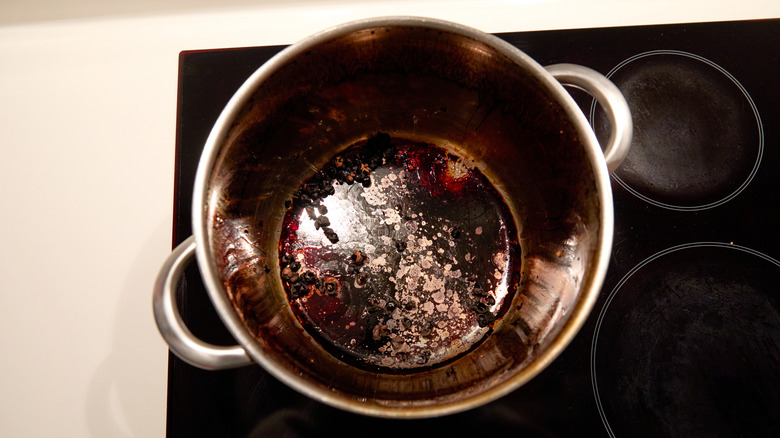
If you're frustrated by unsightly black and brown stains splattered across your cookware, your oven cleaner can break them down better than dish soap. Spray the oven cleaner across the bottom of your pots and pans or use it as a spot treatment solely on stains or greasy burned spots, then let it sit for about a minute. When time's up, wipe away the foamy cleaner and give your cookware a rinse — and watch the stains disappear. Just don't try this trick on hard-anodized aluminum; it could wreck your cookware.
Get rid of grease stains on glass bakeware
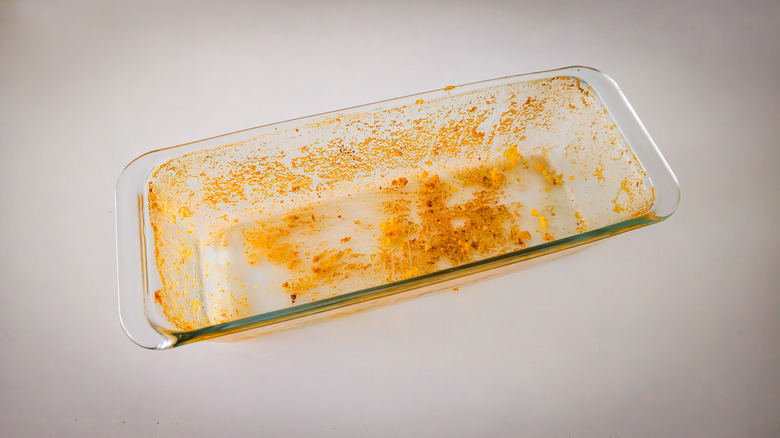
Your go-to glass bakeware can be quite stubborn to clean after baking a casserole, and sometimes, those yellow-brown stains linger even after a run through the dishwasher. Pull out your oven cleaner, and you can get your glass baking dishes looking new again. The ingredients that work on the baked-on grease inside your oven do the same on your bakeware — just spray the cleaner onto any stains or spots, let it sit for no more than a minute, and wipe it away.
Strip seasoning off of cast iron cookware
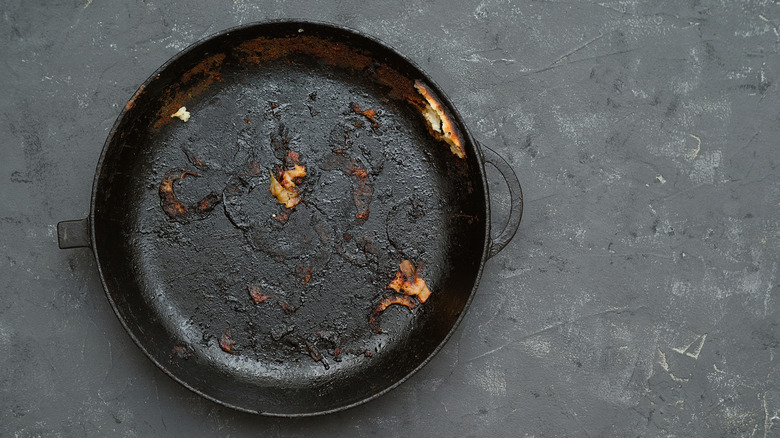
If you have a cast iron pan that's looking worse for wear (or perhaps one you've inherited or thrifted), grab your oven cleaner. These tough cleaning products can break through years and layers of seasoning to strip it bare. Spray a layer of oven cleaner on both sides of the pan, then slide it into a plastic bag and seal it shut. Let the pan sit for 24 hours before scrubbing with steel wool. You may need to repeat the process for particularly well-loved pans.
Get cooked-on gunk off grill grates
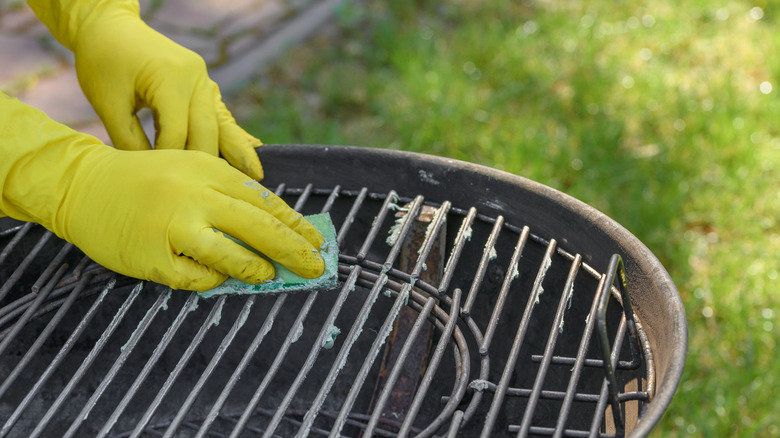
Getting grill grates clean is as tough a task as cleaning your oven. Most grill grates require special care because they're typically made of either cast iron (enamel-coated or uncoated), steel, or stainless steel — which means oven cleaner can get them sparkling. Pull them off your grill and coat them in a layer of oven cleaner, then let the solution sit for about 40 minutes. Give them a scrub, then rinse them clean. Just make sure to wash them with soap and water before putting them to use for cooking.
Make oil stains disappear from your driveway
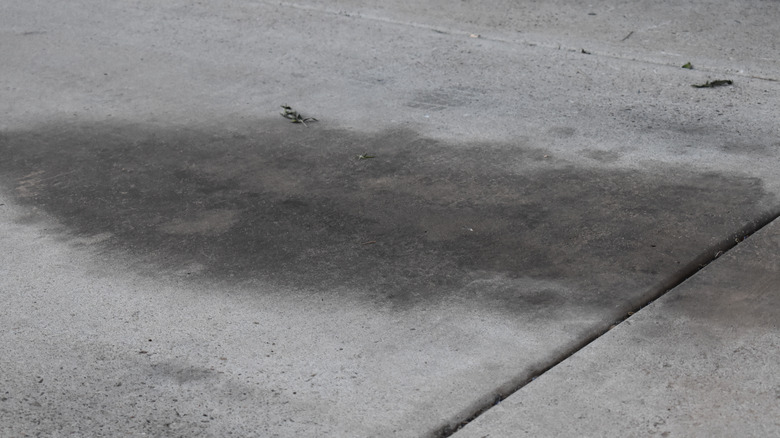
Once your car leaks oil onto your driveway's asphalt, odds are the oil stays there. But oil, gasoline, and other automotive fluid stains can actually be pretty simple to clean — if you break out your aerosol oven cleaner. After all, the residue inside your oven is similar; whether they're cooking oils or automotive oils, they're still oils. Uncap your oven cleaner, spray it on top of any driveway stains, and let it sit for about 15 minutes. Then, break up the stain with a stiff scrub brush before rinsing it away.
Remove soap scum sitting on tubs, showers, and tile
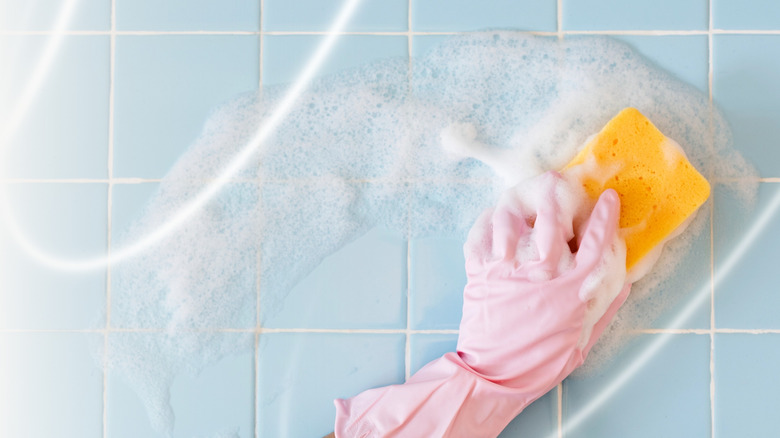
Soap scum seems like a residue that shouldn't be challenging to clean. However, this chalky, stubborn buildup that appears across tubs, showers, and bathroom fixtures is actually a kind of residue comprised of minerals from hard water (such as calcium stearate and magnesium stearate). Your oven cleaner contains just the right abrasive, corrosive ingredients to break down this tough debris. Spray it onto any surface that's afflicted, including tile, grout, and fiberglass bathtubs, let it sit for half an hour (or longer, if needed), and wipe it clean.
Tackle hard water buildup on showerheads
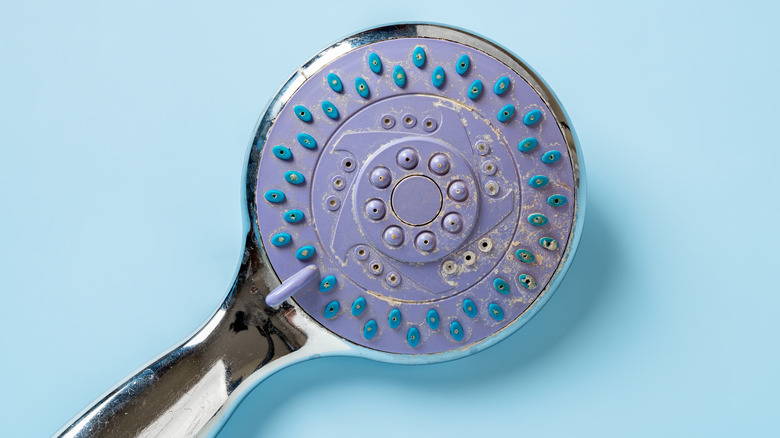
If you've noticed your showerhead is getting tougher to clean or losing water pressure, hard water might be the culprit. Cleaning hard water stains and buildup typically requires special cleaning solutions that can break down mineral deposits, but you can also try a spray of oven cleaner for a quicker fix. Coat the showerhead and its spouts thoroughly with the solution, cover, let it soak for approximately 20 minutes, then rinse clean for a mineral-free finish.