

Plant These Herbs With Rosemary To Fill Your Garden With Hummingbirds
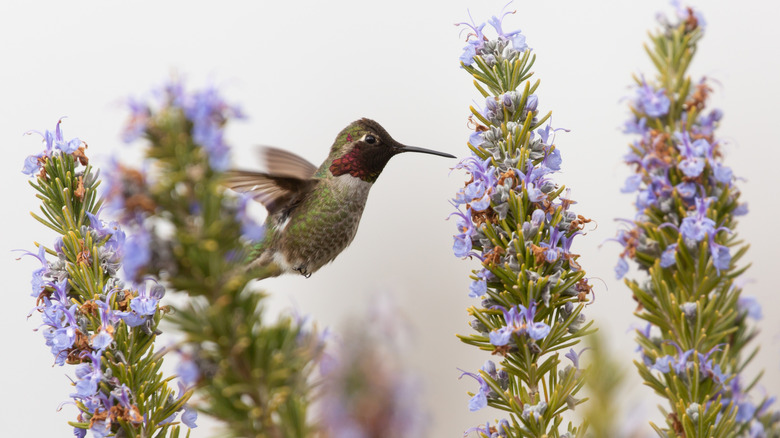
Rosemary (Salvia rosmarinus or, as it was previously known, Rosmarinus officinalis) is something of a do-it-all plant. It's hardy and blooms not only in spring, but also winter. It's drought-tolerant and well-suited for hot weather, too. This easy-to-grow plant will add fragrance to your garden – it falls within the mint family, after all — while providing great ingredient options for cooking. Outside of the garden and kitchen, scientific research suggests that rosemary may even have anti-inflammatory, analgesic, and antioxidant properties.
But for many home gardeners, one of the best effects of planting rosemary is that hummingbirds love the nectar inside its flowers. Adding rosemary into your garden, along with other plants known to attract hummingbirds' interest, can quickly fill your outdoor space with these iridescent, jewel-hued critters. The key to attracting hummingbirds into your yard is to choose plants known to appeal to them while thriving alongside rosemary. You'll have even more success if you choose companion plants that share similar needs and growing conditions.
Rosemary-compatible garden companions that'll encourage hummingbirds to stop by include alyssum (specifically, sweet alyssum), borage, certain varieties of sage, zinnias, or even lavender (which, when paired with rosemary, attracts hummingbirds and butterflies). In addition to considering plants that pair with rosemary, it's also a good idea to seek out options that meet hummingbirds' top criteria, like perennials with bloom times throughout the year and plants that bloom with tubular flowers, since those work with the birds' long, thin beaks.
Borage is a hummingbird magnet
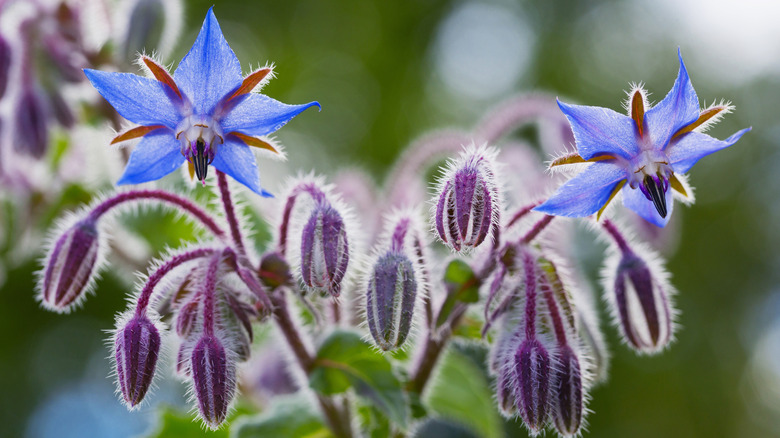
Add borage (Borago officinalis) into your garden, and you'll get more than just hummingbirds stopping by. This flowering plant, which also goes by the name "star flower," is a visual showstopper. It's also a favorite of pollinators of all kinds, which is why it's also earned the nicknames "bee bush" and "bee bread." Borage offers a frequently-replenished nectar supply that keeps hummingbirds and bees well-fed with plenty of sugar. As a result, you'll likely find that this particular plant gets significant traffic when it's added to your garden and its blooms appear in spring and summer. If you live in a warm climate and prune your borage regularly, you may find it continues to flower into early fall.
If you're already growing rosemary in your garden, borage makes an excellent companion plant. It's not picky; this star-flowered plant can handle full sun and partial shade, as well as dry soil. You can even grow borage pretty easily in nutritionally-poor soil, which alleviates the headache of fine-tuning your garden soil's pH. It might look more delicate than rosemary, but it can handle similar growing conditions (and it's even edible to an extent, like its fellow herb). It just might be even easier than rosemary to get growing, as borage is such an effective self-seeding plant that it can quickly go from thriving to invasive, potentially taking over your garden if you aren't careful.
Zinnia blooms with nectar-rich flowers
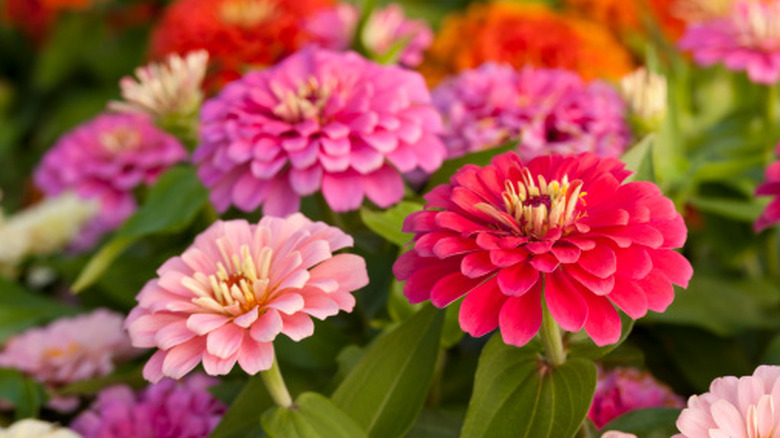
Pollinators love brightly-colored flowers, but hummingbirds are especially enthusiastic about them. And while there are so many beautiful blooms you could choose, zinnias are among the brightest and best-suited for hummingbirds in particular. Birds can easily reach the nectar inside the flowers' central florets, and they bloom all summer long, allowing pollinators of all kinds can stop by regularly. Here's an extra tip: Adding any zinnias to your garden should draw hummingbirds' attention, but if you want to amp up the attraction factor, take advantage of specific colors. Red, orange, yellow, and pink flowers will appeal to hummingbirds the most.
Zinnias are bolder and brighter, and they feature bigger flowers than your typical rosemary plant, but they're also one of the easiest flowers to grow and surprisingly great companion plants. Don't let their gorgeous blooms fool you; zinnias are one hardy full-sun plant, able to survive dry conditions (including droughts!) and thrive without much maintenance. That's quite similar to drought-tolerant rosemary, which is also a low-maintenance plant that'll sprout and bloom without too much intervention on your part.
However, you may want to keep the two separate until you're sure your zinnias are flourishing. While zinnia plants can handle dry conditions once they're established, they will need more water in their seedling stage. Once they've taken root, though, they should do well in the same type of dry soil that rosemary plants thrive in.