

Keep Your Spider Plant Thriving Year-Round With An Easy Care Tip Everyone Overlooks
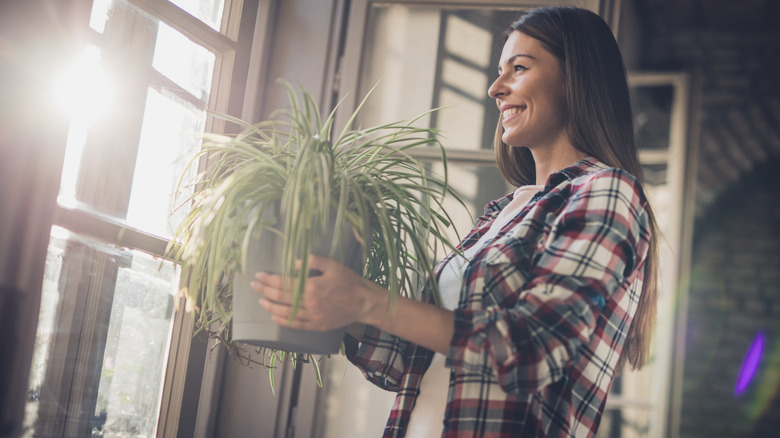
Spider plants (Chlorophytum comosum) are among the best houseplants for beginners because they don't need too much light or water. Even though they can bounce back from a little neglect, they still greatly benefit from proper care. Spider plants are typically very easy to grow and maintain and will thrive indoors in indirect medium to bright light. However, don't overlook your choice of soil — spider plants can suffer if they stay too damp. Use a well-draining soil to keep your spider plant happy and thriving.
Even though spider plants are capable of growing successfully in various types of soil, it's crucial that the dirt is able to dry out after you've given your houseplant a drink. Before watering your spider plant again, stick your finger into the soil to make sure the first couple inches are dry. In some cases, you may need toadd an amendment to your soil to make drainage easier.By ensuring that your houseplant is in a suitable type of soil that drains properly, you'll keep your spider plant thriving through every season with this simple tip.
Choosing the best soil for spider plants to help them thrive
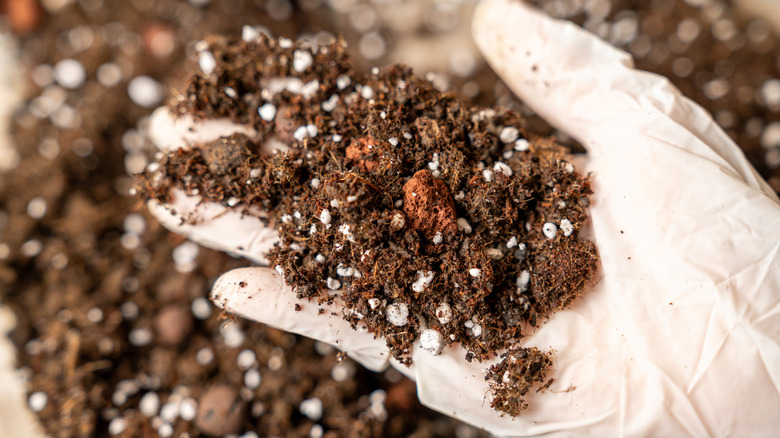
The best type of soil for spider plants is a sandy loam with close to a neutral pH, though they can tolerate a slightly acidic or slightly alkaline pH, too. General-purpose potting soil is a perfectly good option for these easy houseplants as long as it has proper drainage. If you find that your regular potting soil stays damp for too long, try mixing an amendment like perlite into the soil to improve drainage and avoid waterlogging your plant. This ensures that your spider plant won't suffer from root rot caused by overly-wet soil.
To properly care for your spider plant, keep it out of direct sunlight, which can cause the tips of the leaves to turn brown. Fertilize every three to four months and keep the plants at a temperature between 50 to 75 degrees Fahrenheit. Though spider plants like to be a bit root-bound, leaving them this way for too long can lead to roots growing out of the pot's drainage hole, or can even crack the plant's pot. When a spider plant needs to be repotted, simply use your general-purpose potting soil to relocate it to another container.