

Why Adding A Fountain To Your Birdbath Isn't Always A Good Idea
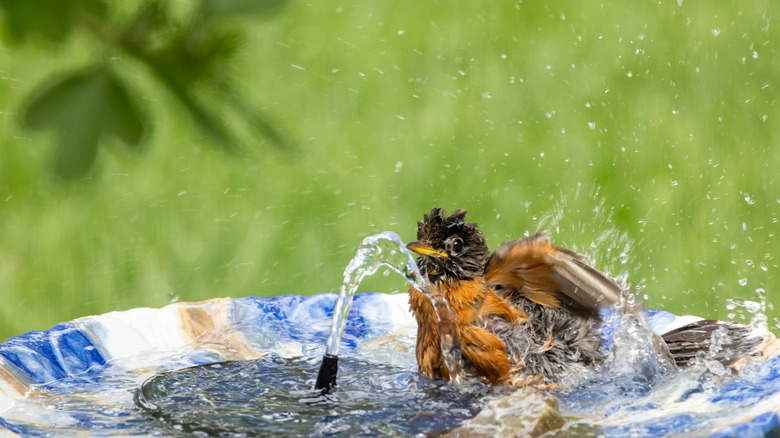
If you've been eyeing a fountain for your birdbath, we have good news and bad news, and more good news. The good news is that birdbath fountains help attract birds to your garden and make your under-appreciated birdbath more fun to watch. The bad news is that there's a price to pay for all that joy, and it comes (as prices occasionally do) in the form of more work for you. Fountains add a layer of maintenance complexity, yet many people already have trouble staying on top of basic birdbath upkeep.
Birds are attracted to the sound of running water because they need it for drinking and preening — that's bird cleaning, not the thing you catch a teenager doing in a mirror. (Though, come to think of it, not all that different.) But with fountains come pumps and the tubes through which the pumps move water. Two things happen in there. One is that whatever bacteria you have in your birdbath water gets in the pump and tubes as well. The other is that practically everything on Earth can stall a fountain pump, which is the first leg of a short flight to destroying it. Pumps can become clogged with algae, slime, organic matter like leaves, and mineral deposits from hard water. Pumps can also be damaged when starved of water, which can happen if the birdbath isn't kept full or is filled with frozen water.
Minimizing birdbath fountain issues
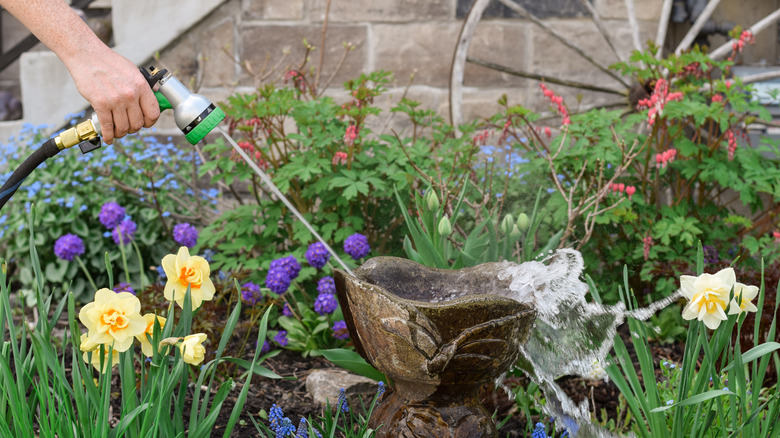
Put simply, a birdbath fountain involves a lot of cleaning, keeping an eye on the water level, and removing the pump when it's cold out. If the bad news is that fountains inherit or worsen the things that make you think twice about putting a birdbath in your yard, the good news is that all that maintenance might be worth the effort. Running water is far more likely to be healthy than a stagnant birdbath. The circulation, which promotes oxygenation, eliminates anaerobic zones that cause nasty bacteria to thrive. At the same time, it inhibits algae growth and can keep the water from freezing in places with mild winters ... though placing a tennis ball in your birdbath can help prevent freezing as well.
All of this hinges on whether you have time for the additional maintenance required by a fountain setup. To protect a fountain pump, you should enclose it in a pump sock to reduce clogs (if it's a submersible pump) or use an inline filter to remove solids (if it's not submersible). Once you've eliminated the debris from gunking up your pump, you'll need to flush it and your water tubing with two parts vinegar to one part water or a non-toxic cleaner every week or two, and completely change out the water periodically. Note that some manufacturers advise against using vinegar, so follow your owner's manual guidance.