

Don't Throw Out Plastic Nursery Pots. Reuse Them To Feed Birds
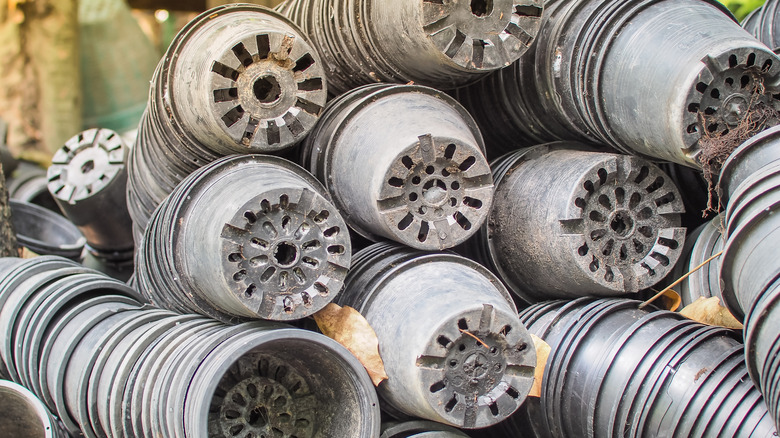
If you're a bird enthusiast, you know that one way to encourage their presence around your property is to feed them. With so many options available, putting a bird feeder in your garden can be overwhelming (and can quickly get expensive if you have more than one). Getting the "right" feeder can depend on the types of food and birds you're trying to attract, but you don't necessarily have to spend a fortune. Even better, you can reuse certain materials around your home that might otherwise end up in a landfill.
Take plastic nursery pots, for example. These are designed to only be used once — after you transport them to your home, you have to transfer the plants into another container or directly into the ground. Most people end up throwing out these plastic nursery pots because there aren't many options for reusing or recycling them. Fortunately, you can reuse a variety of plastic containers by converting them into bird feeders. It's even possible to use broken pots for this purpose, as long as the product is sufficiently intact to hang it up and fill it with seed. It's pretty easy to create a DIY hanging feeder with a few key steps, like cutting small holes near the bottom and inserting wooden rods.
How to convert plastic nursery pots into bird feeders
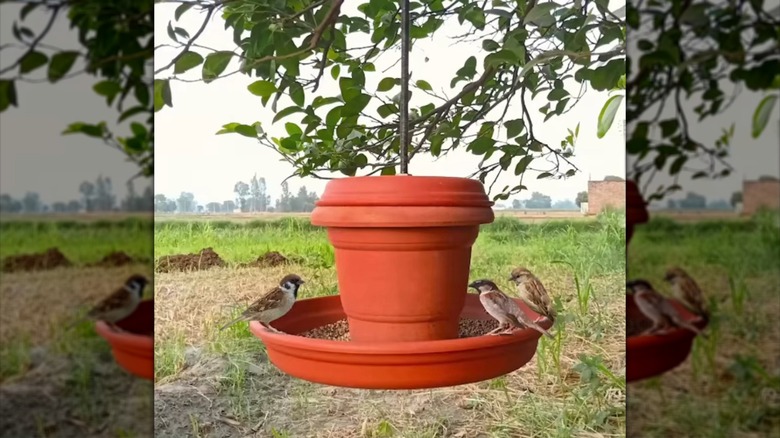
Before repurposing plastic nursery pots into avian feeding spots, you'll need to do a little bit of prep work. First, clean the pots out completely with water and dish soap. Allow them to dry and check to ensure there are no signs of soil or other debris left behind.
The next steps largely depend on the types of pots you're repurposing. When reusing single-use nursery pots, place these face up and create feeding ports by cutting a few low holes around the sides of each container. You can use scissors or a small knife here, but make sure you wear protective gloves to prevent accidental injuries. If the pots came with saucers, use these as makeshift roofs over the tops. You can also affix an additional saucer to the bottom using rope or small chains to catch seed spills. Alternatively, you can use a larger plastic planter without any saucers.
Next, you'll need to create perches for the birds so they have somewhere to stand while eating. The simplest method is to drill small holes underneath the feeding ports you already cut out and slide wooden sticks into each one. Some people choose to decorate the outsides of these plastic pots, but make sure you avoid substances that are harmful to birds. To that end, the National Audubon Society approves of crayons but advises against markers, glue, and tape.
Placing and maintaining your DIY bird feeder
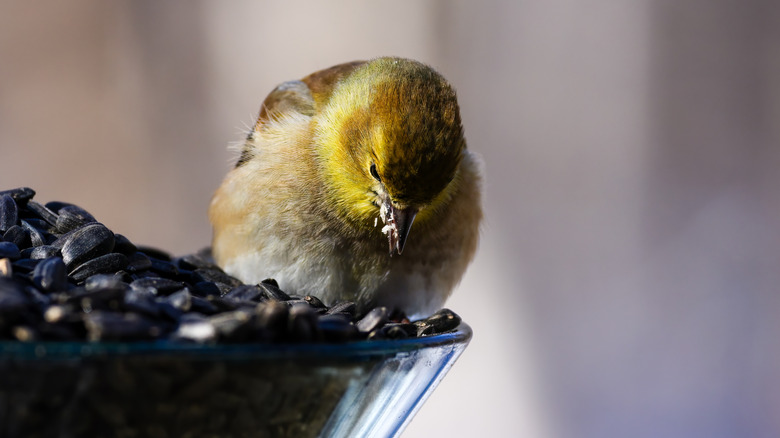
Once you've created your bird feeders out of plastic nursery pots, it's time to place them in your yard or garden. Create additional holes near the top of each new DIY bird feeder so you can insert a string for hanging. Once this is complete, fill your new feeders with the desired seed. If you're stuck on which types of seeds to buy, try all-purpose black oil sunflower seeds. These attract a variety of birds year-round, including finches, cardinals, titmice, and chickadees.
You can place your repurposed nursery pot bird feeders on tree branches or shepherd's hooks in your yard or garden. Audubon Vermont recommends finding a spot at least 5 feet off the ground in order to deter other animals.
Once everything is in place, sit back and see how many birds visit your yard. Not only does it feel good to support your feathered friends, but doing so by reusing plastic nursery pots is an environmental win-win. The work doesn't end there, though — consider inspecting and cleaning your homemade bird feeders at least once a week to ensure the birds stay safe and healthy.