

12 Tall Perennial Plants To Add Height To Your Garden
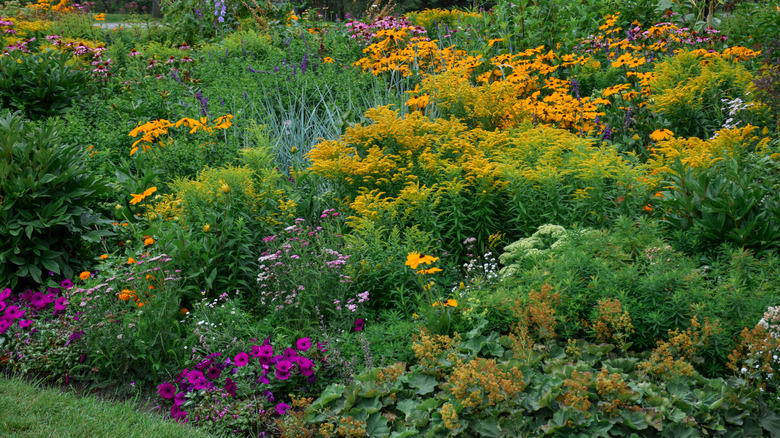
It's easy to understand why gardeners choose to litter their plots with perennial plants. Different from annual plants, which have to be re-planted every year, perennials continue to bloom for several years. Perennials are a diverse group running the gamut from low-growing flowers and fruit bushes to tall grasses, trees, and shrubs. Apart from being more ergonomic to take care of, this taller class of perennials offers gardener's wonderful opportunities to add height to their gardens.
Without height, gardens can look somewhat static since everything is on the same level field. By adding height you can create a more visually appealing landscape while also improving the health of your garden. When strategically planted, tall perennials can maximize sunlight, improve airflow through the garden, attract pollinators, and save valuable horizontal space that can be used for planting shorter flowers and vegetables. So, the question is: What tall perennials should you be planting?
While trees and shrubs are certainly going to give you the most bang for your buck in terms of height, there are other types of perennials that can contribute by being more of a middle ground. The following 12 tall perennials range in height and are hardy across a number of USDA climate zones. Some can be planted in the ground, while others will work well in containers. Either way, all will do the job of adding vertical visual interest to your garden.
Fruit trees
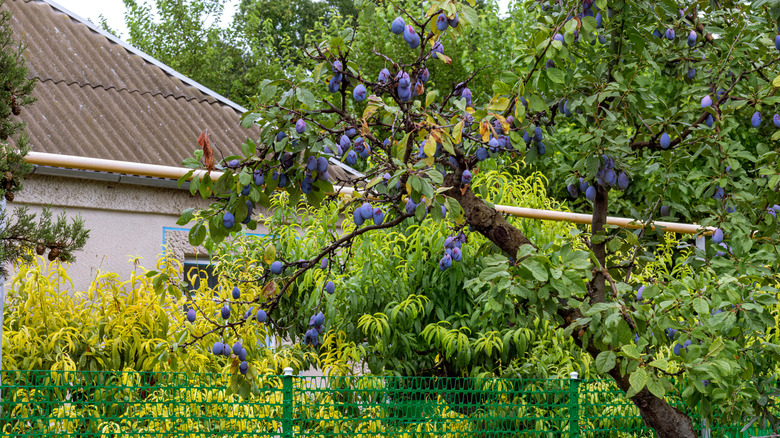
Though they take years to mature, fruit trees are going to be one of the best options for providing vertical visual interest. Species like apple (Malus domestica), pear (Pyrus communis), and certain cherry trees (Prunus avium) will do well in cold and mild climate zones, while peaches (Prunus persica) and fig (Ficus carica) will do well in warmer climates.
Permaculture planting principles state that you can create a whole garden guild underneath and surrounding fruit trees, further bringing them into the garden as opposed to them being their own separate thing. Fruit trees range in height from 18 to 35 feet for standard stock, and 8 to 15 for dwarf and semi-dwarf.
Climbing roses
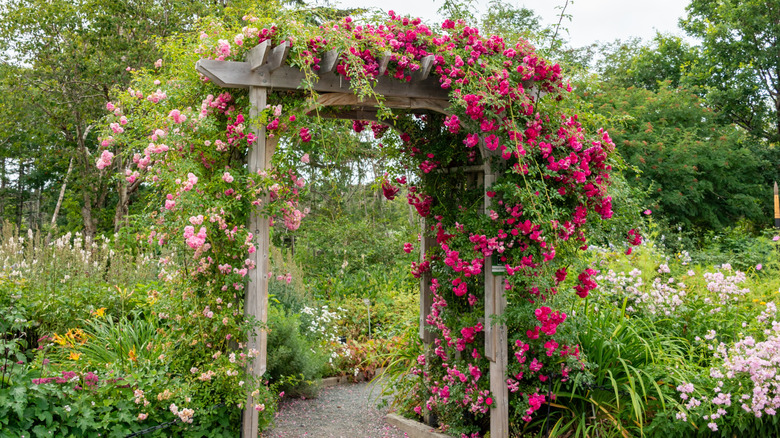
Climbing roses offer a unique way to add height to a garden because they do so with the help of structures. The roses need something to actually climb on in order to provide height, which is why gardeners often plant them alongside arbors or fences in order to provide structure.
The best climbing roses are those that climb easily, are disease resistant, and offer bountiful displays of colorful, scented blossoms. Rosa 'Don Juan' and Rosa 'Cecile Brunner' are such examples and will do well in USDA zones 5 to 10. The height of a climbing rose depends on the structure you provide it, and how much sun it gets during the day.
Highbush blueberries
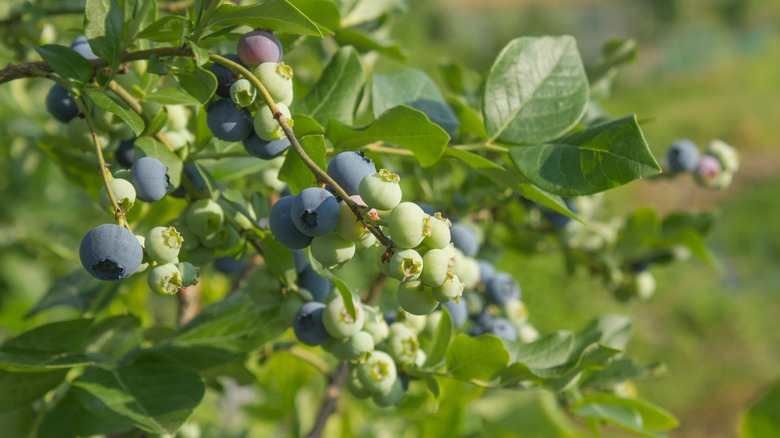
Highbush blueberries (Vaccinium corymbosum) are a native North American fruiting shrub that grow between 6 to 12 feet in height, making them excellent tall border or privacy plants. The blueberries produced are noted for their sweetness and depth of flavor. They can be grown in containers or sown directly into the ground.
Zone hardiness depends on the variety. Vaccinium x 'Patriot' will survive the colds of zone 3, while Vaccinium x "Sunshine Blue" can withstand the heats of zone 10. This allows a wide selection for growers across the country.
Culver's root
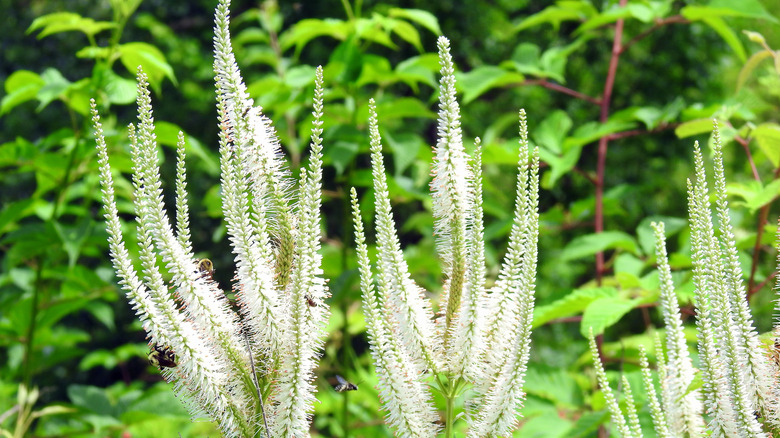
If you've ever desired to have a native perennial plant in your garden that will work overtime to bring loads of beneficial pollinators like butterflies and bumblebees, then you need to be planting culver's root (Veronicastrum virginicum).
A summer blooming flower that grows between zones 3 and 8, culver's root is known for its unique vertical flowers that come in an array of colors including creamy whites and deep purples. Reaching a maximum height of 5 feet tall, they work well to fill in the space between short and tall plants.
Coneflowers
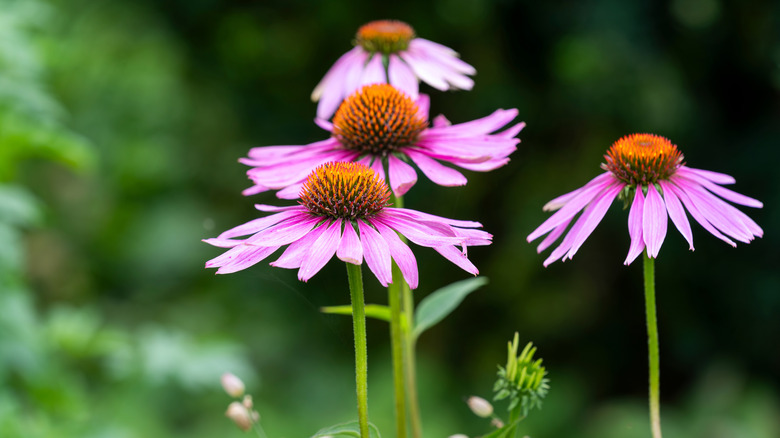
Often known by its botanical name of Echinacea, coneflowers are another exceptionally colorful and fragrant native perennial that does an amazing job of attracting pollinators. Averaging 3 to 4 feet high, coneflowers are not overly tall, but they look as if they have greater height owing to their bare, straight stems. Hardy between USDA zones 3 and 8, coneflowers are highly adaptable to various soil types and work well as border plants or as a space filler between taller and shorter plants. Just make sure they get plenty of sun.
Russian sage
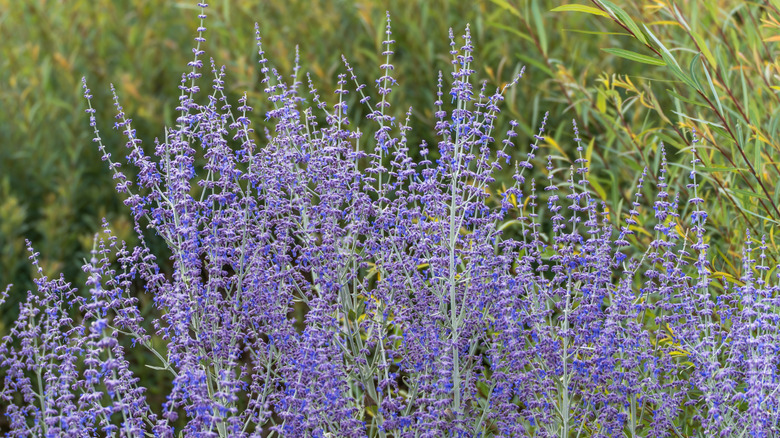
Russian sage (Salvia yangii) is an unfussy plant that grows well between USDA hardiness zones 4 and 9. It's notable for its tall flowers which are often mistaken for lavender thanks to their similar shape and color. Russian sage is different, however, because it grows in larger, taller clusters than lavender and has a distinctive minty scent. Tending to grow in large bushes that can reach up to 5 feet high and 2 feet wide, Russian sage can work exceptionally well as a perennial border or as a garden centerpiece.
Lupines
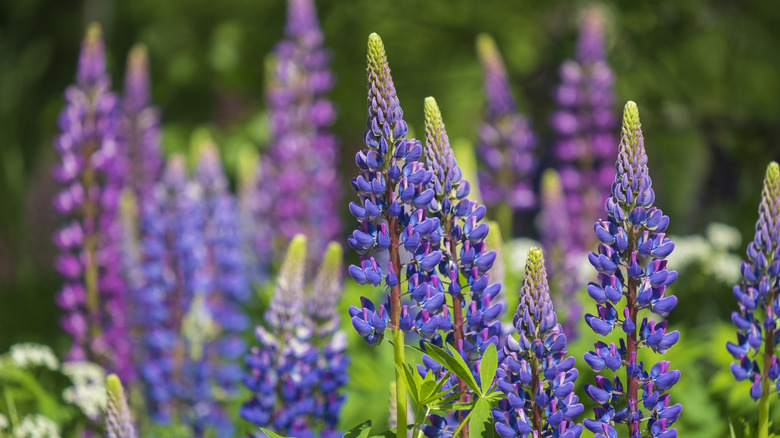
As a member of the legume family, lupines (Lupinus spp.) have deep taproots that break up soil compaction and have special bacteria in those roots that helps enhance the surrounding soil with nitrogen. As such, lupines make excellent companion plants for other flowers and even some vegetables. In terms of height, they offer mid-range height of around 4 feet. They are excellent additions to wildflower meadows that get plenty of sun and offer great vertical interest thanks to their tall blooms that come in a variety of different colors. They are hardy between zones 3 and 8.
Joe Pye weed
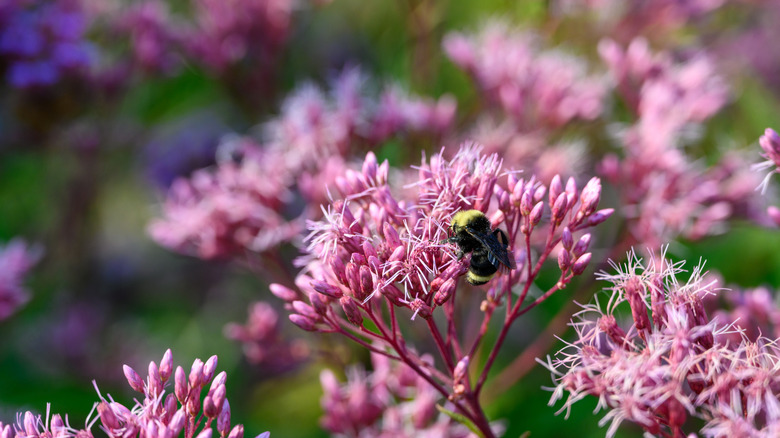
In terms of attracting pollinators to your garden while also adding height, one of the very best options is Joe Pye weed (Eutrochium purpureum). Averaging 4 to 8 feet in height, the vibrant pink, white, or purple blossoms of the tall Joe Pye weed make excellent magnets for pollinators like bumblebees, butterflies, and hummingbirds. Able to grow between zones 4 to 8, Joe Pye weed can serve well as a border plant or as a filler for some bare spots in your perennial garden. They require plenty of sun and rich, moist soil to grow to their fullest height.
Blue false indigo
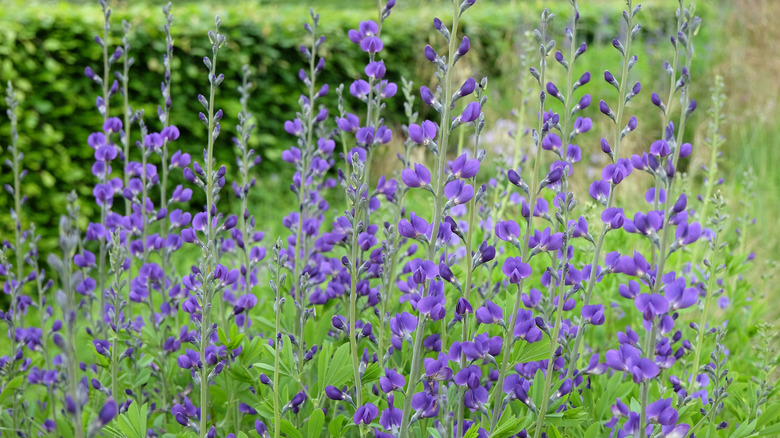
There is hardly a better perennial for attracting butterflies than blue false indigo (Baptisia australis). This is a large, bushy perennial plant that grows to about 4 feet in height. The blooms of the blue false indigo are often mistaken for lupines thanks to their vertical growth. The flowers grow in populated clusters that are incredibly attractive to butterflies. A hardy plant, blue false indigo will grow well in gardens between zones 3 and 9 and is an excellent option for anyone looking to make natural indigo dyes.
Tall garden phlox
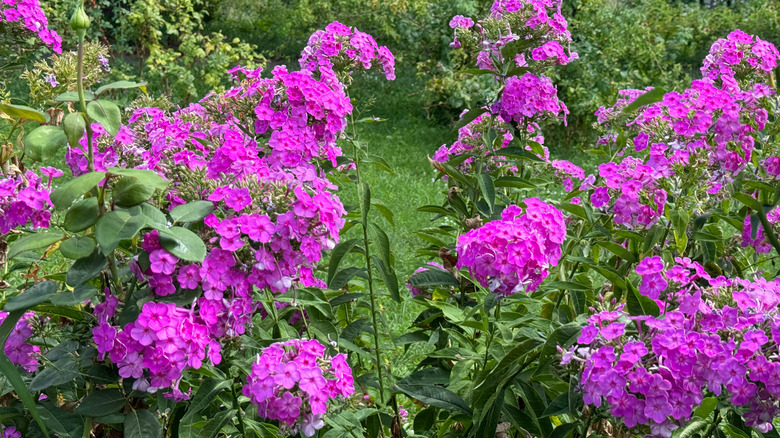
The adjective "tall" is necessary for this particular type of garden phlox (Phlox paniculata). Most phlox grows low to the ground and often barely exceeds 2 feet in height. Tall garden phlox, however, doubles the average height; sending this beautiful flowering bush to 4 feet high. Able to grow between zones 4 and 8, tall garden phlox blooms in a range of colors and they're highly attractive to pollinators thanks to their scent. However, they don't do well with crowding as lack of airflow can bring mildew. Good spacing is therefore required, making this a good stand-alone plant.
Switchgrass
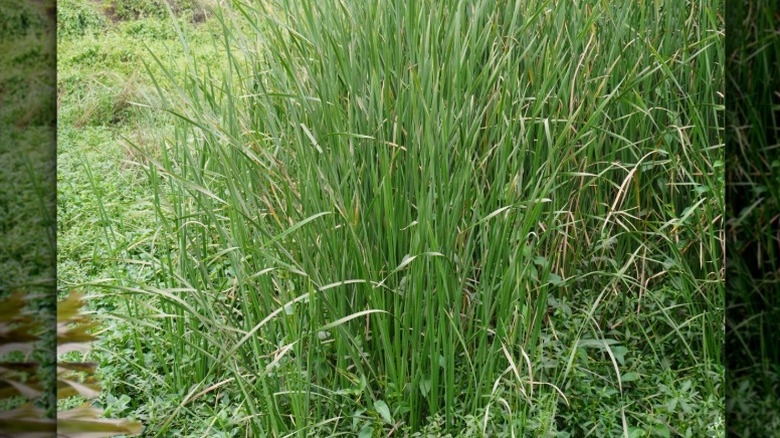
Switchgrass (Panicum virgatum) is native to North American prairies and has become popular as an ornamental grass for perennial gardens. They come in either arching or upright cultivars. For an emphasis on height, the upright varieties such as 'Northwind,' 'Dallas Blues,' and 'Thundercloud' are your best bet, as they range from 5 to 8 feet tall. Though most prefer warmer temps with plenty of sun, switchgrasses are hardy between zones 3 to 9. Their best use is as tall borders or as privacy barriers for those living in crowded urban or suburban settings.
Pampas grass
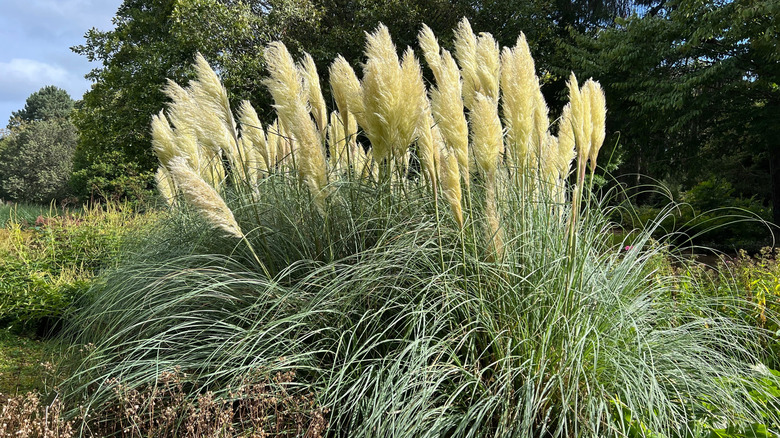
Aside from the fruit trees we first mentioned, pampas grass (Cortaderia selloana) is by far one of the tallest perennials you can plant in your garden. 'Giant White Pampas' and 'Hardy Pampas' are among the tallest of the pampas grasses, typically reaching up to 12 feet tall. Most pampas typically prefer warmer climate zones 7 to 11, but the 'Hardy Pampas' is good on its name and will tolerate down to zone 5. You can grow pampas in the yard, but it also responds well to being planted in larger containers.