

Why Everyone Loves This Backyard Upgrade
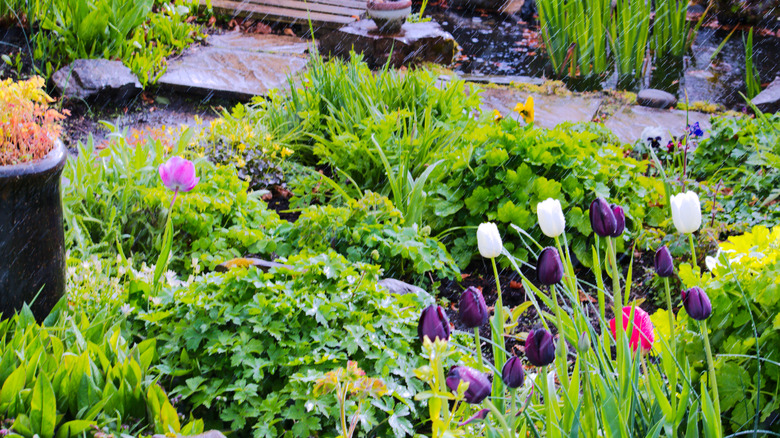
Most homeowners have a love-hate relationship with rain. Sure, it's essential for providing your garden and surrounding landscape with the hydration it needs to stay alive, but rain can also be detrimental. Storms that cause excessive runoff from a home can cause swamps to easily appear where green lawns once stood. Those stagnant pools can be quite harmful, increasing erosion, damaging property, and spawning mosquitoes and flies. If you are someone who wants to stop stormwater from wrecking your yard, there's a popular backyard upgrade that transforms potentially damaging rains into an overall benefit
Rainscaping is a landscape management technique that utilizes water in a unique and beautiful way. According to landscaping professional Anna Johnson, speaking with The Spruce, "Rainscaping is ... helping homeowners turn runoff into a resource while solving common problems like soggy lawns and erosion." Essentially, problem spots where water has collected or done damage in the past can be transformed into unique areas filled with water-loving plants, rainwater collection devices, and visually compelling water management structures.
The benefits of rainscaping go beyond just protecting your yard from standing water and erosion. It can also help keep the foundation of your home protected by redirecting water away from the foundation. With seemingly no downsides, is it any wonder why this backyard upgrade is proving so popular?
How to upgrade your yard with rainscaping
To incorporate rainscaping, many will go the way of rain gardens. These gardens are intentionally planted in depressions, letting them soak about 30% more rainwater than a normal garden would. This is thanks to the strategic planting of water loving plants, such as Joe-pye weed (Eutrochium purpureum), blue flag iris (Iris versicolor), and red osier dogwood (Cornus sericia). Research what water-loving plants work well for your area, and be sure to amend the soil so that it holds moisture but drains away excess.
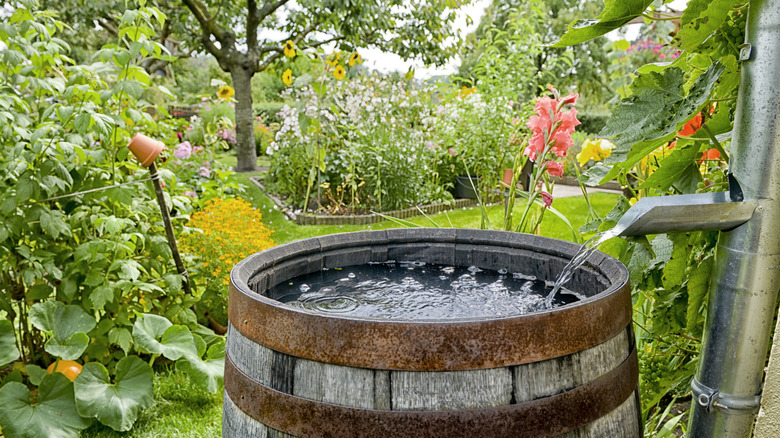
A backyard rainscape does not need to only be a natural endeavor. You can also make practical additions like rain barrels – provided your municipality allows such things — or a dry creek bed. To accomplish this, you need to dig a trench that runs away from the house foundation, then fill it with boulders and small rocks for free water flow. "Beyond their curb appeal, dry creeks help filter and clean rainwater before it returns to local rivers and streams," Johnson says via The Spruce. You can come up with some really creative ideas for backyard landscape creeks like creating waterfalls or building ponds at the end.
Other ideas include permeable walkways, traditional French drains, or underground dry wells that hold stormwater and allow it to slowly permeate the surrounding soil. Do your research, get creative, and see what works best for your property.