

HGTV's Mike Holmes Chooses This Long-Lasting Flooring Material Over Wood Or Stone

The floors in your home need to be reliable, comfortable, and easy to maintain. If you're planning on selling your home soon, you should also consider what's popular, as outdated flooring materials can hurt the resale value of your home. While some flooring options, like wood or stone, hit a few of those marks, they aren't always able to hit all three. This is particularly true in areas like your kitchen, where constant use, spills, and potential water damage could cause major problems. That's why HGTV's Mike Holmes recommends using porcelain or ceramic tiles for kitchen flooring.
Ceramic and porcelain tiles check all the major boxes for long-lasting flooring. As Holmes explained on his Make It Right blog, "They are durable, attractive, easy to clean, and available in a large variety of patterns and finishes." The glaze used to coat these tiles protects them from absorbing water and allows you to simply wipe spilled food off of them. While they can still be damaged, especially if you drop something heavy like a cast iron skillet, they generally resist daily wear and tear. Consumer Reports agrees, noting that porcelain tiles rated highly in durability tests. Li Wang, head of Consumer Report's flooring testing, said, "Tile is the highest-rated flooring among the categories we test. It doesn't wear out, scratch, or stain. Its color doesn't fade, it's waterproof, and it's surprisingly slip-resistant, even when wet." If you're worried about resale value, you'll be pleased to know that while there may be the occasional outdated tile trend that could impact resale value, high-quality tile is generally a positive.
How ceramic and porcelain tiles compare to other materials
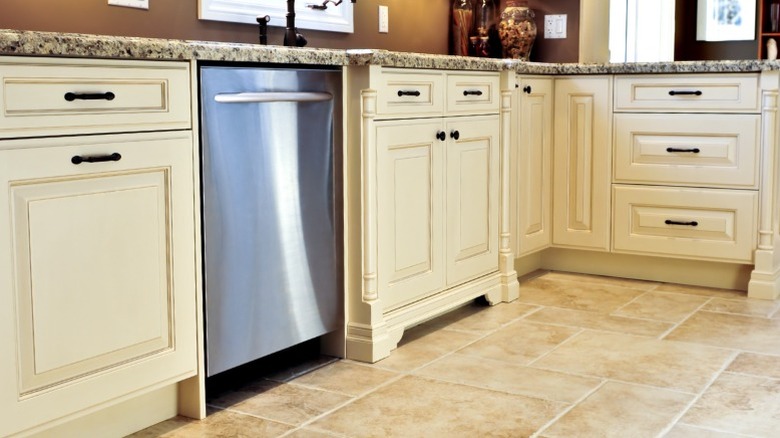
Ceramic and porcelain have a lot going for them, but other materials have their charm as well. So why should you pick ceramic or porcelain over them? Laminate and vinyl are more affordable, but they may suffer in your kitchen. Laminate is vulnerable to damage from water and heavy activity, while vinyl is easily cut by dropped knives. While some can mimic the aesthetics of tile, peel and stick tile vinyl is outdated, so you're better off sticking to real tiles.
Wood flooring is soft, which makes it comfortable to walk on, but it stains and scratches relatively easily. Spilled wine or pasta sauce could leave your light hardwood looking messy, and a dropped cup that wouldn't harm your tiles might dent the wood. Additionally, wood is absorbent, so if it isn't sealed properly, a burst pipe or flooded sink could lead to costly repairs. Compared to tiles, wood floors have an overall higher price tag and require more maintenance.
Natural stone can make your home feel classy, and it's resistant to most physical damage like ceramic and porcelain are. However, the higher price of the stone paired with the cost of professional installation makes this option significantly less affordable. For kitchens in particular, Mike Holmes recommends steering clear of natural stone, explaining, "Natural stone is porous and needs to be sealed every couple of years. Acidic liquids such as wine, lemon juice, and vinegar can do some damage." Ceramic and porcelain, on the other hand, do not need to be sealed unless they are unglazed.