

7 Genius Ways You Never Thought To Use WD-40 In Your Garage
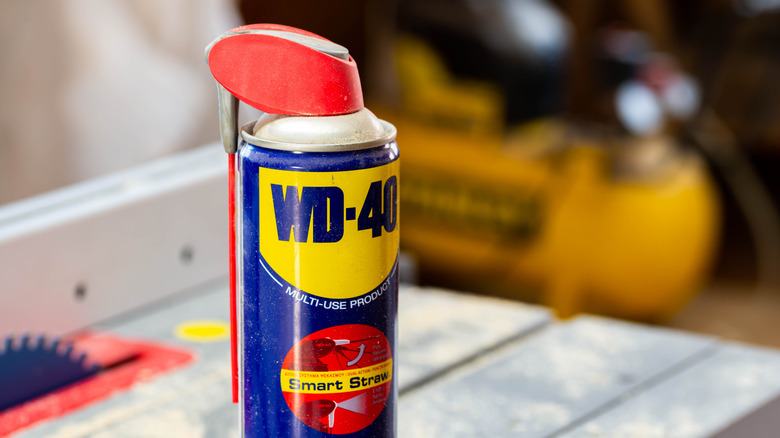
WD-40 has been a staple in many homes and garages since its inception in the 1950s. While it is well known for making it easy to removing stuck bolts, removing rust, and lubricating parts, this multi-use product can do much, much more. In fact, WD-40 is one of those products that seems to have an infinite amount of uses. Due largely to this versatility, WD-40 states that as early as the 1990s, four-fifths of American households had a can handy. Although most who buy WD-40 likely know it has a wide range of applications, they probably don't fully realize to what extent. The company claims the product has over 2,000 uses! It is really no surprise there are a number of ways you may have never considered to use WD-40 in your garage, such as preventing splinters on wooden tool handles or removing those stubborn oil spills from the floor.
While some of these uses may seem far-fetched, they actually work. WD-40's unique ingredient combo allows it to function as, among other things, a cleaner, degreaser, lubricant, corrosion and rust inhibitor, solvent, and penetrant. Once you learn of some of the genius ways in which you can use it in the garage alone, you may find yourself buying WD-40 by the case instead of single cans.
Keep corrosion off nails and screws
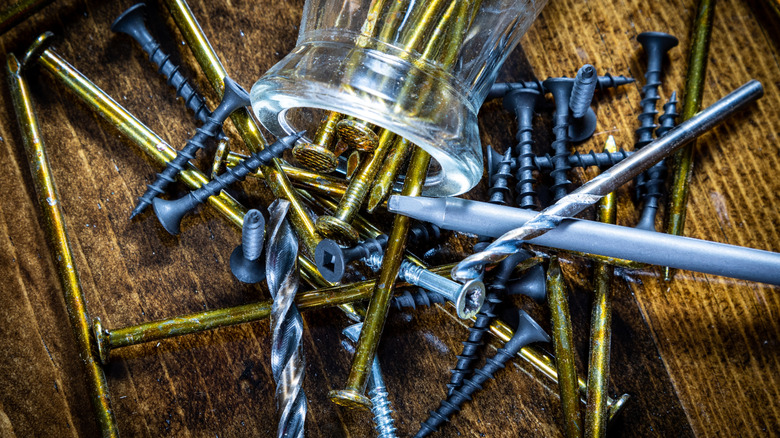
Nails and screws are prone to rust and corrosion, especially in a humid garage. You certainly don't want your fasteners wearing down before you even get to use them. To keep corrosion and rust off your stash of nails and screws, spray the entire box or jar of them with WD-40. The protective coating doesn't last long, though, so you'll need to reapply it from time to time.
Clean and pretreat paint brushes
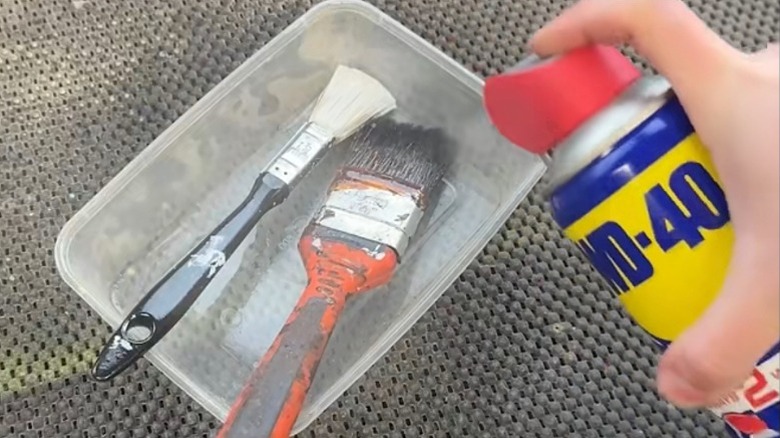
There are several WD-40 hacks for painting, and one trick that could be a real life saver in the garage is using WD-40 to quickly prep your paintbrushes. Spray a light coating on your brushes to keep paint from sticking and make them easier to clean. You can also use WD-40 to revive brushes that have become stiff and brittle from leftover paint, spraying them liberally to let the lubricant penetrate, separate, and soften the bristles.
Clear spray can nozzles
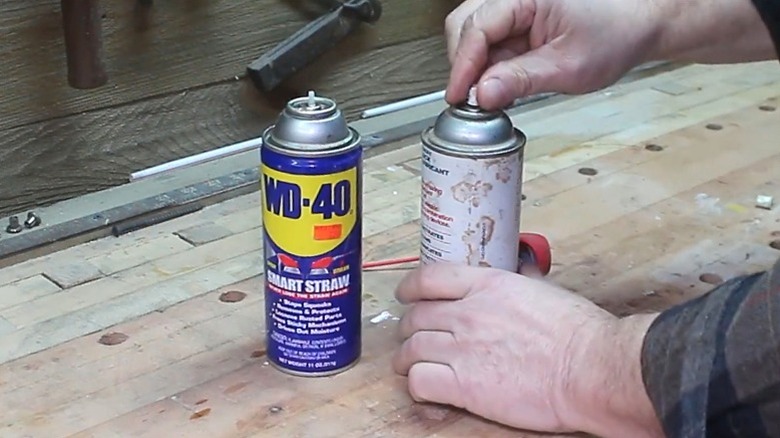
Spray paint nozzles are notorious for becoming clogged. However, that's nothing a shot of WD-40 can't handle. Spraying the clogged nozzle with WD-40 and wiping it with a clean towel will typically open it up so that it's fully functional. Or, you can simply take the spray paint nozzle off its can, put it on the WD-40 can, and give it a few sprays to clear the nozzle. For thicker clogs, you may have to remove the nozzle and spray WD-40 over it to let it soak as well.
Remove scuff marks and tire stains
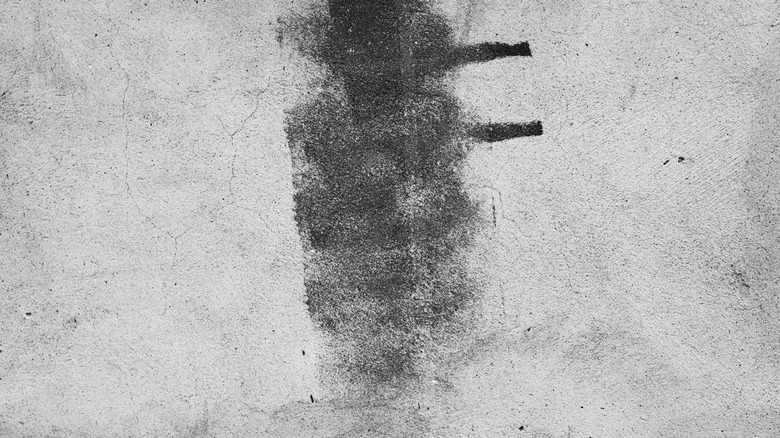
Scuff marks and tire stains are common on garage floors, but instead of ignoring them, you can easily clean them by spraying them with WD-40, waiting a few minutes, and wiping them away. Scuff and tire stains on concrete may require scrubbing with a brush or scouring pad. However, WD-40 even works to remove marks in your garage left from tar.
Prevent wooden tool handles from splintering
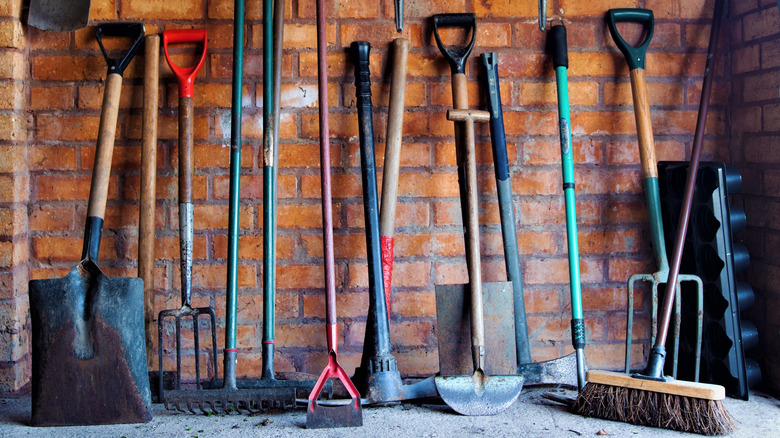
WD-40 does more than just clean rusty tools and protect the metal from future corrosion — it can protect the wood handles from splintering too. Clean the handles to remove dirt and grime, and then coat them with an ample amount of WD-40. Rub it in with a clean cloth to make a smooth surface that won't snag and create a barrier to prevent moisture from penetrating the wood. This combination keeps the wood from premature wear.
Get grease off your hands
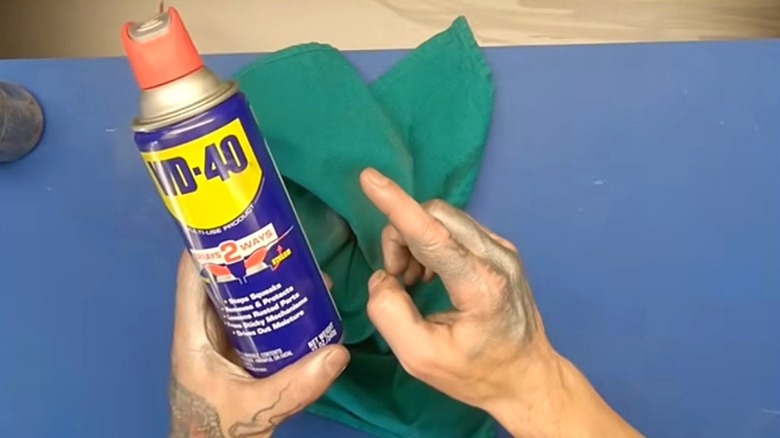
If you end up with grease, paint, or other grime on your hands after a long day of working in the garage, you can quickly clean that mess away before going in the house. Just spray some WD-40 on your hands, and rub them together for several seconds. Wipe them clean with a cloth, shop towel, or rag. Once inside, you'll just have to give you hands a quick wash with soap and water to freshen up.
Clean oil spots from garage floor
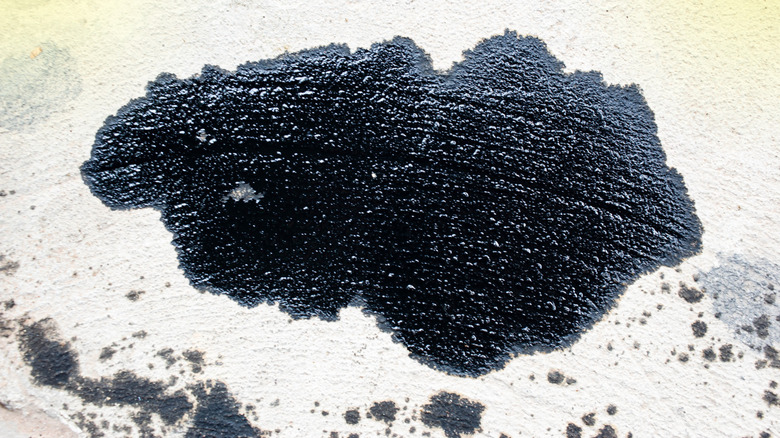
Whether it dripped from your engine or was spilled, oil leaves a stain that can be difficult to remove from a garage floor. In a pinch, you could try to tackle the cleanup by spraying the area with WD-40. Scrub the stain with a brush to loosen it, and rinse it off with a garden hose. Using WD-40 can be helpful for fresh oil, but you may need a stronger cleaner or specialty product for a deeper set stain.