

The Leftover Kitchen Scrap That Helps Snake Plants Thrive
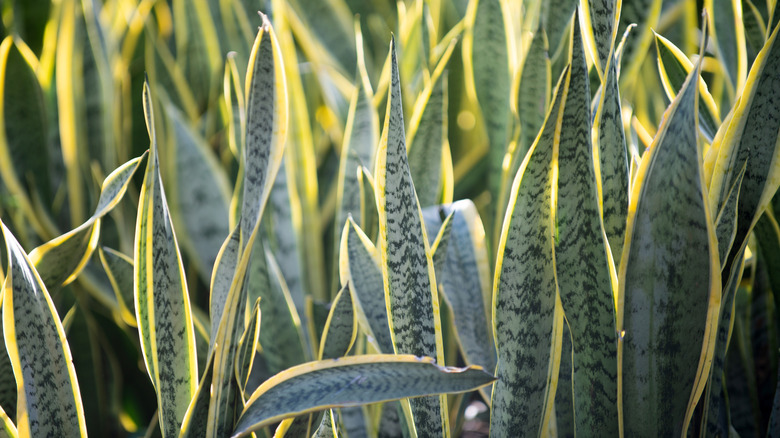
Snake plants, of which there are some 70 different species belonging to the genus Dracaena (formerly considered in the Sansevieria genus), are a popular addition to homes and gardens. They are easy to care for and can be grown inside or outdoors. Although they require little in the way of maintenance, there are some things you can do to ensure they remain in good health. Occasionally adding some used coffee grounds to the soil around the plant is one of them. Whether you keep a snake plant next to your bed or have a bed of them in your yard, this leftover kitchen scrap can help them thrive.
Coffee grounds benefit plants in a couple of ways. First, used grounds can add a bit of nitrogen to the soil, giving snake plants a mild infusion of this valuable mineral. They also contain trace amounts of other helpful nutrients, including calcium, magnesium, phosphorous, and potassium. These benefit snake plants by providing nutrition to microbes that in turn improve the soil quality and drainage. When it comes to caring for a snake plant, that's an important benefit, as they require well-draining soil to prevent root rot.
Another touted benefit of coffee grounds is keeping slugs at bay. This isn't much of a benefit to snake plants, however, as they aren't high on the slug menu. So, think of it more as a perk. What you shouldn't rely on coffee grounds to do is lower the soil pH. Although commonly believed to be acidic, used grounds are barely beyond neutral and have only a slight, temporary effect on the soil.
Using coffee grounds to help snake plants thrive

Using coffee grounds to benefit snake plants is pretty simple, but there are a few ways to go about it. What is typically considered the best approach is to add used grounds to your compost, which can later be added to enrich the soil around your snake plants. It is important, though, that coffee grounds should not make up more than a fifth of the total volume of your compost pile. Otherwise, it can have a negative impact on your plants.
You can also reuse your coffee grounds as a soil amendment and work them directly into the soil, to a depth of a few inches beneath the surface. Another idea is to sprinkle the grounds directly on the soil's surface. When doing this, only use a small amount and scatter them sufficiently. Otherwise, they can dry out and form somewhat of a shell on the soil, blocking air and water from penetrating beneath.
Yet another method for using coffee grounds is to apply them as a mulch. Here again, the formation of a hardened shell that blocks the flow of water and air is a concern. One way to prevent this is to cover the grounds with a thin layer of grass clippings, shredded leaves, or straw to help them retain moisture. Regardless of how you use the coffee grounds, if you are adding them directly to the soil, they should be thoroughly dried first to prevent clumping or molding.