

Help Keep Your Floor Grout Cleaner For Longer With This Surprisingly Simple Habit
We may receive a commission on purchases made from links.
In addition to their design variety, tile floors are ultra durable and easy to clean, which makes them super practical in high-traffic areas of the home. But a tile floor's Achilles heel is the grout. This material between tiles can get dirty, gritty, and become hard to clean. Because grout sits below the surface of your tile, it is naturally positioned to collect grit and grime. Some grout is also relatively porous if it's not sealed, allowing dirt to become embedded in the pores. The good news is that by habitually cleaning the tile and learning how to seal grout annually, it will remain clean and attractive for years to come.
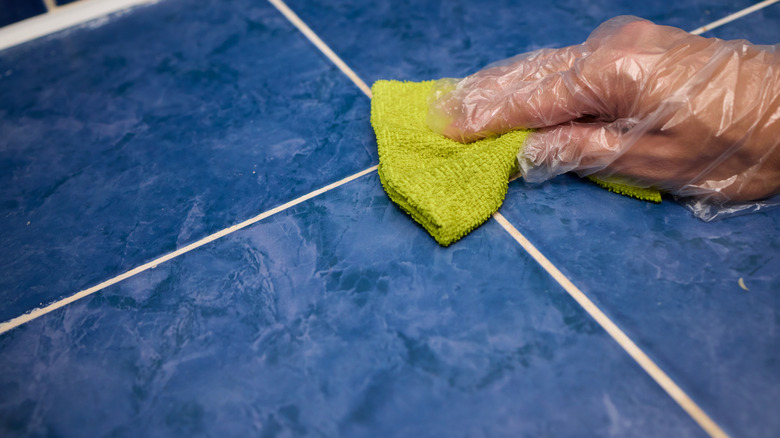
If your grout is currently dirty and stained, you'll want to address that problem first. The most common grouts in use are sanded and unsanded grout. Both have a porosity that make them a bit tricky to clean. One method is to make paste using a combination of baking soda and 3% hydrogen peroxide, along with a drop of dish washing soap. Be sure to wear gloves and ventilate the room before using the mixture to scrub the grout with a stiff brush. Allow the mixture to sit for ten minutes or more, then wipe it up with a damp sponge.
Keep in mind that this solution works best with ceramic tiles. If your tiles are made from natural stone, marble, granite or the like, homemade cleaners can cause damage. So you'll want to avoid cleaning with vinegar or the aforementioned hydrogen peroxide mixture. Instead, opt for a commercial cleaner made specifically for natural stone, like Bar Keeper's Friend Granite & Stone Cleaner.
Make a habit of tile and grout upkeep
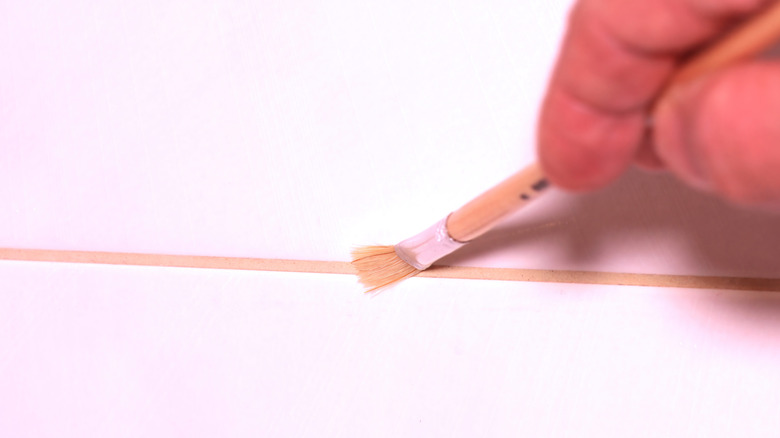
After you have cleaned your sanded or unsanded grout, preserve your hard work with a grout sealer. The sealer is easy to apply, with containers often including an integrated applicator, like Miracle Sealants Grout Cleaner. Most will require two applications over a couple of days. But read the specific directions on the product you purchase. With the grout cleaned and sealed, you are good to go — for about a year. For any grout that requires sealing, you should reseal it annually at a minimum, to ensure a continued clean appearance.
While sanded and unsanded grout are the most popular, they are the trickiest to upkeep. That said, there are other common grout types that you may encounter on floors in your home that require less maintenance. For example, the best grout to use on ceramic bathroom tile floors is typically a formulation that is waterproof, like epoxy. Because these grouts are less porous, they are typically easier to clean (and they get less visibly dirty, in general). That being said, you will still want to take the time to clean this kind of grout with a mild, pH-neutral cleaner — water and dish soap with a soft bristled brush will do the trick. But regardless of the type of grout you have, you should make a habit of cleaning it at least every six months for the best results.