

Not Hardwood, Not LVP: Mike Holmes' Top Pick For Durable, Easy-Care Kitchen Floors
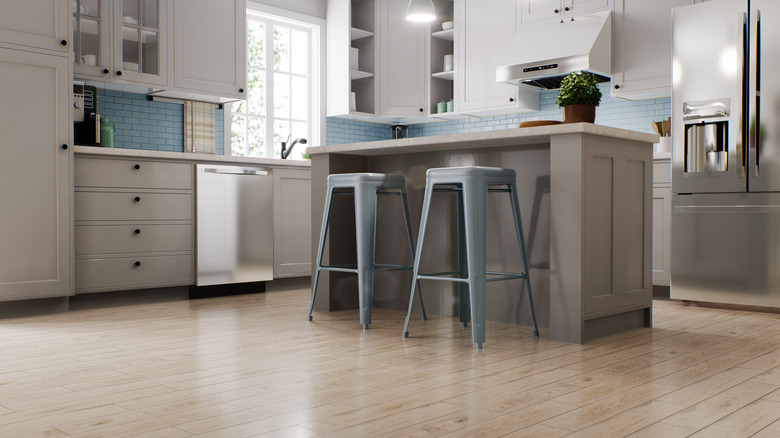
When you're in the midst of renovating a kitchen, you need to make a lot of important decisions. Perhaps the most important of all is what kind of material you're going to use for the floor. A kitchen floor sees plenty of abuse, from spills and cooking mess to general traffic, so you'll need a material that's both durable and easy to clean. And while many might opt for traditional hardwoods or new-age LVP (luxury vinyl panels), Canadian carpenter and HGTV host Mike Holmes believes that tile is the way to go for kitchen flooring.
Writing for his blog Make It Right, Holmes states that hardwood should be avoided in kitchens because it's "prone to moisture damage and can be marked and dented when you drop something." Despite being a highly flexible material, Holmes notes, wood is also easily damaged by high traffic and will likely need to be refinished or repaired every few years.
While some experts believe that LVP panels are going to dominate kitchen design in 2026, Holmes looks beyond the trends to focus on what materials are actually going to stand up to abuse, look beautiful, and last practically forever. Holmes also says that vinyl planks are "prone to mold" and that "the manufacturing is not environmentally friendly." As such, tile is likely to be the best option for your kitchen floors. The question is, what kind?
What materials are ideal for kitchen tile?
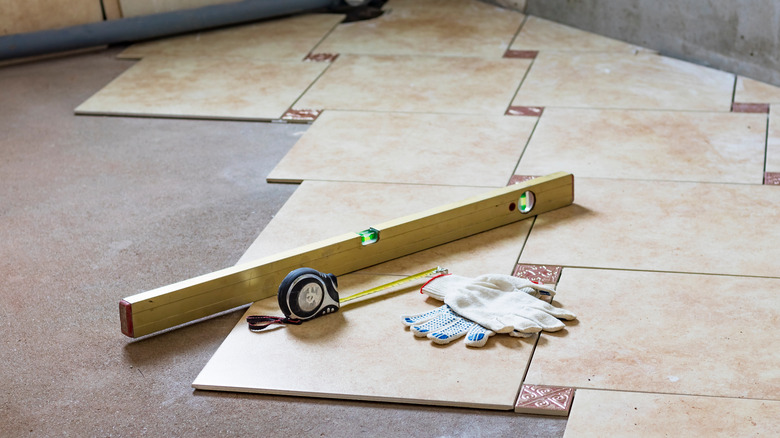
In general, tile is an excellent material to work with. It's resistant to damage and moisture, and it's easy to clean, too. But choosing the right kind of kitchen floor tiles is as important as choosing to use tile in the first place.
On his Make It Right blog, Mike Holmes writes how both porcelain and ceramic tile are "durable, attractive, easy to clean, and come in a large variety of patterns and finishes." His case for ceramic as an ideal choice stems from its ability to repel moisture and stand up to messes, making it an especially good choice for kitchens attached to porches or patios. Porcelain tile, while more expensive, is even more resistant to moisture and will show next to no damage if scratched as the color is embedded into the tile itself.
Stone tile is another option — one that Holmes says makes an "extremely durable kitchen floor that holds up well to daily use, and can be heated from below to provide comfort." Whichever option you do choose, Holmes notes that, when choosing tile, you always need to make sure that the kitchen's subfloor is perfectly level and supported before installing it.