

DIY Faucet Cover: Make One Yourself Using Items From Around The House
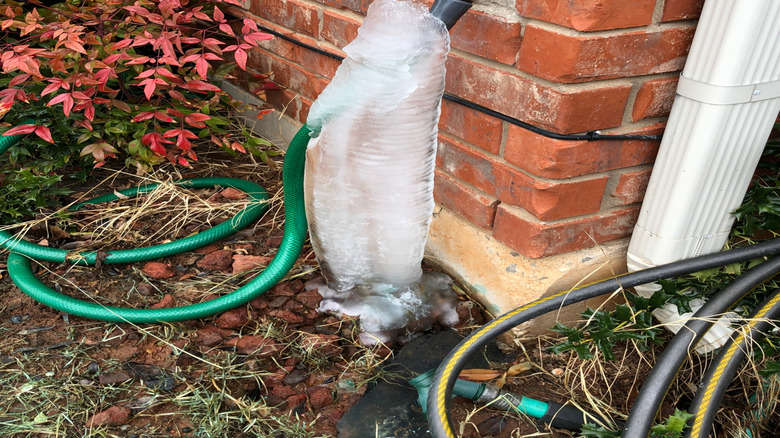
At some point each winter, the threat of freezing weather descends across almost portion of the U.S. It happens almost every year, even in the areas that aren't traditionally considered cold climate regions. If you are wondering if you should cover you faucets this winter, the answer is yes. Unfortunately, faucet covers are typically in high demand during cold winter weather and sell out fast. If you didn't secure a supply of faucet covers while preparing your house for winter, there's no reason to panic. You can always make a faucet cover yourself using items from around the house, including some that are meant to keep you warm as well.
The sole purpose of faucet covers is to prevent the water in your faucet from freezing, expanding, and damaging the faucet and pipe to which it's connected. It accomplishes this by insulating the faucet, as well as capturing heat leaking from the inside of your house through the opening in the wall through which the pipe passes. While store-bought faucet covers accomplish this while looking neat and being easy to install, they are not hi-tech devices. To that end, there are a number of ways in which you can create DIY versions that work just as well as the commercially produced varieties. At least one solutions requires having nothing more than what you likely already have around the house.
Raid the sock drawer and pantry to protect your faucets
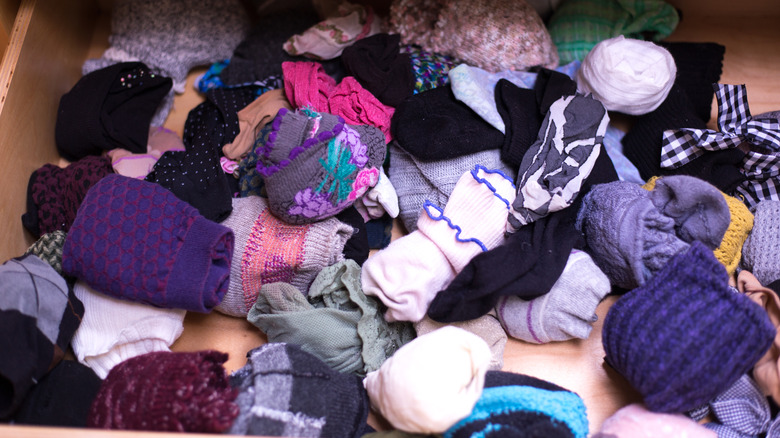
There are actually a variety of methods for creating DIY faucet covers. However, some of the more popular involve utilizing supplies such as massive foam cups or pool noodles that you may or may not have on hand. That being said, there is no need to head out in cold winter weather on a scavenger hunt for supplies. Most likely, rummaging through your sock draw, pantry, and catch-all drawer will likely yield all the supplies you need.
For this DIY faucet cover, you will need socks, a plastic bag of some sort, and duct tape, zip ties, or rubber bands. Long wool socks are ideal, but any pair of socks will suffice in a pinch. Once you have the supplies gathered, make sure the faucet is turned off. Then, drain the remaining water from and remove any hoses or attachments.
To cover your faucet in this manner, start by folding the socks down over themselves, essentially creating a double layer. Then, slide the socks completely over the faucet or hose bib, and press them tight against the house to help capture any escaping warm air. Next, place a plastic bag over the sock-covered faucet. This will protect the sock from rain and wind. Finally, secure the bag in place with a large, sturdy rubber band, zip ties, or duct tape.