

Stop Brown Tips On Spider Plant Leaves With One Easy Fix
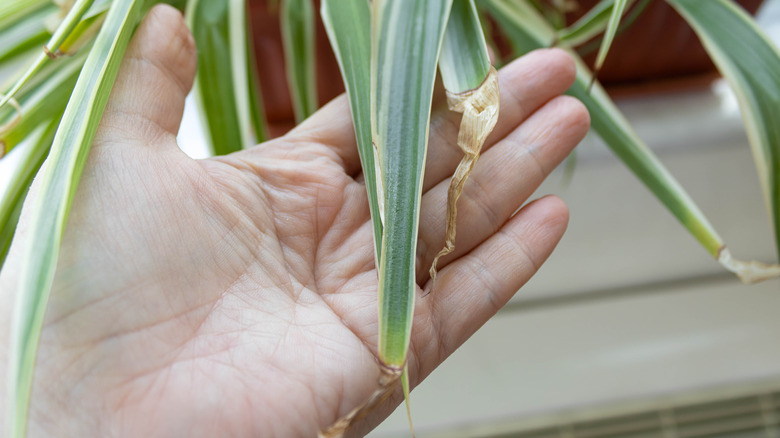
Spider plants (Chlorophytum comosum) are popular houseplants for a variety of reasons, from their love of hanging baskets to their long, slender leaves, which spill over the edges of containers with abandon. Plus, caring for spider plants is pretty simple since they're able to tolerate low light and dry soil. That said, give your spider plant damp soil and a moderate amount of sunlight if you can. If your watering habits aren't up to snuff, the plant may try to tell you that it's stressed out. A telltale sign is crispy brown leaf tips. This issue is most likely to arise when you're tending to your spider plant in the winter. Less frequent watering may help, but you might also need to use a different type of water.
If your spider plant develops brown leaf tips, mineral accumulation in its soil is probably the culprit. This problem often happens in the winter, as the plant's functions slow down. Your spider plant doesn't absorb moisture as fast as it does in the spring and summer, and it's less efficient in dealing with calcium, magnesium, sodium, and other minerals commonly found in tap water. Long story short, it's easy for these minerals to reach unmanageable levels when your spider plant can't process them quickly. Leaf tips and other vulnerable parts of the plant are usually the first to complain about this stress, especially if excess fluoride has built up. Unfortunately, giving your spider plant more water won't remedy the situation. In fact, it may worsen it. Instead, the best approach involves switching to rainwater or distilled water, both of which have lower mineral content than tap water.
Addressing brown leaf tips with demineralized water
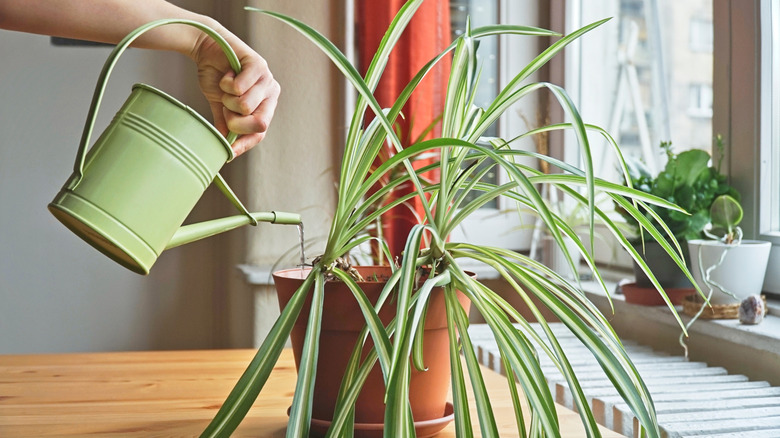
To fix brown leaf tips on a spider plant, start by pivoting to demineralized water and offering moisture a bit less often than you were before. In general, it's time to water when the top inch of your plant's soil is dry. When watering, be thorough and focus on the roots. About 15 minutes after a hydration session, remove any water that has pooled in the plant's drip tray. This discourages minerals from accumulating near the base of the container. It also prevents this part of the pot from harboring stagnant water, which promotes root rot.
Though rainwater and distilled water are both good hydration sources for a spider plant experiencing mineral overload, they may not be readily available at your house. If you have just a small amount of distilled water, mix it with tap water to see if the mineral reduction is sufficient. You can also let tap water sit out for a day or so, which lowers its chlorine content. Just keep in mind that this tactic won't evict fluoride or most other minerals that cause problems for spider plants.
While your spider plant is healing, minimize other sources of stress, which include direct sunlight and chilly drafts. If new brown tips are forming a couple of weeks after you've adjusted your watering practices, change your plant's potting soil to get rid of excess minerals. When repotting your spider plant, give it fresh potting mix that contains drainage-promoting perlite or coarse sand. Once the plant is nestled in its new home, give it a drink of demineralized water to expel lingering buildup from its roots.