

Can Mothballs Keep Mice Out Of The House? Here's The Truth
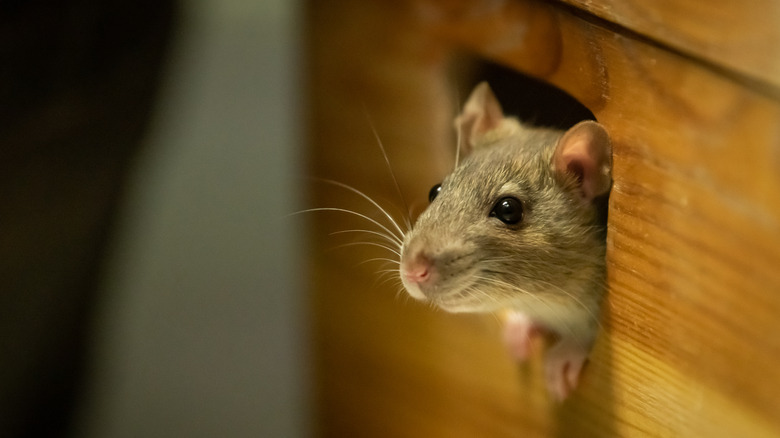
The question of whether mothballs repel mice is personal for me. You see, my grandmother was a huge proponent of mothballs. I remember the closets in her house absolutely reeking of them. When I asked why, she told me that she used them to protect her wool clothing from the moths and beetles that liked to eat it, and also to keep mice out of the house. I always believed this last claim, because I never once saw a single mouse scurry across my grandmother's shining floors. So I was surprised to learn, many years later, that mothballs not only don't repel mice, but are actually incredibly hazardous to human health.
Mothballs are small white or multicolored balls made primarily out of a substance called naphthalene. This is a chemical that, in solid or powdered form, releases its gas into the environment to deter moths. It is what gives mothballs their characteristic smell and is also a chemical many believe will deter mice because naphthalene is a common ingredient used in several types of pesticides.
However, despite their strong smell, there is no evidence to suggest that a few strategically placed mothballs will repel mice. There is not enough naphthalene in the mothballs to perform any kind of deterrent act on the mice. You would need massive quantities of mothballs to keep mice away, and this could actually be incredibly bad for your health. This idea is so baseless, in fact, that it's actually illegal to sell, distribute, or use them for that purpose.
Mothballs are extremely dangerous
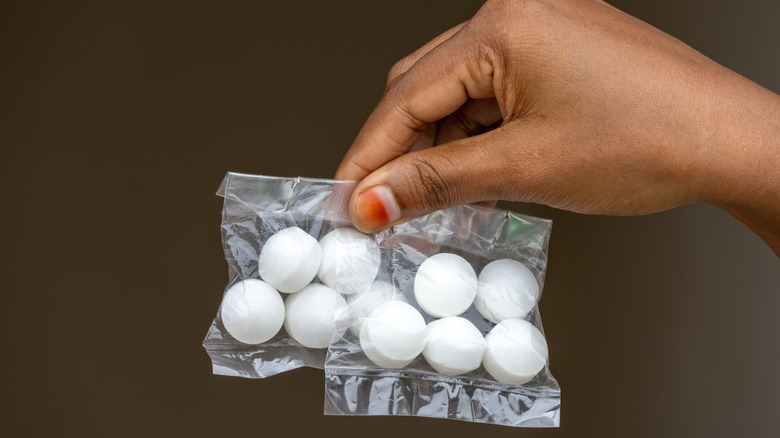
Naphthalene is not the only chemical present in mothballs. Paradichlorobenzene is also a common addition, and both chemicals are toxic to humans and pets. The Environmental Protection Agency restricts mothballs to their labeled use, and using them to deter larger pests violates federal pesticide regulations, making this practice illegal in the United States, even in residential homes. There is good reason for this, as both of the chemicals mentioned can have drastic effects on your health.
Of the two chemicals, naphthalene is by far the most dangerous. According to the Louisiana Department of Health, "Exposure to naphthalene can cause more serious effects, including hemolytic anemia. Naphthalene is also a possible carcinogen. Extended exposure to mothballs can also cause liver and kidney damage." Hemolytic anemia is when your red blood cells are destroyed faster than they can be reproduced, meaning that your body reduces its capacity to move oxygen, creating paleness and jaundice. There is also the fact that mothballs can appear to children or pets to be treats or candy — ingesting a mothball can be incredibly dangerous, requiring an emergency room visit and immediate care.
There are far more natural ways of keeping mice and moths out of your home. The best way to keep mice out of your home is to locate any entrances where they could be entering and stuff them with steel wool or copper mesh, which are substances they cannot chew through. Looking for a natural and pleasant-smelling deterrent? Bergamot oil is a natural, refreshingly scented alternative to keep mice at bay.