

13 Common Trees You Should Never Plant Right Next To Your House
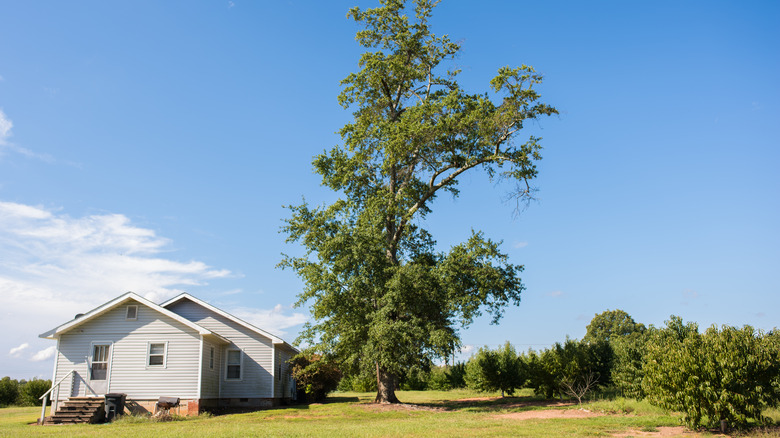
Trees are an important part of your home's landscaping. When planted properly, trees can provide numerous benefits beyond just looking beautiful. They can be wind breaks that help keep your house protected during a storm, produce sweet sap that can be boiled down into syrup, and even attract a whole host of beneficial pollinators that will enhance the overall health of your yard. But, notice that we said "planted properly." Trees that are not planted correctly can be truly disastrous, especially if planted right next to your home.
The fact of the matter is that there are just some trees that you should avoid planting near your home at all costs. While you might be charmed by their ornamental qualities, understand that certain trees can wreak havoc if planted too close. Branches can fall and damage your home, roots can grow and destroy the foundation, and fast-growing branches can overtake gutters, grow into siding, and allow unfriendly critters access to your house.
This list aims to provide you with information on what types of trees would be a huge mistake to plant next to your house, such as a tree giant like an oak, or a brittle-branched poplar. Doing so could end up costing you a lot of money in repairs and removal, so it's best to do your research and not plant them in the first place.
Silver maple
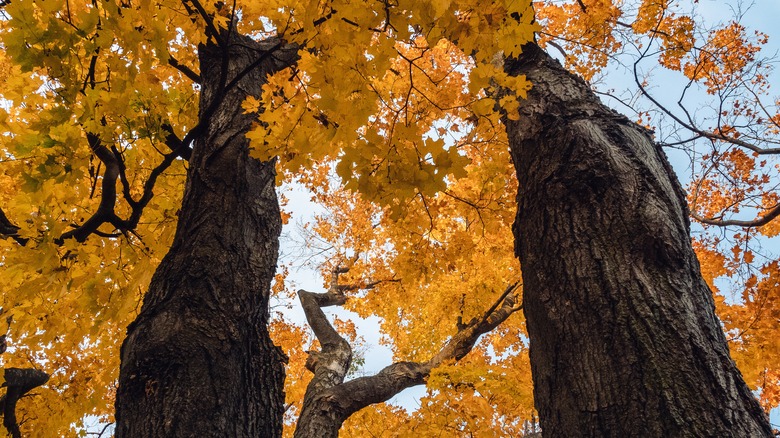
A common variety of maple across USDA zones 3-9, silver maple (Acer saccharinum) is nevertheless a tree you cannot plant close to your house. Known to grow upwards of 80 feet, the large roots of the silver maple like to grow partially above ground, meaning that they will easily break through walkways or concrete foundations. Also, silver maples are susceptible to a wide variety of diseases that can eat away at the branches, causing them to fall onto your home. Plant silver maple well away from your house and try tapping them for sugar in the spring.
Black walnut
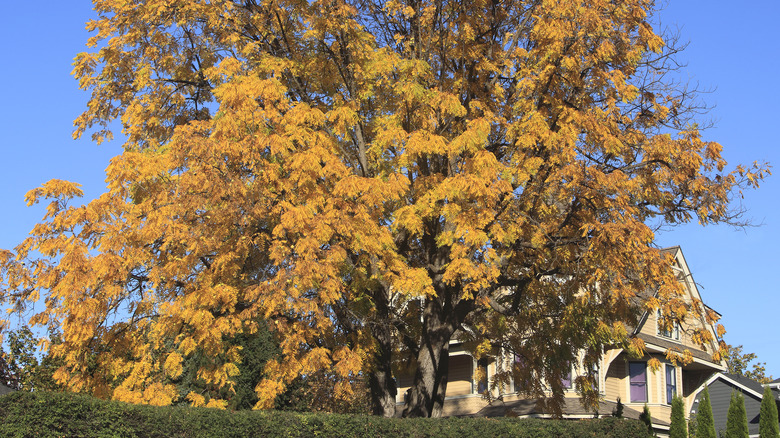
While its dark heartwood makes beautiful hardwood floors, having a black walnut (Juglans nigra) can be harmful not just to your house, but the plants surrounding it. The roots of the tree release a chemical compound called juglone, which prevents nearby plants from germinating. These roots also grow to be massive, meaning that they can very easily create problems for your foundation. Hardy from zones 4-9, black walnut should be planted in its own secluded corner so the roots don't affect the house, and the stain caused by the dropping nuts won't permanently color your walkway.
Bradford pear

If you've ever walked by a Bradford pear (Pyrus calleryana) when it's in bloom, you've likely pinched your nose in disgust. That's because this tree emits a foul stench, which can easily waft in through your windows or HVAC system if planted right next to your house. On top of this, they are also invasive, meaning they will cause harm to your property's ecosystem. Bradford pears are also notoriously brittle, meaning that even a light storm could have branches hitting your home and causing damage. In short, just avoid planting these at all costs.
Weeping willow
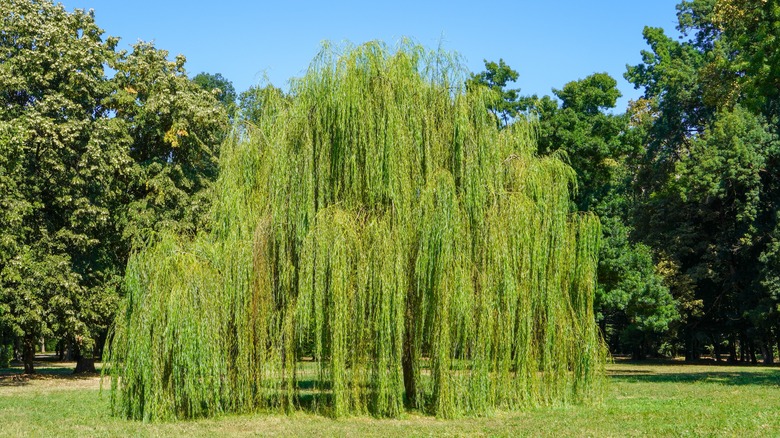
A weeping willow (Salix babylonica) is among the most beautiful trees you can plant, provided you live in zones 6-8 where it flourishes. Growing upwards of 50 feet tall, the branches of the willow droop downwards, creating a stunning waterfall effect. Unfortunately, the roots of the willow will seek out water wherever they can find it. This includes septic systems or sewer lines, which the willow roots can very easily clog. A willow needs plenty of space between it and other trees. Planted by a small pond or in the middle of a field would be ideal.
White ash
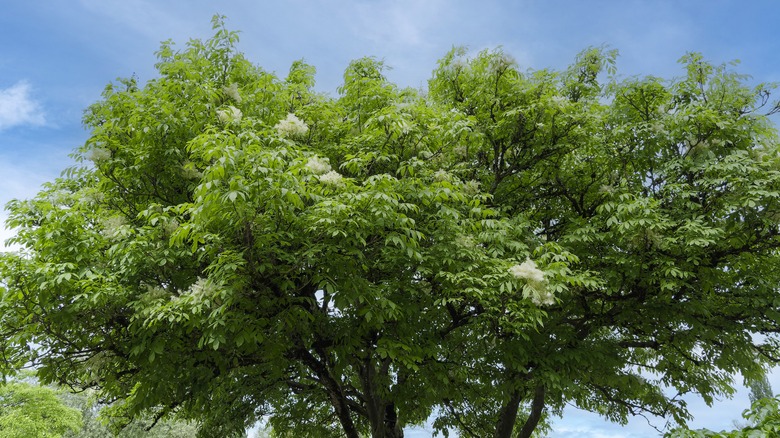
The fact that it can grow up to 120 feet tall should automatically eliminate white ash (Fraxinus americana) from being planted near your home. These trees are also highly susceptible to infestation from the emerald ash borer. These insects significantly weaken the tree, often killing it. If dead branches fall on your home from a height of 120 feet, enjoy the costly home repair bill. Plus, their roots are exceptionally large and grow outwards from the trunk, meaning they can easily uplift walkways or break apart foundations.
Oak trees
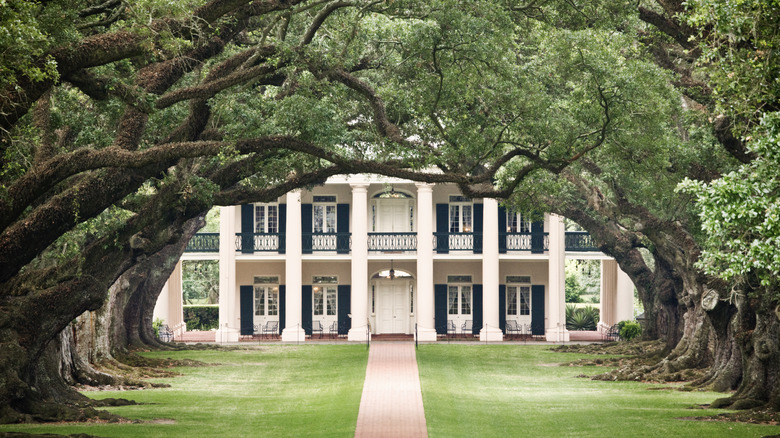
Oak (Quercus spp.) is an amazing species to have on your property, provided they've been planted a good ways away from your house. From a distance, at least 50 feet out from your house, oak trees can become a great windbreak thanks to their tremendous size. However, most oaks reach up to 100 feet tall, making them veritable lightning rods that could easily be struck and break apart. It is for exactly this reason, plus their exceptionally strong, fast-growing, and foundation-destroying roots, that they should not be planted close to your home.
Poplar trees
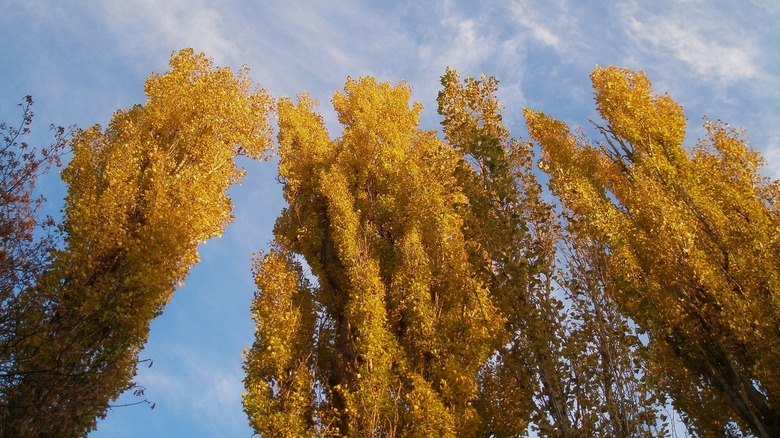
Poplar trees (Populus spp.) often exceed 150 feet in height. Therefore, it's best to keep these trees well away from your home for a few different reasons. Firstly, they are exceptionally brittle, meaning that it would not be beyond the pale for a large branch to fall from a great height and harm your home. Secondly, like a weeping willow, poplar roots will seek out water. Yes, this affects your underground utilities, but also can seriously damage your home, because poplar roots will slither into the tiniest places for water, continue to grow, and quietly destroy your home.
Arborvitae
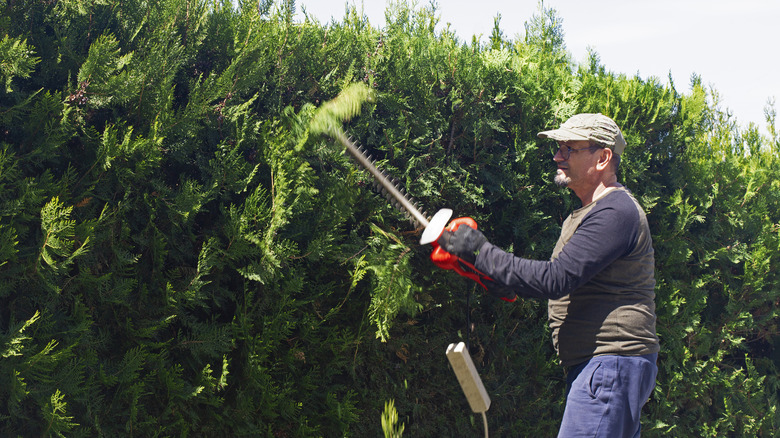
Another fast-growing tree, arborvitae (Thuja occidentalis) can end up being 60 feet tall if you don't keep it in check. While it makes for a natural privacy screen when planted along the borders of your yard, can pose issues when planted right beside your house. The chief problem is that it grows up to 3 feet every year. It can easily outgrow your house, making for difficult management. Additionally, its branches can get into gutters, invade siding, cause mold growth, and even invite termites, which we all know can absolutely destroy a house.
American elm
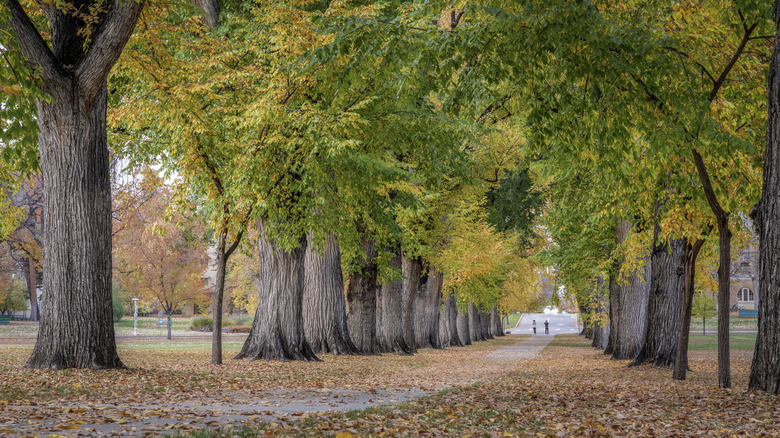
Though its populations have been ravaged by Dutch elm disease, the American elm (Ulmus americana) is experiencing restoration in places like New England. While this is encouraging for tree lovers, you still should avoid planting an American elm nearby your home. Despite being exceptionally tall trees that can reach over 100 feet high, the roots of the American elm are very shallow. As such, they can easily tear apart a walkway and wreak havoc on a foundation if planted too close to a home.
Weeping cherry
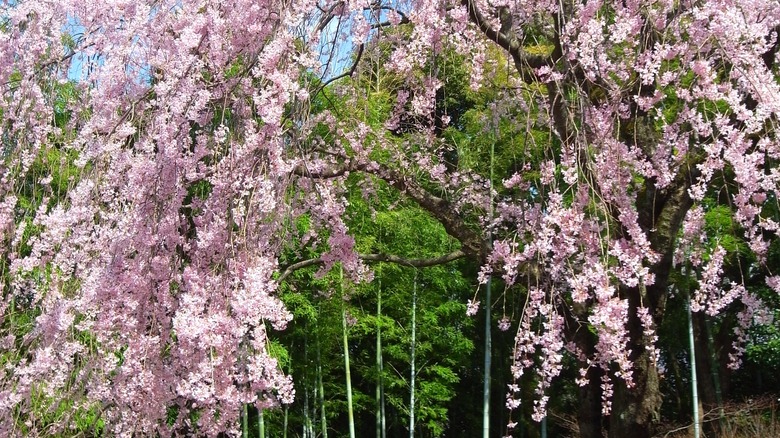
There is no denying the beauty of a weeping cherry (Prunus pendula) in bloom, with its stunning pink and white blossoms. Still, it should not be planted anywhere near your house. Not a large tree in terms of height, the weeping cherry, also called the Japanese flowering cherry, has branches can spread outwards at least 30 feet in diameter. These will easily affect your house by getting into gutters, siding, and windows, as well as bringing in unwanted pests. The shallow roots too can certainly pose issues with foundations, sidewalks, and walkways.
Eastern cottonwood
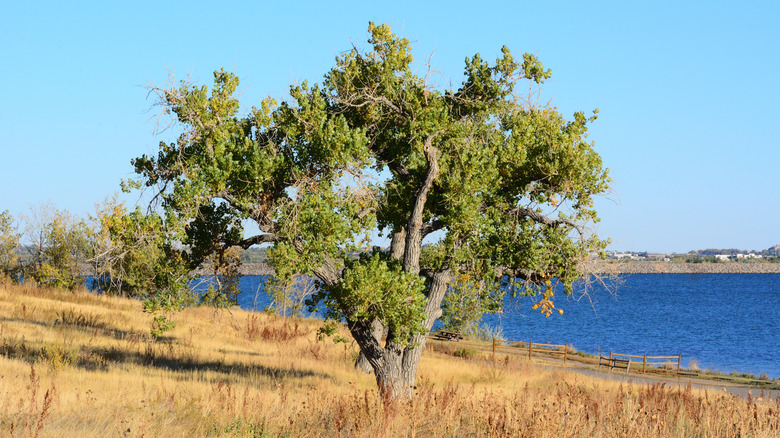
The eastern cottonwood (Populus deltoides) brings us into the realm of truly enormous trees. Growing to nearly 200 feet in height, the eastern cottonwood is among one of the tallest native hardwood species found in North America. Emerald ash borers are a particular nuisance for these trees, which already have a tendency to shed branches from on high when they reach maturity. This is the main reason you should not plant an eastern cottonwood next to your home, as the damage of a branch falling from such a height would be tremendous.
Giant sequoia
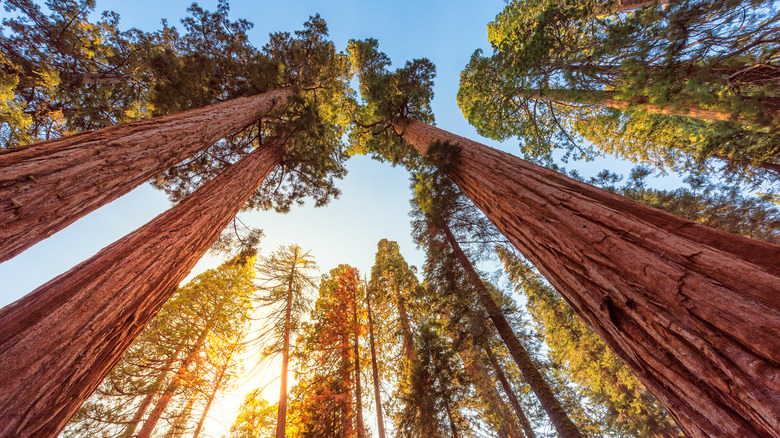
The giant sequoia (Sequoiadendron giganteum) grow upwards of 300 feet tall and have been around for thousands of years. Recently, gardeners across the country have been experimenting with growing them on their properties. They need to be grown 50 feet away from the house, because if they are planted too close, their massive root systems and super strong wood will grow through anything, including concrete. However, it takes at least 50 to 60 years for a sequoia to reach this stage, so if you have one planted too close, you've likely got time to move it.
Coast redwood

Finally, we have the coast redwood (Sequoia sempervirens), which grows over 300 feet when in its proper conditions of zones 7 through 9. Because they grow exceedingly faster than other trees, planting them near your house will quickly choke out other varieties. Though they can only grow well in specific areas of the country (northern California and southern Oregon), the redwood could, over time, cause immense damage to your home's structure thanks to its strong and complicated root system. Also, because of its size, a coast redwood could be exceptionally costly to get rid of.