

10 Surprising Ways You Can Use Hydrogen Peroxide In Your Garden And Yard
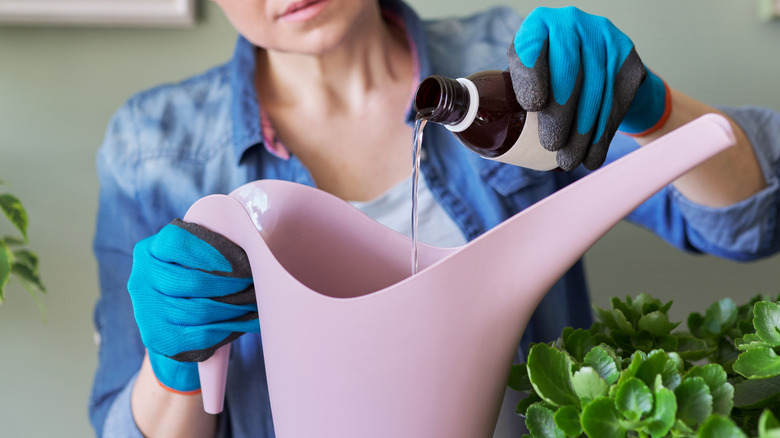
Hydrogen peroxide can lend a hand with all kinds of tasks in your home, from fixing a slow-draining sink in your kitchen to brightening dingy grout between floor tiles. However, this simple compound isn't limited to indoor cleaning and clog busting. It can also be a surprisingly helpful tool for a range of yard and garden tasks thanks to the power of oxidation. This process destroys the cell walls of bacteria, helps dislodge dirt from a variety of surfaces, and even delivers oxygen to living things that need more of it.
Though hydrogen peroxide looks pretty calm when it's hanging out in a bottle, it's always on the verge of a breakdown. Just one small encounter with catalase, an enzyme present in most organisms, will make it bubble. These bubbles indicate that the hydrogen peroxide is decomposing into hydrogen and oxygen at a rapid rate. In other words, when you see hydrogen peroxide fizzing, oxidation is underway. Whether you're disinfecting your kitchen counters or cleaning your patio furniture, be sure not to mix hydrogen peroxide with vinegar. This produces peracetic acid, which can hurt your eyes, skin, nasal passages, and more. Plus, it may corrode metal surfaces it touches. When used properly, the hydrogen peroxide you buy at the drugstore can be a safer alternative to bleach, commercial pesticides, and other harsh chemicals that are often used in homes and yards.
Make glass surfaces sparkle
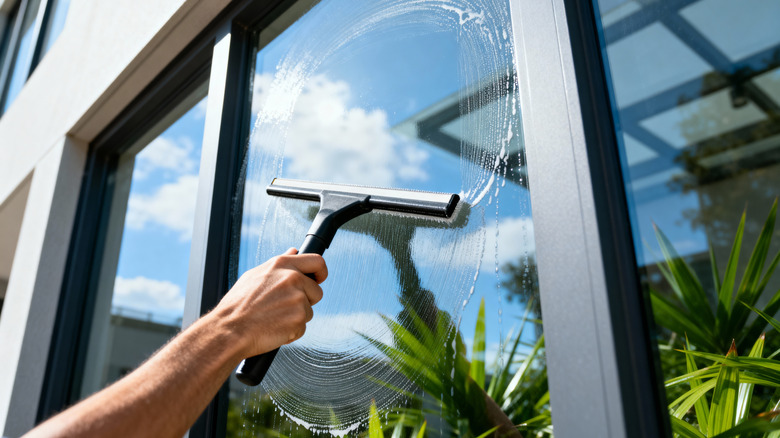
Though hydrogen peroxide is often recommended for bathroom cleaning, it can also help you remove grime and streaks from a variety of glass surfaces in your yard. Combine 1 part hydrogen peroxide with 1 part water in a spray bottle. Spritz this solution on the glass you'd like to clean. Then, watch the peroxide's bubbles fizz away filth that has accumulated on the exteriors of your home's windows, the glass top of your patio table, and more. A soft cloth or squeegee can help you finish the job with ease.
Evict unwanted algae
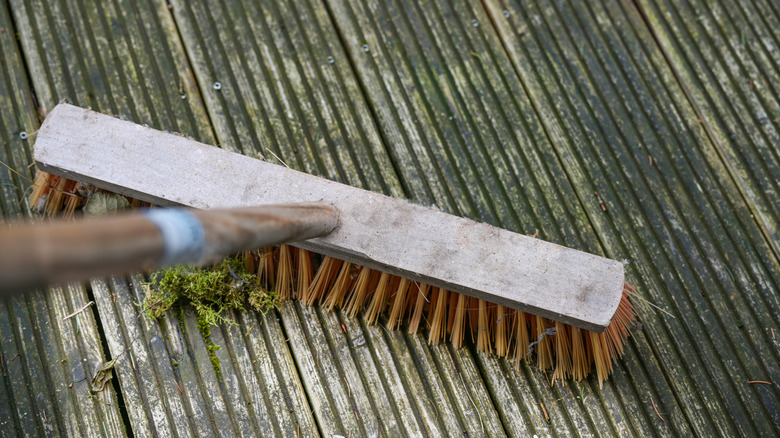
Green algae loves to grow in damp areas that don't get much sunshine, from siding on the north sides of homes to plant pots stationed on shady porches. It will even grow on decks, outdoor furniture, and greenhouses, especially when air gets stagnant. Hydrogen peroxide is an effective way to get rid of this slimy interloper. Blend 1 tablespoon of hydrogen peroxide into about ¼ gallon of water and apply it to hard surfaces that algae has attacked. Let this solution soak into the algae for several minutes, then scrub the affected surface, hose it down, or both.
Remove dirt and stains from a concrete patio
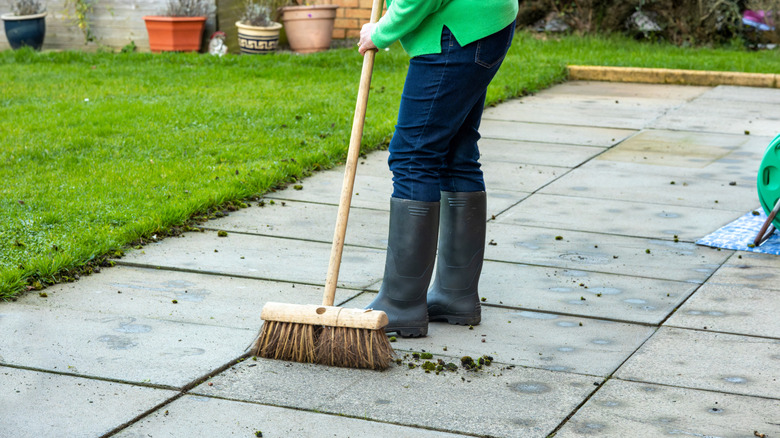
Algae isn't the only thing hydrogen peroxide can remove from decks and patios. If you need to clean a concrete patio but want to avoid bleach and pressure washers, try a homemade solution that prominently features the hydrogen peroxide from your medicine cabinet. Mix 1 cup of peroxide into 1 gallon of water along with ½ cup of baking soda and ⅛ cup of liquid dish soap. Once you've swept the patio, apply the solution to every inch of concrete with a large scrub brush. Then, rinse it off with a hose after about 20 minutes.
Sterilize potting soil you'd like to reuse
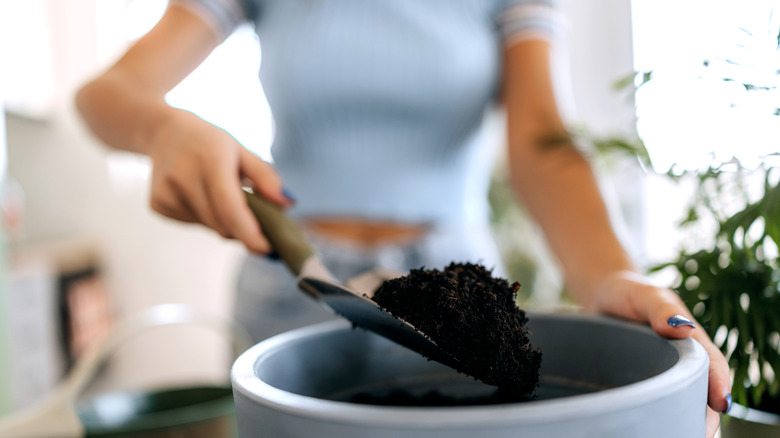
You can reuse old potting soil by sterilizing it, then mixing in fresh soil or compost to restore nutrients and beneficial microbes. To sterilize soil in a plant pot, saturate it with 1 part hydrogen peroxide blended into 1 part water. For an outdoor garden bed, pour used soil on a large plastic sheet and drench it with ½ cup hydrogen peroxide diluted with 1 gallon of water. Let the soil dry before putting plants in it.
Encourage seeds to germinate
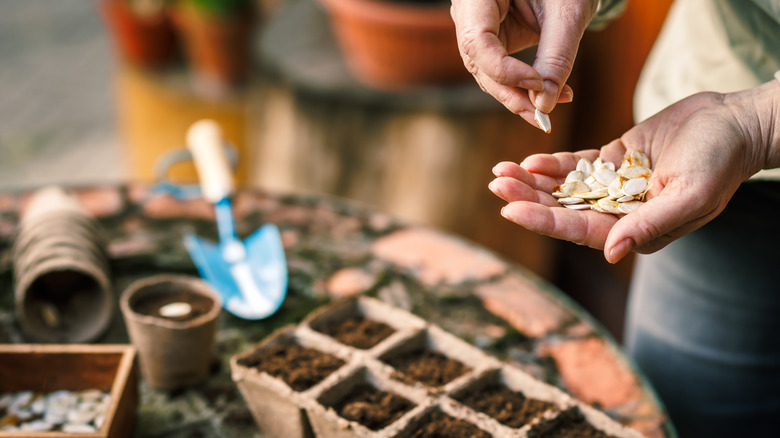
Certain types of seeds are more eager to germinate after taking a bath in hydrogen peroxide. If you're open to some trial and error, you may discover that this seed-prep step benefits your gardening regimen. Generally speaking, large seeds that take at least a month to germinate appreciate this approach, which typically involves a 30-minute soak in 3 percent hydrogen peroxide, the product you'll find in bottles at your local drugstore. A study, published in the journal Plants, found increased germination rates in several types of legume seeds using a similar process.
Clean veggies from your garden
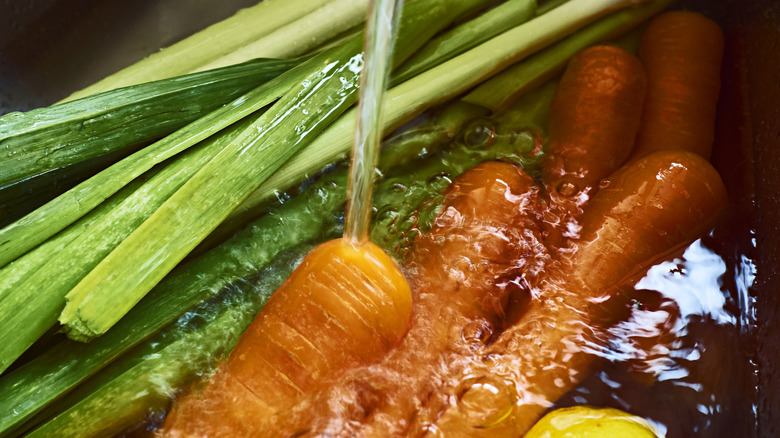
Starting a vegetable garden in your backyard can benefit your health in many ways, from adding more plant-based foods to your diet to increasing your level of physical activity. Just make sure to clean your homegrown produce thoroughly, as it can carry bacteria capable of making you sick. Fortunately, hydrogen peroxide offers an easy and inexpensive way to kill these pathogens. Dilute ¼ cup of hydrogen peroxide in 1 gallon of water. Then, soak your fresh-picked produce in this solution before rinsing it with water. A 20-minute soak is ideal for lettuce and other tender veggies.
Remedy root rot
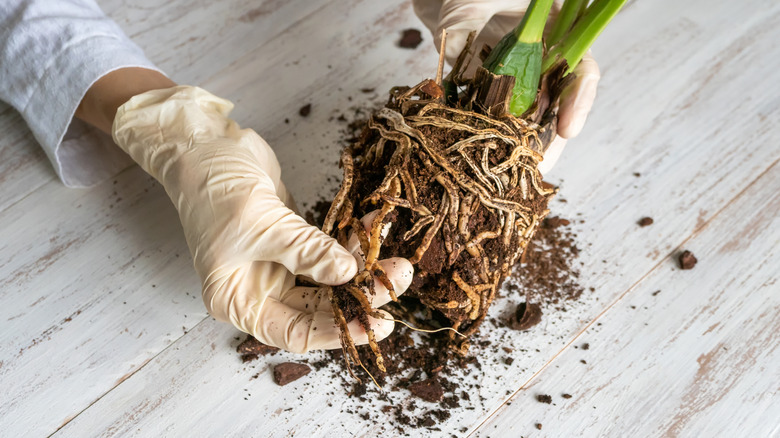
Root rot can be caused by fungi, water molds, or bacteria, and it typically emerges when a plant has spent too much time in overly wet conditions. Hydrogen peroxide will not eliminate these pathogens, but it may help support the plant's recovery. Remove the struggling plant from its container or planting site, excise diseased roots, and clear away any soil stuck to the remaining roots. Then, mist the roots with a mix of 1 part hydrogen peroxide and 1 part water. The oxygen the peroxide releases as it bubbles can help revive the plant's root system.
Annihilate aphids and fungus gnats
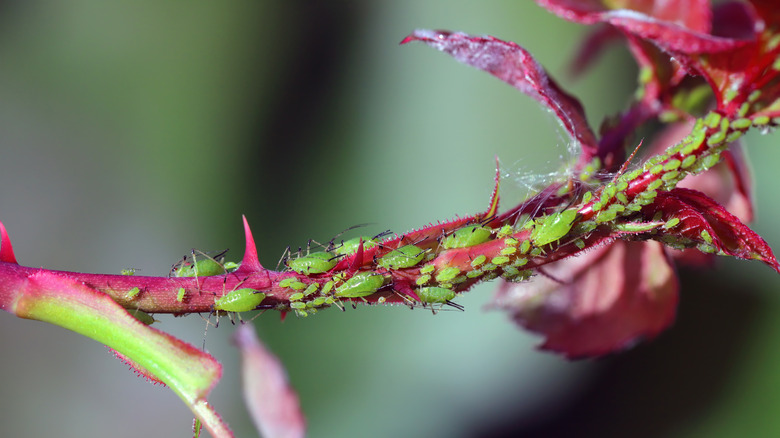
Hydrogen peroxide is considered a lower-toxicity option for controlling certain garden insects. It's particularly good at wiping out soft-bodied pests such as aphids and fungus gnats. Cover the foliage of affected plants with a blend of 1 part hydrogen peroxide and 4 parts water, making sure to drench any aphids or gnats you see. In the case of fungus gnats, you'll also need to treat the soil surrounding your plants. Apply the same peroxide solution to dry soil to kill the eggs of these pests, repeating weekly until the problem is gone.
Sanitize garden tools
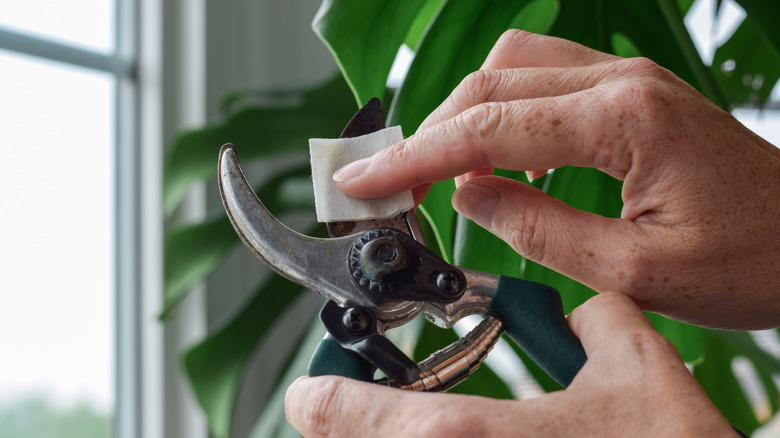
Cleaning and sanitizing your garden tools regularly is one of the best ways to prevent the spread of plant pathogens, especially those that hang out in the soil. Many gardeners choose to wipe their shovels, pruners, and other implements with rubbing alcohol or diluted bleach after washing them in soapy water. However, hydrogen peroxide can disinfect these items in a pinch. Spray it on at full strength and let it rest for 10 minutes before rinsing the tools with water. Use the same process on plant pots to keep container gardens healthy and happy.
Kill pesky weeds in driveway cracks
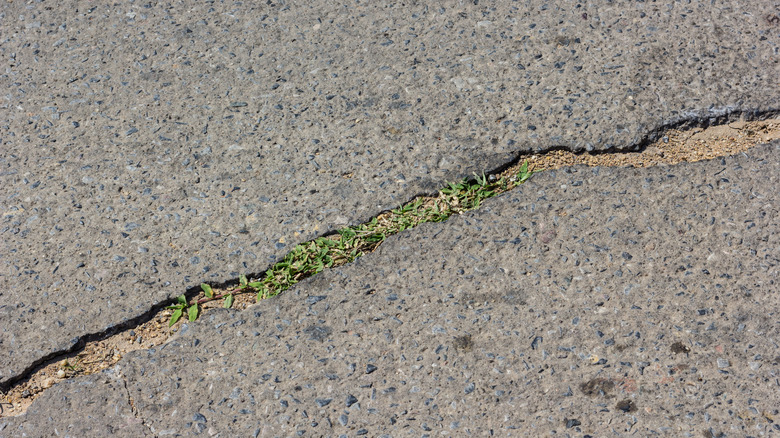
Extra-strong hydrogen peroxide — the 10 percent variety rather than the more common 3 percent type — can stop weeds from taking over driveway cracks as well as the areas between a patio's pavers. Pour 1 ounce of this peroxide into a spray bottle filled with water, saturate the crack-dwelling plants with the solution, and then wait 15 minutes for the peroxide to do its job. Finally, give the area you treated a water rinse. Be sure not to use strong peroxide near plants you want to keep or natural stone such as granite.