

People Are Putting Bubble Wrap On Their Windows, And They're Smart To Do So
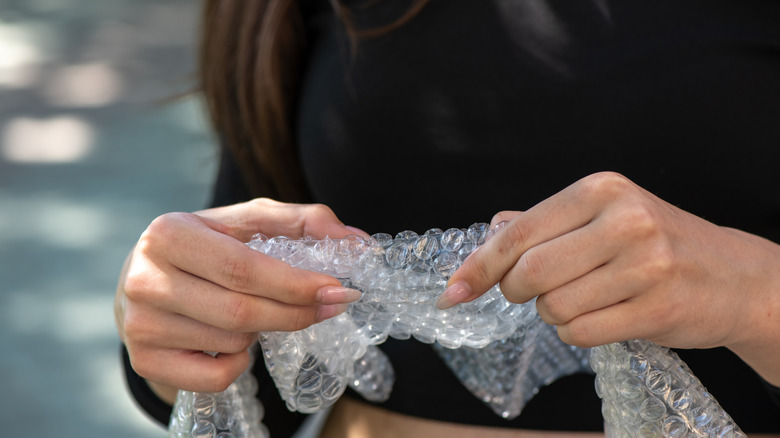
Glass is a poor insulator, and windows are a prime entry point for cold or hot air. Especially if they are dated or have not been properly sealed the outside air will seep into the indoor conditioned air, creating a draft. Knowing how to insulate your windows is key to making sure your home stays as warm as possible during the winter time. While it may seem funny to learn that people are putting bubble wrap on their windows, they're actually quite smart for doing so.
We all know bubble wrap, the clear, pliable plastic with hundreds of individually air-filled bubbles we used to pop after opening up a package. It's made by vacuuming two sheets of plastic together and then trapping the air inside of the bubbles. But the wrap's uses go far beyond mere packaging, as it can be used in fall gardening hacks, and on your windows as insulation.
That is the primary point of people hanging bubble wrap on their windows. They take sheets — which you can buy in 200 square feet rolls for $20 — and cut them to fit their windows. You can then spray the windows with water and press the bubble wrap to the glass with the bubble side facing the window. This is an extremely cost effective way to provide your home with added insulation and save on energy costs.
How bubble wrap works to insulate your windows
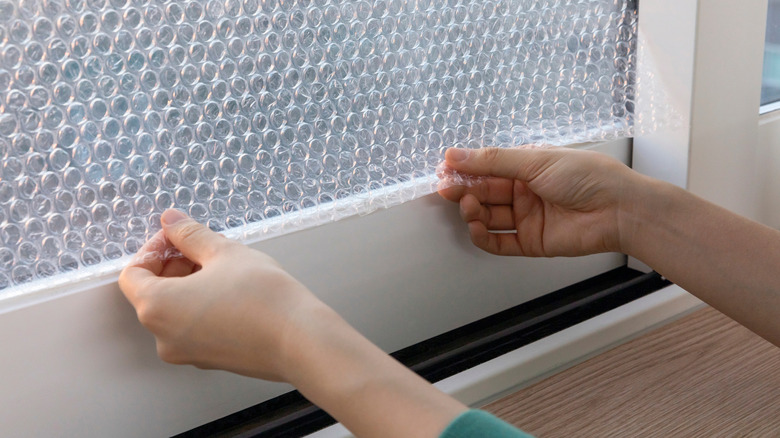
While it may seem somewhat funny to plaster your windows with bubble wrap, the fact of the matter is that it is an exceptionally good insulator. Bubble wrap keeps both the hot air of summer and the cold air of winter at bay, creating an overall more comfortable home environment. It's similar to aluminum foil, which is another material home owners place over their windows for additional insulation. However, bubble wrap is going to serve you much better.
The reason bubble wrap works so well as an insulator is that it creates a buffer zone between the cold seeping in from the glass. The pockets of air get trapped in between the bubbles and cannot escape inside to make the room colder. In fact, bubble wrap works so well that it can reduce heat loss from single panned windows by upwards of 50%. That's no laughing matter when you're looking to save on energy bills.
In terms of what type of bubble wrap to use, aim for ones with larger bubbles and with less space in between them, as they will trap more of that air that is trying to get in. Whatever bubble wrap you have on hand will work too, however — try for yourself and see just how well it works.