

Say Goodbye To Hard Water Stains With The Help Of An Ordinary Kitchen Staple
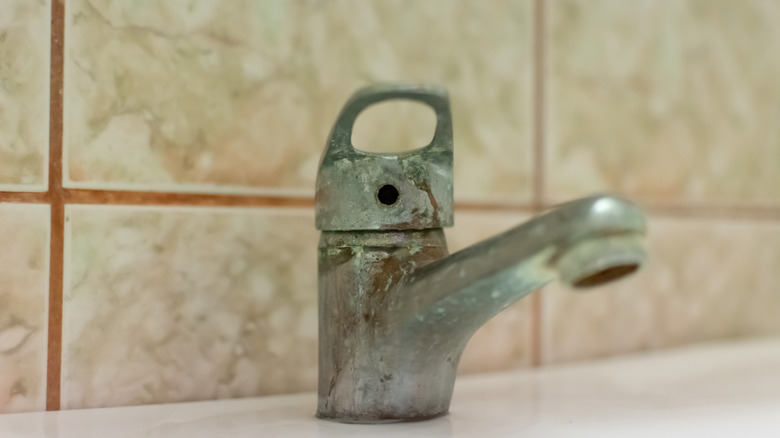
Hard water stains are a common occurrence on faucets, shower doors, and other items that get wet often and tend to air dry afterward. As water dries on these surfaces, the minerals it contains stay behind. Over time, calcium, magnesium, and other substances build up, forming spots and streaks. These mineral deposits don't pose many health hazards, but they might make your bathtub feel more stressful than soothing and your kitchen appear less welcoming than usual. The good news is that you can remove hard water stains with simple, gentle ingredients you may already have on hand: lemon juice. It's good at removing rogue minerals from a variety of surfaces, including toilet bowls, glass doors, tiles, and showerheads. Whether you have a fresh lemon in your fridge or a bottle of lemon juice in your cabinet, it's ready to make your hard water stains vanish.
Lemon juice has what it takes to defeat hard water stains because it's acidic. Its citric acid is one of its main mineral-melting components, as the minerals that cause hard water stains tend to be alkaline. When citric acid touches them, a chemical reaction happens. This process helps break down the minerals and, by extension, the stain. Once this has happened, the buildup is much easier for you to whisk away.
In addition to being non-toxic and available at nearly any supermarket, lemon juice is a safe choice for a range of household materials, including ceramic, chrome, glass, porcelain, stainless steel, and some types of plastic. It shouldn't be used on granite or other types of natural stone. Lemon juice can also be used to remove soap scum, as well as on hard water stains.
How to remove mineral deposits with lemon juice
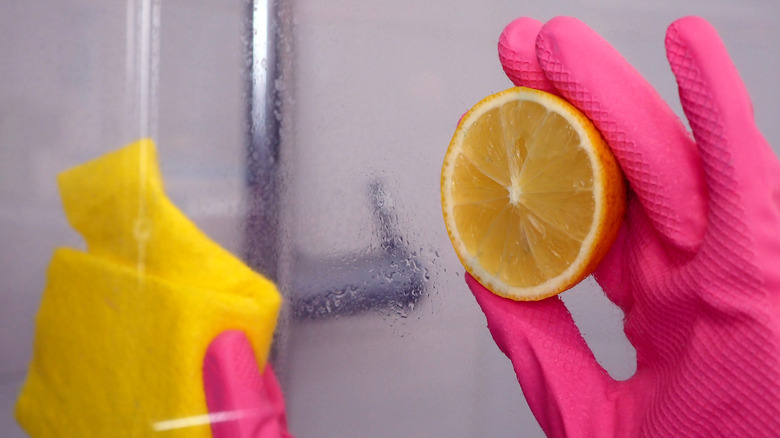
In general, removing hard water stains with lemon juice involves covering the stain with a generous helping of the stuff, letting it sit for at least 10 minutes, and then gently scrubbing away the mineral buildup – ideally with a toothbrush or other soft-bristle brush. It's important to rinse the juice off of whatever you've just cleaned so it doesn't cause stains of its own. You also shouldn't mix lemon juice with abrasive agents, even if you're working on a stubborn stain, because this is likely to lead to damage.
If you're attacking a tough-to-remove mineral deposit with lemon juice, let it soak into the stain for a longer period of time. You may need to let the juice rest on a gnarly stain for up to an hour for the citric acid to do its work. This time frame is ideal for stains in parts of the toilet bowl that aren't submerged in water. Just douse the stain with juice, go watch an episode of a TV show you like, and then return to scrub what's left of the stain.
To get hard water stains out of your bathtub, mix one part lemon juice with two parts hot water, rub this mixture all over the tub with a rag, and come back to the area in 10 minutes for a scrub session. Dunking a removable showerhead in a similar solution for half an hour can loosen caked-on minerals. You can also use pure lemon juice on mineral-laden spots. Still seeing evidence of minerals on your showerhead? Try removing the hard water stains with aluminum foil.