

How To Instantly Remove Soap Scum From Glass Shower Doors—It's So Simple!
We may receive a commission on purchases made from links.
You should be rubbing lemons on your shower door, and that's not even the weirdest thing you'll read in this article. If you have issues with hard water stains or soap scum collecting on your glass shower doors, a cut lemon will do a credible job of dissolving it so you can wash it away. The prime mover here is citric acid, which gives lemon juice its sourness. Cleaning products that contain citric acid make a lot of claims about various capabilities, but if you're trying to get soap scum off a shower door, it's just what the chemist ordered.
Soap scum is what happens when hard water meets soap. Hard water is simply tap water with an above average amount of dissolved minerals — mostly calcium and magnesium — that are left behind after drying or evaporation as a chalky, difficult-to-remove residue. When the water is heated, the residue tends to clump together and can cause problems with equipment like showerheads and dishwashers. When soap and body oils enter the picture, hard water and soap interact chemically to form a residue that's insoluble in water and gets left behind when your shower door dries.
Acids, like citric acid, dissolve the alkaline mineral salts of hard water, and they also suspend the metals in water through a process called chelation. This makes citric acid great for removing hard water stains and soap scum. The juice from a lemon is about 5 percent citric acid, making it a feeble form of a relatively weak acid. That is, there are stronger acids, but citric acid is strong enough to remove paint and usually strong enough to tackle soap scum. But there is a way you can use it to tackle your soap scum nightmares.
Making the lemon trick work for you
While it isn't strong enough for major soap scum buildup, it can usually handle everyday cleaning of your shower door. A lemon's mildness makes it safe enough for repeated use. Lemons are easy enough to come by, as are stronger forms of citric acid, which can commonly be found in grocery stores among the food-canning supplies or in your grocery's cleaning aisle as Lemi Shine 100 percent citric acid powder and other brands.
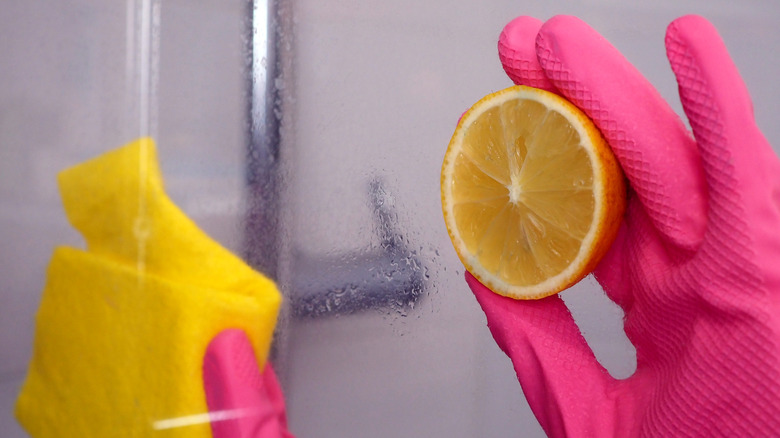
To clean with a lemon, all you need to do is squeeze a bit of lemon juice on the glass, give it a moment to start working, then rub it clean with the lemon itself. Some natural cleaning mavens will advise you to make a paste with lemon juice and baking soda, but the baking soda neutralizes the citric acid, undermining the whole purpose of using lemon. Cleaning with lemon will often require a second cleaning to remove any sticky residue from the fruit — a problem you won't have with straight citric acid.
If you stray beyond the shower door with your lemon, remember that, while people successfully clean stainless steel with citric acid all the time, it can still micro-etch the material. It's not ideal for removing water stains from granite countertops or marble because it can micro-pit both, and might also erode tile grout over time. Also, avoid using citric acid on delicate surfaces and electronics, including screens. But if you're in a pinch, just grab a lemon and get to work on those glass shower doors.