

Keep Your Wood-Burning Stove In Tip-Top Shape With These Must-Know Tips
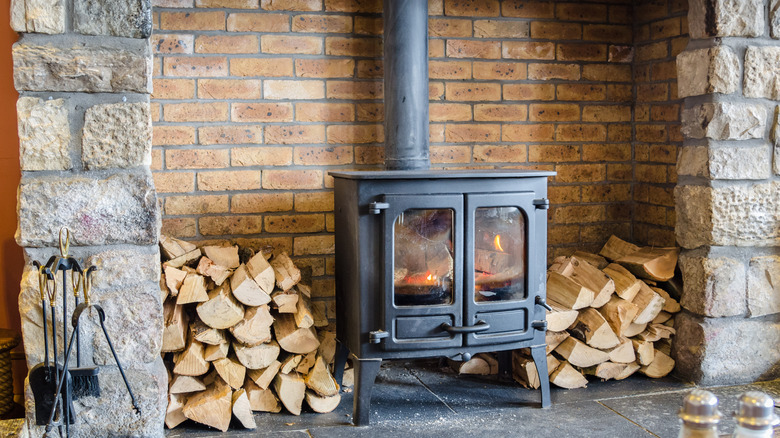
Where I live in New Hampshire, wood-burning stoves are essential. Winter storms can leave us without power for several days, knocking out central heating in the process. My wood-burning stove keeps my house warm, lowers my heating bills, and adds a wonderfully cozy aesthetic. Whether you have a free-standing unit or a fireplace insert like I do, these must-know tips can help keep your wood-burning stove in tip-top shape all winter long.
All wood-burning stoves need to have a proper cleaning before they are put into use. Any leftover ash from the previous winter is vacuumed out, and I also remove the fire bricks to clear out trapped debris. I also check the gasket on the door. A worn-down gasket won't seal the door properly, allowing more air to get in, smoke to get out, and reducing thermal output. I also clean the glass on the door using a damp paper towel that's been dipped in cold ash, and then buffing it with newspaper for a clear shine.
It's also important to have your chimney examined, as proper draft is essential for smoke removal and efficient burning. A chimney blocked with soot and creosote can affect air flow and even cause chimney fires. If you are new to wood stove ownership or are not comfortable cleaning your flue, call a professional chimney sweep. Rates typically range from about $140 to $550, depending on your region.
Using the right kind of wood is essential
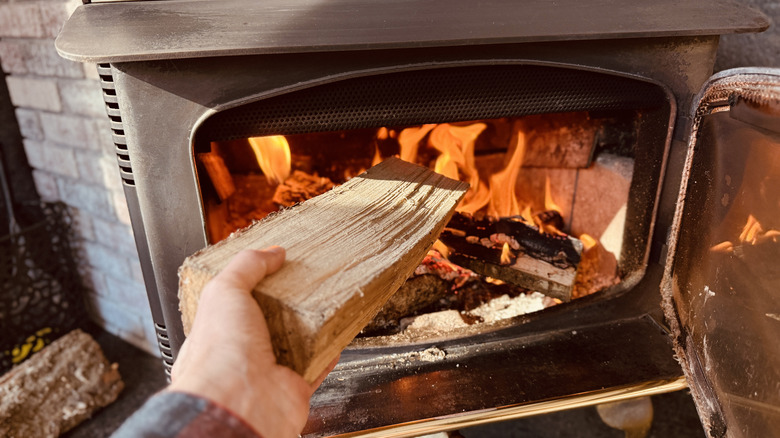
Using the right kind of wood is essential for getting the most out of your wood-burning stove. In New Hampshire, I own a small wood lot filled with trees like beech, oak, ash, and maple. These are hardwoods that offer consistent flames and produce high heat. Oak and maple are my go-to woods because they burn longer and higher than others.
While some speak to the contrary, you can absolutely burn softwoods like pine. Because it contains pitch, pine lights quickly and burns fast. This is what makes them so excellent for kindling. However, if you use them as your primary burners, they burn fast, meaning more refilling of the stove, and create more smoke than hardwoods, which can lead to heavier creosote buildup. Never burn pressure-treated lumber or plywood, as they have been treated chemically and will release toxic fumes.
You also want to ensure that any wood you are burning is dry enough. The minimum moisture content should hover around 20% or less. Anything higher won't burn efficiently, meaning you'll get less heat and more smoke. If you aren't in the habit of seasoning wood yourself, always purchase wood that has been pre-seasoned or kiln-dried. Store the wood somewhere where it will stay dry throughout the winter. A wood shed is preferable, but in my experience, covering the top layer with a tarp can work as well.
Routine maintenance during the burn season
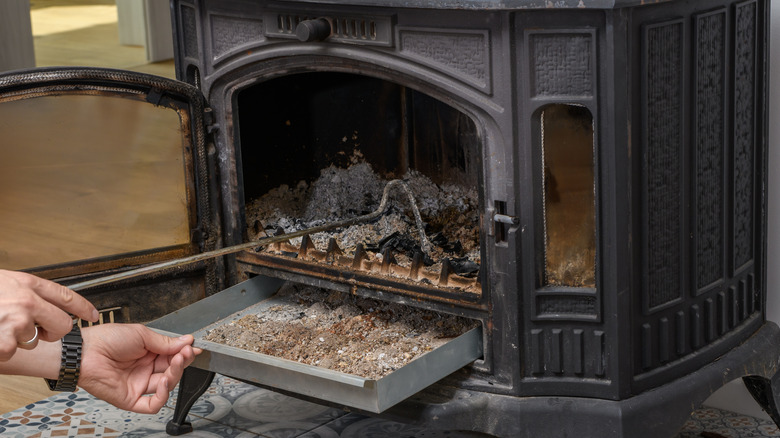
Even if you get the right wood and have all of the pre-burning safety requirements checked, there is still routine maintenance you have to perform throughout the winter to make sure that your stove is working at its best. There are weekly and monthly tasks you should perform in order to keep your wood-burning stove shipshape.
On the weekly front, be sure to clean the ash buildup in your stove after about five to seven burn days. Having too much ash in the burn chamber will prevent proper air circulation between the logs, leading to poorer combustion and burning. Ash that isn't removed can retain moisture, leading to rust and shortening the stove's lifespan. It's also good to check your door glass and gaskets on a weekly basis to make sure they are clean and sealing properly.
Every month, check your stove's baffle and blanket. The baffle is a fire-resistant plate that helps recirculate heat inside the burn chamber, keeping your wood stove hotter for longer. If it is cracked or significantly worn down, your stove won't reach optimal burning temperatures. Overall, if you keep an eye on your stove and do regular checkups, there is no reason why you should not have a wonderfully warm and cozy burning season.