

The Popular Driveway De-Icer You Should Think Twice About Before Using
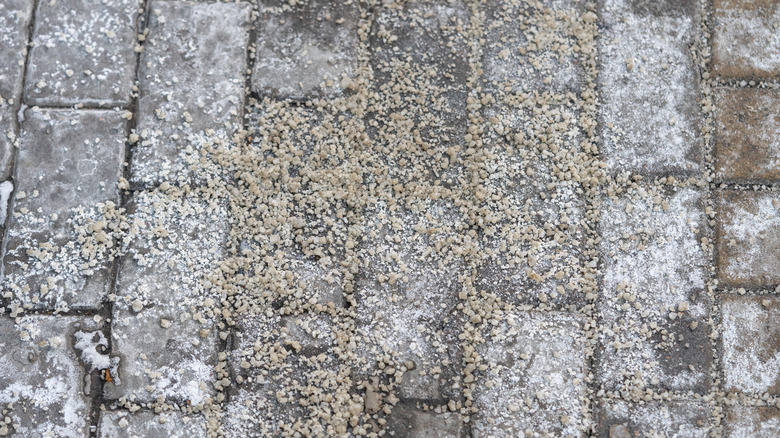
For many, rock salt is the go-to de-icer. It's used by towns to keep the roads clear of ice and by citizens trying to do the same for their driveways and walkways. While rock salt is exceptionally cheap — you can get 50 pounds of it for under $10 — and there is no denying that it is one of the most effective salts for getting rid of ice, there are more than a few reasons you should think twice before using it. While it makes quick work of ice and snow, its corrosive qualities can cause damage to your driveway, walkways, and even your car and spring garden.
Rock salt isn't your driveway's friend. Concrete driveways and walkways are highly susceptible to rock salt damage. It can get into the pores of the concrete and accelerate its deterioration by holding onto more water. That, along with thawing and freezing cycles brought about by rock salt use, can lead to cracking, pitting, and surface flaking over time. Asphalt is a little more resistant to rock salt, but not by much. Those same freeze-thaw cycles will inflict damage on the asphalt surface, especially if it is not seal-coated against it.
Rock salt can ruin your car and plants too
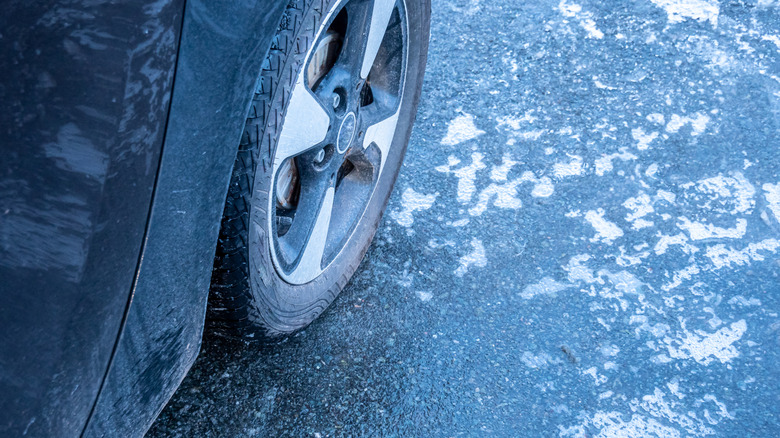
Your driveway and the local watershed are not the only things at risk if you use rock salt for de-icing; your car is too. When combined with water, rock salt can create a chemical reaction that will hasten the rusting and corroding of the metal parts of a car. This includes the undercarriage, brake lines, body panels, exhaust system, and even parts of the engine. You can mitigate these damages by having your undercarriage sealed and by frequently washing your car to remove salt residue.
Your plants can also be susceptible to damage from rock salt, particularly those you have planted along your walkways or driveway. According to a study conducted by the University of Massachusetts Amherst, rock salt seeps into the ground, and the plants absorb it in the spring when they are pulling for nutrients. The salt then attacks their cells, causing them to wilt or even die. Additionally, rock salt is made of sodium chloride, a toxic substance that can cause skin irritation and gastrointestinal distress if ingested. If you have dogs or children, find alternatives for rock salt. It is particularly harmful to dogs, as it can irritate their paws when walked on and cause kidney damage if ingested.
So, if rock salt is so bad, what is the alternative? Well, there are plenty of eco-friendly, DIY de-icers you can make out of ingredients you find in your own home. Looking for an easy purchase that's still more environmentally friendly than rock salt? You can ditch the salt in favor of calcium chloride.